
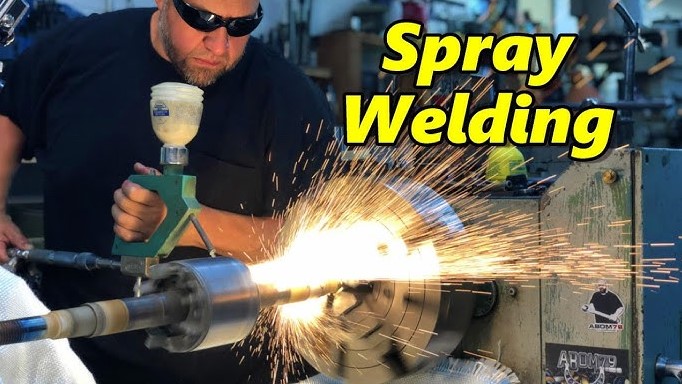
Spray welding is a thermal spray process that uses high-velocity flames to melt and bond metal alloys onto a base material. It acts as a specialized armor, helping engineers restore worn-out parts or provide extreme wear resistance to new industrial machinery.
Have you ever looked at a massive industrial engine part or a worn-down axle and wondered if it could be saved? It is frustrating to throw away expensive equipment just because one section has suffered from years of friction. This is where learning what is spray welding changes the game for mechanics, engineers, and DIY restorers.
Instead of sending perfectly good steel to the scrap yard, you can effectively “grow” it back to its original size. In 2026, the demand for sustainable manufacturing and equipment maintenance is higher than ever. Spray welding offers a perfect solution.
It is not just about sticking metal to metal; it is about precision, chemistry, and engineering. By melting powdered metal alloys and propelling them onto a surface, we create a bond that can withstand incredible pressure and heat. Let’s dive into how this technology works and why it remains a top-tier choice for heavy-duty repair.
Key Takeaways
- What is spray welding: It is a thermal coating process that applies molten metal particles to a substrate to rebuild dimensions or improve surface durability.
- Versatility: You can use spray welding on almost any metal, making it an essential tool for automotive, aerospace, and agricultural maintenance.
- Heat Management: Unlike traditional welding, spray welding minimizes heat-affected zones, preventing the warping of precision parts.
- Cost Efficiency: Instead of buying a new, expensive part, spray welding allows you to salvage the original component for a fraction of the cost.
- Material Diversity: You can apply a wide range of materials, including ceramics, carbides, and specialized steel alloys, to achieve specific surface properties.
- Longevity: Components treated with spray welding often last significantly longer than the original factory parts due to superior hardness and friction resistance.
Understanding the Basics: What Is Spray Welding?
At its core, spray welding is a thermal spray coating process. Think of it like a very hot, high-speed paint sprayer, but instead of paint, you are spraying molten metal. You start with a powdered metal alloy. A specialized torch uses a fuel gas and oxygen mixture to heat this powder until it becomes a semi-molten stream of tiny droplets.
These droplets are then blasted onto the base material (called the substrate). When the particles hit the surface, they flatten out and lock into the microscopic texture of the metal. As they cool, they bond together and to the surface, creating a new, durable layer. It is a brilliant way to add thickness to a part that has been ground down by years of use.
The Difference Between Spraying and Welding
While we call it “spray welding,” it is distinct from arc welding or MIG welding. In traditional welding, you melt the base metal entirely to join two pieces together. In spray welding, the goal is not to melt the part itself, but to apply a new layer on top. This is the “secret sauce” of the process. Because the base metal does not melt, it doesn’t suffer from the massive heat distortion that often ruins complex, precision-machined parts.
The Step-by-Step Spray Welding Process
If you are planning to perform spray welding, you have to follow a specific workflow. It is all about surface preparation. If the surface is dirty, oily, or too smooth, the metal will simply flake off. Getting the surface ready is 80 percent of the battle.
Visual guide about What Is Spray Welding
Image source: buildpro.com.my
Step 1: Surface Preparation and Cleaning
First, you must remove all contaminants. Any oil, grease, or paint will ruin the bond. Most professionals use a degreaser followed by a mechanical cleaning method like grit blasting. Grit blasting creates a “profile” or a rough surface that acts like Velcro for the incoming metal spray. This mechanical anchor is essential for a strong, lasting bond.
Step 2: The Pre-Heat Stage
Once clean, the part is usually pre-heated. This helps remove any hidden moisture and makes the surface more receptive to the thermal spray. You don’t need to get it glowing red, but keeping it at a steady, warm temperature prevents the cooling stresses that might cause the new layer to crack.
Step 3: The Application Phase
Now, the actual spraying happens. Using a specialized torch, the operator moves steadily across the part. The goal is to build the layer in thin, even passes. If you spray too much in one spot, you might get uneven cooling, which leads to internal stress. It requires a steady hand and a good eye for distance and speed.
Step 4: Cooling and Machining
After the spray process, the part needs to cool down slowly. Once it reaches room temperature, the part will likely be slightly oversized. This is intentional. You then take the part to a lathe or a grinder to machine it down to the exact, original factory dimensions. The result is a part that looks and performs like new, often with better wear characteristics than the original.
Why Choose Spray Welding Over Traditional Repairs?
You might wonder why we don’t just use standard welding to fix everything. There are specific reasons why spray welding is the preferred method for certain jobs in 2026. Understanding the benefits helps you decide when to use this technology.
Low Heat Input
Because the base material doesn’t reach a molten state, you avoid “heat-affected zones.” In high-stress engine components, heat causes warping and brittle spots. Spray welding keeps the part cool, preserving the metallurgical properties of the substrate. This is a massive advantage when working with thin-walled components or heat-sensitive alloys.
Unlimited Material Combinations
With traditional welding, the filler metal must be compatible with the base metal. With spray welding, you have much more freedom. You can spray a ceramic coating onto steel for heat protection, or a carbide-heavy alloy onto soft iron to create an extremely hard surface. You are essentially choosing the “armor” for your part regardless of what is underneath.
Excellent Salvage Value
Think about the cost of a large crankshaft for an industrial pump. Replacing it can cost thousands of dollars and take weeks to arrive. Spray welding lets you build the surface back up in a few hours. It is the ultimate “green” choice, as it prevents parts from becoming landfill material.
Industries That Rely on Spray Welding
The applications are vast. Almost any industry that deals with heavy, rotating, or sliding machinery uses this process. If it moves and rubs against something else, spray welding can likely make it last longer.
Aerospace and Aviation
Engine components in aircraft are subject to incredible temperatures. Spray welding allows engineers to apply specialized coatings that act as thermal barriers. These coatings protect the metal from melting or losing strength under intense pressure.
Agricultural Maintenance
Farmers face constant wear on equipment like plow blades, augers, and gearboxes due to soil and rock friction. Spraying these parts with hard-facing alloys extends their lifespan by two or three times. This means less downtime during the busy harvest season.
Automotive Restoration
For classic car enthusiasts or heavy truck fleet managers, spray welding is a secret weapon. It is frequently used to rebuild worn cylinder heads, camshafts, and transmission shafts. By restoring the dimensions accurately, the car runs smoothly without needing impossible-to-find replacement parts.
Common Challenges and Best Practices
Like any skill, spray welding has a learning curve. Even if you know what is spray welding, executing it correctly requires attention to detail. Avoiding common mistakes will save you from frustration and wasted material.
Mastering the Standoff Distance
The distance between your torch and the part is critical. If you are too close, you might overheat the substrate. If you are too far away, the metal particles will cool down too much before they hit the surface, resulting in a weak, porous coating. Practice on scrap metal until you get a consistent feel for the optimal distance provided by your equipment manufacturer.
Monitoring Powder Flow
The powder flow must be steady. If the feeder pulses, you will get ripples in your coating. Always check your equipment lines for kinks or blockages before you start. A consistent flow equals a uniform, dense, and strong coating.
Safety First
Thermal spraying produces dust, fumes, and heat. Always wear proper respiratory protection, as metal dust is hazardous to your lungs. Use high-quality heat-resistant gloves and a welding shield to protect your skin and eyes from the UV rays produced by the flame.
Future Trends in Thermal Spray Technology
Looking ahead to the rest of 2026 and beyond, we are seeing shifts toward more automated systems. Robotic arms are now being programmed to handle the spray torch. This removes human error and ensures that the thickness of the coating is perfectly uniform across the entire surface. This is a game-changer for high-precision components.
Additionally, we are seeing new powder chemistries. Companies are developing nanostructured powders that create coatings with incredible density and hardness levels that were unthinkable a decade ago. As we continue to refine the science of what is spray welding, we are finding more ways to make our industrial infrastructure last longer and run more efficiently.
Conclusion
Spray welding is far more than just a repair trick; it is a vital part of modern industrial maintenance. By understanding what is spray welding, you open up new possibilities for reclaiming, protecting, and enhancing the machinery that powers our world. Whether you are a hobbyist working on a vintage car or a professional in a heavy manufacturing plant, the ability to restore a worn surface is a valuable skill.
Remember, the key to success lies in preparation and patience. Clean your surfaces well, dial in your equipment, and don’t rush the process. When done correctly, spray welding provides a bond that is as strong as the component itself, saving you money and helping the environment by keeping equipment in service for years to come. Start small, practice often, and watch how much more mileage you can get out of your gear.
Frequently Asked Questions
Is spray welding stronger than standard welding?
It is not necessarily “stronger,” but it is superior for surface restoration because it prevents heat distortion. While standard welding creates a structural fusion, spray welding creates a superior wear-resistant surface layer without weakening the base metal.
Can I perform spray welding in my home garage?
Yes, but you need the right safety gear and equipment, including a clean, ventilated space and proper respiratory protection. It is a specialized process, so start with entry-level kits and practice on scrap metal before working on important parts.
What types of materials can be spray welded?
You can spray a wide variety of materials, including stainless steel, nickel-based alloys, ceramics, and tungsten carbides. The choice depends on whether you need hardness, corrosion resistance, or heat protection.
Does spray welding cause parts to rust?
No, provided the coating is applied properly and covers the substrate entirely. In fact, many spray-welded coatings are specifically chosen because they are more corrosion-resistant than the original base metal.
How long does a spray-welded repair last?
When performed correctly, a spray-welded layer can last just as long as—or sometimes even longer than—the original factory surface. Its lifespan depends on the quality of the bond and the hardness of the material you choose to apply.
Is the equipment expensive?
The cost varies widely from basic manual torches to high-end automated robotic systems. For small shop use, you can find affordable professional-grade manual equipment that offers a great return on investment by saving you money on expensive parts replacement.