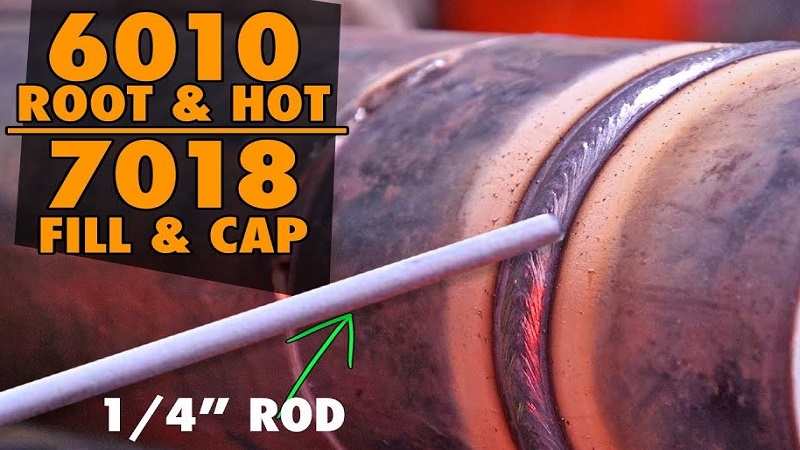
Pipeline welding is a highly specialized trade that primarily relies on Stick (SMAW) and advanced automated GMAW/FCAW systems to join large-diameter pipes. Choosing the right welder depends on the specific project environment, material thickness, and strict quality requirements mandated by modern infrastructure standards.
If you have ever driven past a massive energy project or noticed the winding steel veins crossing the landscape, you have seen the work of pipeline welders. These professionals are the backbone of global infrastructure, moving oil, gas, and water across thousands of miles.
But have you ever wondered, what type of welder is used to weld pipe lines? It is a question that leads us into a world of heavy-duty equipment, precise chemistry, and extreme environments.
In 2026, the landscape of pipeline welding has evolved. While the core principles remain rooted in strength and reliability, the machinery has become smarter, more efficient, and much more versatile. Whether you are a budding apprentice or just curious about the craft, understanding these machines helps you appreciate the immense skill required to join steel pipes that must withstand intense pressure for decades.
Key Takeaways
- Stick Welding (SMAW) Dominance: Still the gold standard for remote, outdoor pipeline work due to its portability and ability to handle dirty, windy conditions.
- Automated Systems: The rise of mechanized GMAW (MIG) systems is accelerating production speeds and improving consistency in long-distance transmission line construction.
- Engine-Driven Power: A high-quality engine-driven welder is essential for off-grid operations where standard electrical power is unavailable.
- Material Compatibility: Selecting the right welder means considering the steel grade, wall thickness, and the specific pipe geometry to ensure structural integrity.
- Certification Matters: Beyond the machine, the welder’s certification and skill level are the most critical factors for passing mandatory X-ray and ultrasonic testing.
- Technological Shifts: By 2026, digital arc control technology allows welders to tune their arcs with unprecedented precision, reducing spatter and defects.
The Undisputed King: Stick Welding (SMAW)
When you ask a seasoned veteran in the field what type of welder is used to weld pipe lines, the answer is almost always a Shielded Metal Arc Welding (SMAW) machine, commonly known as “Stick.” There is a reason for this: stick welding is incredibly resilient. Pipelines are rarely built in climate-controlled shops. They are built in muddy trenches, high-wind plains, and freezing mountain passes.
Why Stick Welding Wins Outdoors
Stick welding uses a flux-coated electrode to shield the weld pool from the atmosphere. Because the shield is built into the rod itself, it is less susceptible to being blown away by a gust of wind compared to gas-shielded processes. For a pipeline welder working in the middle of nowhere, the ability to produce a code-quality weld without carrying bulky gas bottles is a massive advantage.
Engine-Driven Power Sources
Since pipelines go where power lines do not, the welder must be self-sufficient. This is where engine-driven welders come into play. These machines are essentially portable power plants. In 2026, modern engine-driven welders are quieter and more fuel-efficient than ever. They provide a stable arc that allows the welder to “dig” into the root pass of a pipe joint, ensuring complete penetration a critical step for high-pressure safety.
The Rise of Automated and Semi-Automated Systems
While stick welding is the hero of the field, technology is changing the game. On massive projects especially those involving thousands of miles of pipe—speed is everything. This is where we see the rise of mechanized Gas Metal Arc Welding (GMAW) and Flux-Cored Arc Welding (FCAW).
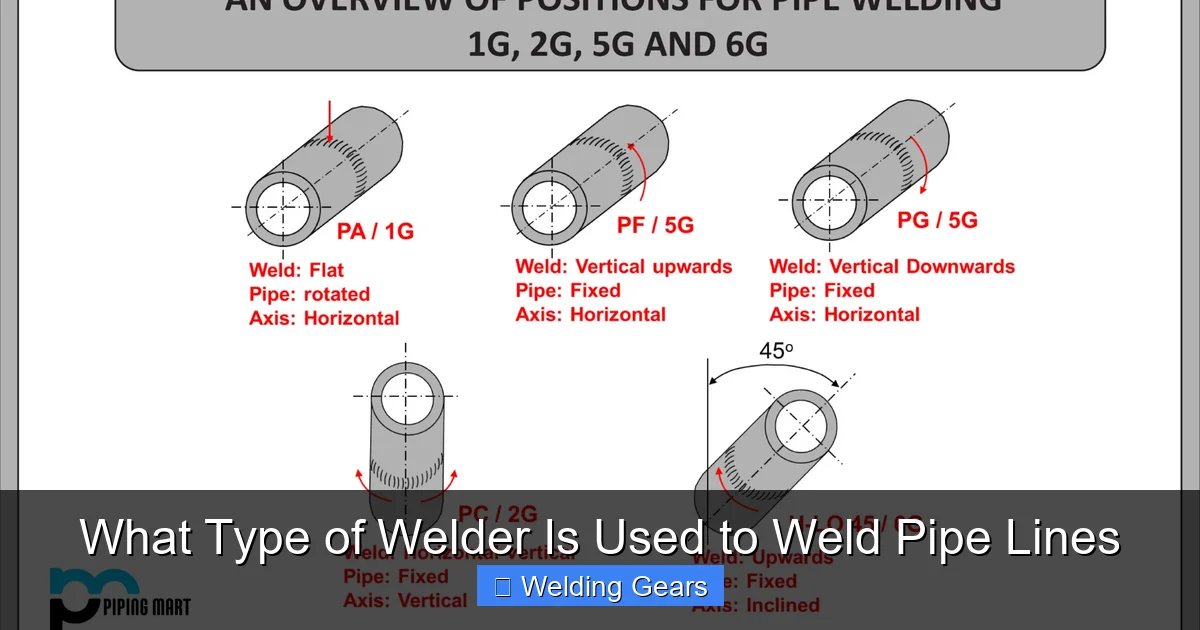
Visual guide about What Type of Welder Is Used to Weld Pipe Lines
Image source: cdn.thepipingmart.com
Consistency and Speed
Automated systems use a motorized carriage that travels around the pipe circumference. The computer controls the wire feed speed, the voltage, and the travel speed with microscopic accuracy. By eliminating human error, these systems can produce perfect, uniform welds over and over again. This consistency is vital because every inch of a pipeline is usually checked with X-rays or ultrasonic testing.
Gas Management Challenges
The downside of these systems is the gas shielding. Since they require an external shielding gas, they often utilize “tents” or windbreaks to protect the weld zone. When you see a team working with these rigs, you will often notice a complex setup of hoses, regulators, and specialized shielding tents. It is a more labor-intensive preparation process, but the production rate makes it worth it for large-diameter oil and gas lines.
Understanding Arc Control and Digital Technology
If you look at the face of a modern welding machine in 2026, you will see digital displays that look more like a smartphone than a traditional welder. Modern inverters have revolutionized what type of welder is used to weld pipe lines by offering “arc control” features.
Customizing the Arc
Pipe welding is all about the “feel.” A welder needs to know how the molten metal will react when they hit a tight gap or a thick bevel. Digital arc control allows the user to adjust how “crisp” or “soft” the arc feels. A crisp arc provides a sharp, biting action that is perfect for the root pass, while a soft arc helps fill the joint without overheating the metal.
The Benefits of Inverter Technology
Older machines used heavy transformers to step down power. Modern inverter-based welders use electronic components to switch power at high frequencies. This makes the machine significantly lighter and much more efficient. A lighter welder means less strain on the truck or the mobile platform, allowing the pipeline team to move faster and stay agile.
Choosing the Right Equipment for the Job
So, what type of welder is used to weld pipe lines when conditions change? The choice usually boils down to three factors: the diameter of the pipe, the wall thickness, and the project deadline. Small-diameter water or irrigation pipes might just need a basic, reliable stick machine. However, a major pipeline carrying high-pressure natural gas requires a high-end setup with sophisticated monitoring.
The Role of Weld Procedures (WPS)
Before a single spark is struck, engineers write a Welding Procedure Specification (WPS). This document is the bible for the project. It explicitly defines the type of welder, the electrode size, the amperage range, and even the pre-heat temperature of the metal. If the procedure calls for a specific inverter model with pulsed current capabilities, the welder must use exactly that.
Maintenance and Durability
Working on a pipeline is brutal on equipment. Dust, rain, heat, and vibration take a toll. The machines used in these environments are “industrial grade,” meaning they have reinforced casings and sealed electronics. If you are starting in the trade, you will quickly learn that a welder is not just a tool; it is your lifeline. Keeping it maintained is a daily ritual that ensures you stay on the job.
The Future of Pipeline Welding
As we look forward in 2026, the trend is moving toward smarter, connected machines. Remote monitoring allows project managers to check the parameters of a weld in real-time from a trailer miles away. This data ensures that every weld meets safety codes before the pipe is even buried. It is a fascinating intersection of hard labor and high-tech engineering.
Safety and Quality Assurance
Ultimately, the goal is simple: no leaks. The machines used today are designed to minimize the risk of inclusions, porosity, and cracks. When a welder uses a top-tier machine, they have the confidence that the equipment is giving them the best possible chance to produce a weld that will stand up to the pressure of the environment for decades.
Conclusion
If you have been wondering what type of welder is used to weld pipe lines, you now know that there isn’t just one single answer. It is a combination of tried-and-true stick welding for the rugged, remote jobs and sophisticated, automated GMAW systems for high-speed, long-distance infrastructure.
Whether it is an engine-driven stick welder in the desert or a computerized wire-feed system in a fabrication yard, these machines are the silent partners in building our world. As a welder, the machine is your most important companion.
By mastering the equipment and understanding how different technologies respond to the demands of the pipe, you can ensure that the infrastructure you build is safe, strong, and built to last. The next time you see a pipeline project, look for those yellow or blue welding trucks they represent the intersection of human skill and modern, heavy-duty technology.
Frequently Asked Questions
Can you use a standard home welder for pipeline work?
No, standard home welders lack the duty cycle, power output, and ruggedness required for industrial pipe welding. Pipeline work typically requires industrial-grade, engine-driven machines capable of handling extreme duty cycles and specialized welding procedures.
Why is stick welding still preferred for remote pipelines?
Stick welding is preferred because the flux coating on the electrode provides its own shielding gas, making the weld resistant to wind. It is the most portable and versatile solution for off-grid construction sites where complex setups are not feasible.
What is an engine-driven welder?
An engine-driven welder is a portable unit that features a combustion engine (diesel or gas) to generate its own electricity. This allows welders to work in remote locations, such as forests or deserts, where there is no access to the electrical power grid.
Do pipeline welders use MIG welding?
Yes, pipeline welders use MIG welding (GMAW), but it is usually part of a highly mechanized or automated system. These systems are used for large projects to increase production speed, provided they can be shielded from the wind.
How does modern technology help with pipeline quality?
Modern inverter welders provide digital arc control, which allows for precise adjustment of the arc characteristics. This reduces spatter and improves fusion, making it much easier for welds to pass the rigorous X-ray and ultrasonic tests required for pipeline integrity.
Is pipeline welding dangerous?
It is a demanding job that involves heavy equipment, high-pressure environments, and physical strain. However, when following strict safety protocols and using properly maintained, high-quality welding equipment, the risks are managed through professional training and certification.