Understanding your gear is the most critical step in welding safety. This guide breaks down the industry standards and certification codes that dictate exactly what tells you the protection level of a welding mask, ensuring you choose the right equipment for every arc type.
If you have ever spent a long day in the shop, you know that your welding helmet is more than just a piece of plastic – it is your primary line of defense. But have you ever stopped to wonder what actually tells you the protection level of a welding mask?
In 2026, technology has moved faster than ever, and safety standards have become more rigorous. Choosing a mask isn’t just about picking the one that looks the coolest; it is about reading the fine print that keeps your vision sharp for years to come. When you are staring down an electric arc, you are dealing with intense ultraviolet and infrared radiation.
Without the right protection, your eyes can suffer from painful damage in just a few seconds. Whether you are a weekend hobbyist or a professional pipe welder, knowing how to interpret the technical specs on your gear is a superpower. Let’s dive into the details of how to read your helmet like a pro.
Key Takeaways
- Certification Matters: Always look for ANSI Z87.1 or CE/EN standards printed on the helmet shell or cartridge.
- Shade Ratings: The shade number determines how much light intensity is blocked; higher numbers offer more protection for high-amperage tasks.
- Optical Class: Check for the 1/1/1/1 rating to ensure the highest clarity and lowest eye fatigue during long welding sessions.
- Reaction Speed: Modern auto-darkening filters (ADF) must react within milliseconds to prevent “welder’s flash.”
- Coverage Geometry: Protection level isn’t just about the lens; it’s about the helmet’s shape and how well it covers your neck and ears.
Understanding the Industry Certification Codes
The first thing to look for when inspecting a new helmet is the manufacturing stamp. You will typically find this on the inside of the helmet shell or embossed on the lens cartridge. These codes are the universal language of safety. If a helmet doesn’t have these marks, it isn’t worth the risk.
The ANSI Z87.1 Standard
In the United States, the gold standard is ANSI Z87.1. This code tells you that the mask has passed rigorous impact tests. A mask with this rating can withstand high-velocity impacts from flying debris, which is essential if you are also doing grinding or cutting. If you see the “Z87+” mark, it means it is rated for high-velocity impacts, which is the baseline requirement for any serious welder in 2026.
International CE and EN Standards
If you look at helmets produced for the global market, you might see EN 379 or CE markings. These are the European equivalent of safety certifications. They focus heavily on the quality of the auto-darkening filter (ADF). When you see these numbers, you know that the device has been tested for light leakage, switching time, and overall optical consistency.
The Science of Shade Ratings
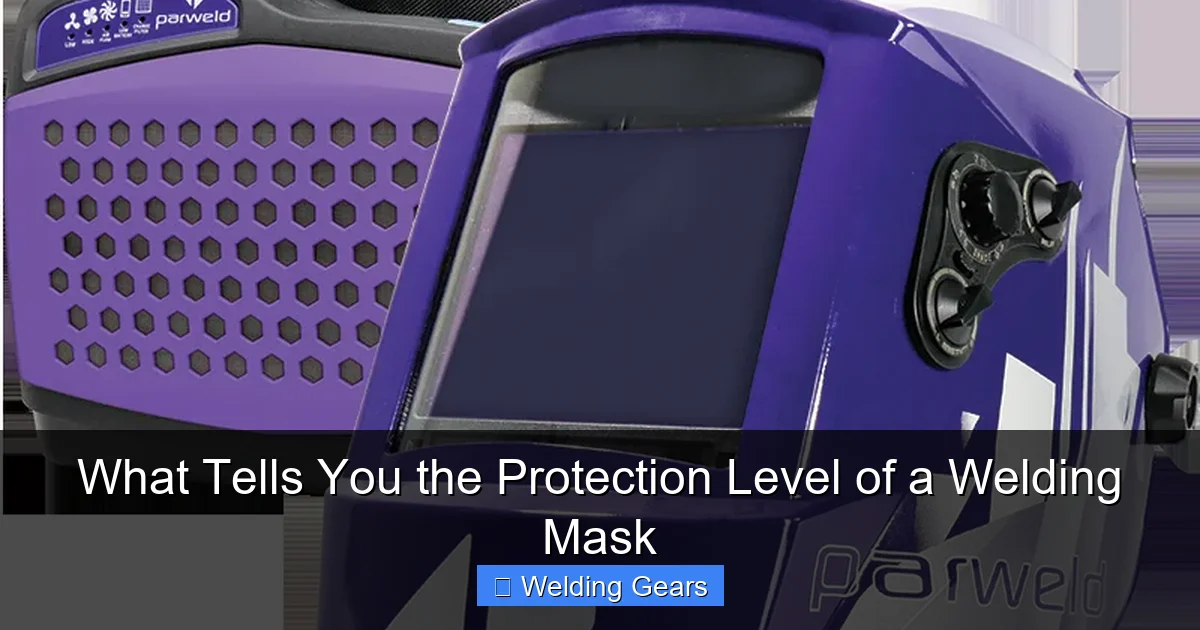
The shade number is probably the most talked-about feature of a welding mask. But what does it actually tell you? Simply put, the shade level dictates how much light is filtered before it reaches your eyes. The higher the number, the darker the lens.
Visual guide about What Tells You the Protection Level of a Welding Mask
Image source: norsemensafety.co.uk
Matching Shade to Amperage
You wouldn’t use the same shade for a tiny TIG weld that you would for a massive carbon arc gouging session. For low-amperage TIG welding, you might use a shade 8 or 9 to keep a clear view of your puddle.
As your amperage climbs say, when you are stick welding heavy plate you need to jump up to a 12 or 13. Most modern helmets have an adjustable range, usually from 9 to 13, which makes them incredibly versatile for different jobs.
Fixed vs. Variable Shades
Older helmets often had “fixed” shades, which meant you were stuck with one level of protection. In 2026, variable auto-darkening filters are the standard. They allow you to dial in your protection level on the fly.
If you find yourself straining to see your work, your protection level might actually be too high for the current you are running. Always check the manufacturer’s chart to see which shade corresponds to your specific welding process.
Optical Clarity Ratings: The 1/1/1/1 Standard
A lot of welders focus entirely on shade, but the optical quality is just as important for long-term eye health. The industry uses a four-part rating system to define clarity. This is often displayed as a fraction, like 1/1/1/1. Each number represents a different aspect of the filter’s performance.
Breaking Down the Four Numbers
The first number represents optical quality, or how distorted the view is. The second number measures the light diffusion, or how clear the lens is when light passes through it. The third number relates to the uniformity of the luminous transmittance, meaning the lens should darken evenly across the whole surface.
The fourth number measures the angle dependence, which ensures you don’t get weird color shifts or blurry spots when you move your head. A 1/1/1/1 rating means you are getting the highest possible quality for your eyes.
Auto-Darkening Filter (ADF) Speed and Sensitivity
The “protection level” of a mask isn’t just about density; it’s about timing. An auto-darkening mask needs to switch from a light state to a dark state in an instant. If it’s too slow, you will get flashed, which is essentially a sunburn on your cornea. This is why the switching speed is a vital specification to check.
Why Milliseconds Matter
In 2026, high-end helmets offer switching speeds of 1/20,000th of a second or faster. This speed ensures that your eyes are never exposed to the full intensity of the arc during the strike. When looking at the box or the manual, always prioritize a faster switching time. It might seem like a small detail, but over an eight-hour shift, that speed difference is the difference between a headache and a comfortable day of work.
Sensitivity Controls
Sensitivity is another factor that tells you the protection level of a welding mask. Some environments, like a busy shop with multiple welders, can cause a cheap mask to flicker or fail to darken because it’s picking up stray light. Adjustable sensitivity allows you to tune the helmet to only trigger for your specific arc, ensuring that your eyes are always shielded exactly when they need to be.
Coverage and Ergonomics
We often forget that your skin needs protection too. A mask that only protects your eyes isn’t doing its full job. The overall shape of the helmet determines the physical protection level for your face, neck, and ears. In 2026, modern designs focus on full-coverage, wrap-around styles that prevent UV light from bouncing off shop walls and hitting your neck.
Materials and Flame Resistance
The material of the shell also matters. High-quality helmets are made from heat-resistant, impact-resistant nylon or specialized polymers. Check for the flame-retardant rating.
If a helmet is flimsy or made of cheap plastic, it won’t just fail to protect you from light; it could melt or warp when exposed to the heat of the welding process. Look for shells that are lightweight but durable, as they provide the best balance of comfort and safety.
Conclusion
At the end of the day, knowing what tells you the protection level of a welding mask comes down to looking for those key indicators: the ANSI or CE certification stamps, the optical clarity rating, the shade range, and the switching speed. Don’t just settle for a mask that looks good; invest in the data behind it.
Your vision is the most valuable tool you have in the shop, and by taking a few minutes to verify your gear’s specifications, you are ensuring a long and healthy career in welding. Stay safe, keep your gear clean, and always double-check those ratings before you strike your next arc.
Frequently Asked Questions
What is the difference between ANSI and CE ratings?
ANSI Z87.1 is the primary safety standard for protective eyewear and helmets in the United States, focusing on impact resistance. CE/EN standards are the European equivalent, which often place a slightly higher focus on the technical performance of the auto-darkening filter components.
Can I use a low-shade mask for heavy-duty welding?
No, using a shade that is too light for your amperage will lead to eye strain, potential retinal damage, and “welder’s flash.” Always follow the recommended shade chart based on the amperage you are running for the specific welding process.
Does a higher price always mean better protection?
Not necessarily, but professional-grade helmets from reputable brands almost always offer better optical clarity and more reliable sensor technology. Look for the 1/1/1/1 optical rating rather than just the highest price tag to ensure you are getting the best protection for your eyes.
How often should I replace my welding lens cover?
You should replace your outer cover lens as soon as it becomes pitted, scratched, or heavily spattered. A damaged lens can cause light diffusion and glare, which degrades the protection level and makes it harder to see your weld puddle.
What does “switching speed” mean for my safety?
Switching speed refers to how quickly the liquid crystal display in your lens reacts to the arc. A faster speed ensures that your eyes are protected the microsecond you strike your arc, preventing the painful exposure known as arc flash.
Why do some masks have a “grind mode”?
Grind mode disables the auto-darkening function so the lens stays clear while you are using an angle grinder. This protects your eyes from flying debris while keeping you from having to take your helmet off, which also offers facial protection against sparks.