Weld overlay is a specialized process where a layer of high-performance material is deposited onto a base metal to provide superior resistance to corrosion, wear, or heat. By enhancing surface properties rather than replacing the entire component, weld overlay allows industries to maximize equipment lifespan while significantly cutting maintenance costs.
Have you ever wondered how giant industrial machines survive the harshest conditions on Earth? Whether it is deep-sea drilling equipment facing acidic saltwater or massive mining crushers grinding through solid rock, these components are under constant attack.
If they were made of standard steel, they would fall apart in weeks. That is where we turn to a brilliant solution known as weld overlay. It is the secret weapon used by engineers to keep our global infrastructure running smoothly.
At its core, understanding what is weld overlay starts with the concept of “surface engineering.” Instead of building an entire valve or pump out of an incredibly expensive, corrosion-resistant alloy, we build the core structure out of sturdy, affordable carbon steel.
Then, we use specialized welding equipment to fuse a protective layer of a high-performance material onto the surface. Think of it like applying a super-durable, metallic skin to your equipment. It is smarter, cheaper, and often stronger than the original material would have been on its own.
Key Takeaways
- Cost Efficiency: Weld overlay allows expensive base metals to be coated with high-performance alloys, saving money compared to making the whole part from exotic materials.
- Enhanced Durability: It significantly increases the surface life of industrial components by protecting them against extreme abrasion, heat, and chemical corrosion.
- Versatility: The process is highly adaptable, supporting various welding techniques like GMAW, GTAW, and SAW to suit specific project requirements.
- Sustainability: By refurbishing worn components instead of discarding them, weld overlay serves as a sustainable practice for modern manufacturing.
- Customizable Metallurgy: Engineers can tailor the chemistry of the overlay layer to meet the specific operational demands of the machinery.
- Broad Application: It is widely used in critical sectors including oil and gas, power generation, mining, and chemical processing.
The Fundamentals of Weld Overlay Technology
To really grasp what is weld overlay, we have to look at how it works. The process involves melting a filler metal usually in the form of a wire or a rod and fusing it to the surface of a base metal. This is not just a coating that sits on top like paint. It is a metallurgical bond. The heat from the welding process melts a tiny fraction of the base metal so that it mixes with the filler material, creating a seamless transition.
Why Metallurgy Matters
When we talk about weld overlay, we are talking about chemistry. In 2026, our control over this chemistry is better than ever. We select filler materials based on what the part will face. If the part needs to survive a chemical plant, we might use a nickel-based alloy.
If it needs to survive a rock crusher, we might use a cobalt or chromium-based alloy that is incredibly hard. The goal is always the same: get the surface to behave like a diamond while the inside remains tough and ductile enough to handle shock loads.
Common Welding Processes
There are many ways to perform this work. Gas Metal Arc Welding (GMAW) is very common because it is fast and easy to automate. Gas Tungsten Arc Welding (GTAW) is used when we need extreme precision and the highest quality finish, especially for small parts or tight corners. Submerged Arc Welding (SAW) is the heavy hitter; it is used when we need to cover large surface areas quickly, like the interior of a massive pressure vessel.
The Economic Advantage of Overlaying
Why do companies spend time and money on this process instead of just buying new parts? The answer is simple: money. In the heavy industry sectors, a single valve body or a heat exchanger shell can cost tens of thousands of dollars. By using weld overlay, a company can extend the life of that part by years or even decades. It turns a “replace” decision into a “refurbish” decision.
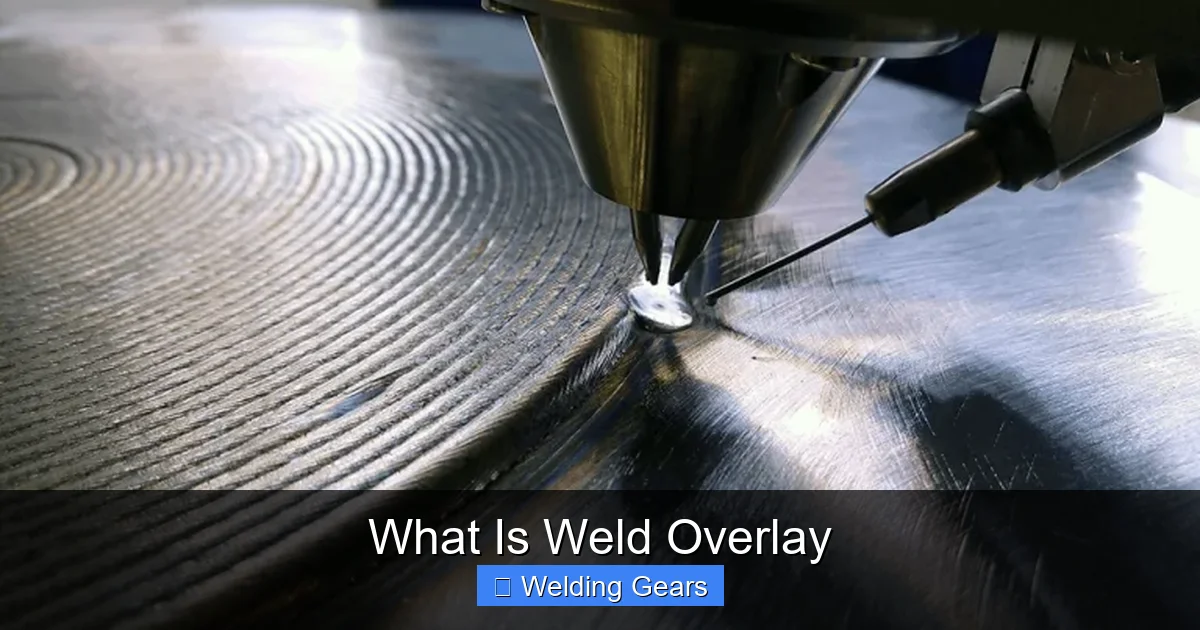
Visual guide about What Is Weld Overlay
Image source: polysoude.com
Reducing Downtime
Downtime is the enemy of profit. When a refinery has to shut down to replace a corroded pipeline segment, they lose massive amounts of revenue every single hour. Because weld overlay makes parts last so much longer, the interval between maintenance stops gets much wider. You are not just saving on the cost of the raw metal; you are saving millions in operational uptime.
Material Savings
In 2026, the cost of raw materials like molybdenum, nickel, and cobalt is volatile. By using these expensive elements only on the thin surface layer where they are actually needed, manufacturers can drastically reduce their consumption of precious resources. This is a win for the balance sheet and a win for the environment, as it promotes a circular economy in the manufacturing space.
Industries That Rely on Weld Overlay
The applications for this technology are everywhere. If you look at an oil rig, a power plant, or even a local recycling facility, you will see weld overlay in action. It is the invisible force keeping critical systems from failing under pressure.
Oil, Gas, and Petrochemicals
This industry is the biggest user of weld overlay. Pipelines and valves are exposed to high pressure, temperature swings, and corrosive fluids. Using a corrosion-resistant alloy (CRA) overlay on the inside of steel pipes allows the oil industry to move corrosive crude safely without the entire pipe rusting out. It is a safety feature that prevents leaks and protects the environment.
Power Generation
In power plants, boilers and turbines deal with incredible heat. Weld overlay helps protect the metal tubes inside boilers from high-temperature oxidation and erosion from coal ash or other combustion byproducts. By applying a specialized overlay, the plant can keep running hotter and more efficiently, which lowers energy costs for everyone.
Technical Challenges and Quality Control
Performing a perfect weld overlay is not easy. It requires skill and modern technology. If you heat the metal too much, you can warp the part. If you do not fuse it well enough, the layer can peel off under stress. This is where quality control in 2026 has become so advanced.
Managing Dilution
Dilution is the biggest challenge in this field. It happens when too much of the base metal melts into the overlay, “diluting” the expensive protective alloy. If the overlay is too diluted, it loses its corrosion resistance. Expert welders use precision cooling and automated travel speeds to keep the base metal melting to an absolute minimum.
Testing and Inspection
Once the work is done, we don’t just walk away. We use non-destructive testing (NDT). This includes ultrasonic testing to check for hidden voids or cracks, and chemical analysis tools to make sure the chemistry of the finished surface is exactly what the specs called for. If it does not meet the standard, it goes back for rework before it ever touches an industrial system.
Future Trends in Weld Overlay for 2026 and Beyond
The world of welding is changing. In 2026, we are seeing the rise of smart welding systems. Artificial intelligence is now helping welders monitor the arc in real-time. If the system senses the heat is getting too high, it automatically adjusts the current to prevent damage. This makes the process much more consistent.
Automation and Robotics
Robotic arms are taking over the repetitive parts of the job. A robot can apply a weld overlay with perfect precision for twelve hours straight without getting tired or losing focus. This level of consistency means fewer defects and higher quality parts across the board.
We are also seeing 3D metal printing (additive manufacturing) starting to merge with weld overlay technologies, allowing for incredibly complex geometric overlays that were impossible five years ago.
Sustainability and Green Manufacturing
As the world focuses more on green manufacturing, weld overlay is becoming a key tool for sustainability. Instead of melting down old parts and creating new ones from scratch—a process that consumes huge amounts of energy we can simply strip the old layer and apply a new one. It is a brilliant way to recycle industrial components while maintaining “like-new” performance.
Conclusion: The Value of Investing in Protection
So, what is weld overlay? It is much more than just a welding technique. It is a vital strategy for industrial longevity, cost management, and safety. By understanding the balance between base metal strength and surface-layer protection, companies can build machines that survive the toughest conditions on the planet.
Whether you are a professional in the industry or just someone curious about how our world is built, it is clear that weld overlay plays a huge role in the success of modern engineering. As we move further into 2026, the technology will only get smarter, cleaner, and more efficient.
Investing in quality overlays is not just about fixing a part; it is about investing in the future reliability of the entire machine. Keep your equipment protected, keep your operations running, and keep innovating through better welding practices.
Frequently Asked Questions
Is weld overlay the same as hardfacing?
While they are similar, they have different goals. Hardfacing is specifically designed to resist abrasion and wear, whereas weld overlay is often used to provide corrosion or heat resistance to a part.
Can any type of metal be used for the overlay?
Not necessarily, as the filler metal must be metallurgically compatible with the base metal to prevent cracking. Engineers select alloys based on the specific operational environment, such as high-temperature or highly acidic conditions.
How does weld overlay affect the base material?
When done correctly, it has minimal impact on the structural integrity of the base metal. However, improper heat control can lead to warping or changes in the internal grain structure, which is why precise welding parameters are essential.
How long does a weld overlay typically last?
The lifespan depends on the intensity of the service environment and the thickness of the overlay. In many industrial applications, a properly applied overlay can extend a component’s life by several years, often outlasting the original surface multiple times over.
Is it possible to perform weld overlay on-site?
Yes, many weld overlay applications are performed on-site for large infrastructure like pipelines or pressure vessels. Portable automated welding systems allow technicians to bring the technology directly to the equipment in the field.
Is weld overlay cost-effective for small parts?
It can be, but it is most cost-effective for large, expensive, or mission-critical components. For small, inexpensive mass-produced parts, it is often cheaper to simply replace the component rather than invest in a custom overlay process.