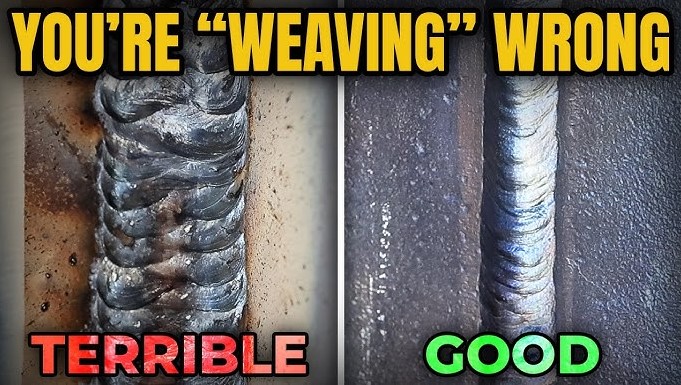
When determining what is the strongest type of weld, the Full Penetration Groove Weld stands out as the industry gold standard for structural integrity. By fusing base metals entirely through their cross-section, this method ensures the weld itself is often stronger than the surrounding material when executed with proper technique and high-quality filler metal.
If you have spent any time in a fabrication shop, you have likely heard the debate. Someone always brings up the question: what is the strongest type of weld? It is a topic that keeps engineers, inspectors, and seasoned shop welders talking for hours.
Whether you are building a custom roll cage, a heavy-duty trailer, or a bridge component, knowing how to create the ultimate bond is the difference between a project that lasts a lifetime and one that fails under stress.
The truth is that the “strongest” weld is not just about the machine you use or the settings on your dial. It is a combination of design, material preparation, and execution. When we talk about maximum strength, we aren’t just talking about a thick bead of metal.
We are talking about molecular fusion that makes the joint the most durable part of the entire assembly. In this guide, we will break down exactly how you can achieve that level of precision in 2026 and beyond.
Key Takeaways
- Full Penetration is Key: A weld is only as strong as its depth; full penetration joints provide total structural fusion.
- Joint Geometry Matters: Butt joints are generally superior to lap or fillet joints for pure load-bearing strength.
- Technique Over Tool: Even the best welder cannot compensate for poor joint preparation or contaminated surfaces.
- Material Compatibility: Selecting the correct filler metal for your specific alloy is just as important as the welding process itself.
- Heat Control: Excessive heat can weaken the Heat Affected Zone (HAZ), making precise temperature management crucial for structural welds.
- Post-Weld Inspection: Non-destructive testing (NDT) is the only way to verify that your “strongest weld” is actually free of internal defects.
The Science of Full Penetration
When you ask what is the strongest type of weld, the technical answer almost always points to the Full Penetration Groove Weld. Why? Because it achieves what we call complete joint penetration. In this process, the weld metal fills the entire thickness of the base metal, creating a bond that is physically unified from one side to the other.
Understanding the Cross-Section
Imagine two thick steel plates being joined together. If you only weld the surface, you are essentially “gluing” the edges. If you bevel those edges into a V-shape, you can reach all the way to the bottom. Once you fill that V, you have created a connection that mimics the properties of the original solid plate. This is the goal of every structural welding project.
The Importance of Root Pass
The root pass is the most critical stage. It is the first layer of metal that actually links the two pieces. If your root pass is weak, the entire joint is compromised. Modern welding technology in 2026 allows for better root penetration using advanced pulsed modes, but the human factor remains. You need to ensure the gap is even and the heat is sufficient to “burn” through to the back side without blowing a hole in your work.
Choosing the Right Joint Geometry
Strength is highly dependent on how your parts meet. Not all joints are created equal. If you are aiming for the strongest weld possible, the design phase of your project is where the heavy lifting happens.
Visual guide about What Is the Strongest Type of Weld
Image source: weldingtroop.com
The Power of the Butt Joint
The butt joint is the king of strength. When two pieces of metal are aligned on the same plane, the forces of tension and compression are distributed evenly across the weld. When you apply a full penetration weld to a butt joint, you effectively remove the joint as a weak point. This is why you see butt joints used in high-pressure piping and skyscraper construction.
Why Fillet Welds Have Limitations
Fillet welds are incredibly common, but they are technically weaker than full penetration butt welds. Because they rely on the shear strength of the weld bead sitting in the corner, they are prone to stress concentrations at the “toe” of the weld. While a massive fillet can be very strong, it is often overkill and adds unnecessary weight compared to a well-executed butt joint.
Material Preparation: The Hidden Variable
You can use the most expensive welding gear in the world, but if your material is dirty, your weld will fail. Identifying what is the strongest type of weld is useless if you are welding through rust, oil, or mill scale. Preparing your metal is arguably more important than the actual welding process.
Cleaning and Grinding
In 2026, we have access to better grinding discs and chemical cleaners than ever before. Always aim for “bright and shiny” metal. Contaminants create porosity, which acts like tiny bubbles inside your weld. These bubbles are stress risers. Under a load, those tiny voids start to crack, and eventually, the whole weld fails. Think of cleaning as the foundation of your building; if the foundation is weak, the house falls.
The Role of Fit-Up
Fit-up is the art of making sure the pieces touch perfectly. If you have a massive gap in your joint, you are essentially just filling a hole with filler metal. This filler metal does not have the same properties as the base material. A tight fit-up allows the arc to transfer energy efficiently, resulting in a cleaner, stronger bond.
Selecting the Right Filler Metal
Filler metal compatibility is a science. You need to match the tensile strength of your filler to the base metal you are joining. If your filler is too soft, the weld will deform under load. If it is too hard or brittle, it may crack as the metal cools and shrinks.
Understanding Tensile Strength
When shopping for welding wire or rods, you will see numbers like E7018. The “70” stands for 70,000 pounds per square inch of tensile strength. Always ensure your filler matches or slightly exceeds the strength of your base metal. This ensures that the weld itself will never be the weakest link in your assembly.
Proper Storage
Even the best filler metal can go bad. Moisture is the enemy of hydrogen-controlled rods. If you are doing critical work, keep your rods in an oven. Hydrogen embrittlement is a silent killer of welds, causing cracks to appear long after you have finished the job. Staying dry is an easy way to guarantee a stronger result.
Technique and Heat Management
Heat input is a balancing act. If you don’t use enough heat, you get “cold lap,” where the weld bead just sits on top of the metal without biting in. If you use too much heat, you ruin the crystalline structure of the metal, making it brittle. This is why modern welding machines with advanced heat control are so important.
Managing the Heat Affected Zone (HAZ)
The HAZ is the area right next to your weld that gets hot but doesn’t melt. This area often becomes the softest part of the joint. By keeping your travel speed consistent and avoiding excessive heat, you can minimize the size of the HAZ, keeping the metal around the weld as strong as the rest of the structure.
Pulsed Welding Technology
In 2026, pulse welding is standard for those wanting the strongest results. By pulsing the current, you get the penetration of a high-heat weld with the cooling benefits of a low-heat weld. It allows for deep fusion while minimizing the risk of warping or burning through thin spots. It is the secret weapon for professional fabricators.
Conclusion: The Ultimate Weld
So, what is the strongest type of weld? It is the one that achieves full penetration, is performed on perfectly cleaned metal, uses the correct filler for the specific alloy, and is managed with precise heat control.
It is a marriage of science and craft. When you take the time to prepare your joints and understand the physics of the arc, you aren’t just making a weld—you are creating a permanent structural solution.
Always remember that the most important tool you have is your eyes. Watch the puddle, maintain your arc length, and don’t rush the process. Whether you are welding at home or in a massive industrial facility, the principles of strength remain the same. Respect the material, respect the process, and you will achieve welds that last for generations.
Frequently Asked Questions
Is a fillet weld ever stronger than a groove weld?
Generally, no. A full penetration groove weld is stronger because it fuses the entire cross-section of the materials, whereas a fillet weld relies on the shear strength of the weld bead surface.
What does “full penetration” actually mean?
Full penetration means that the weld metal has traveled all the way through the thickness of the joint, bonding the back side of the plates together just as strongly as the front.
Why does my weld keep cracking after it cools?
Cracking is often caused by hydrogen embrittlement or improper cooling rates. Using dry filler metal and ensuring your base metal isn’t too cold before starting can help prevent this.
How do I know if my weld has good penetration?
Unless you are using an X-ray or ultrasound (NDT), you cannot be 100% sure. However, seeing consistent penetration on the backside of the joint is the best visual indicator for a successful weld.
Does a thicker weld bead mean a stronger weld?
Not necessarily. A massive weld bead can actually introduce unnecessary stress and heat, which might weaken the metal around the joint. The goal is to match the strength of the base material, not to build the largest deposit.
Is stick welding stronger than MIG welding?
Both processes can produce incredibly strong welds if performed correctly. Stick welding is often preferred for outdoor or thick structural work, while MIG is highly effective for controlled shop environments and thinner materials.