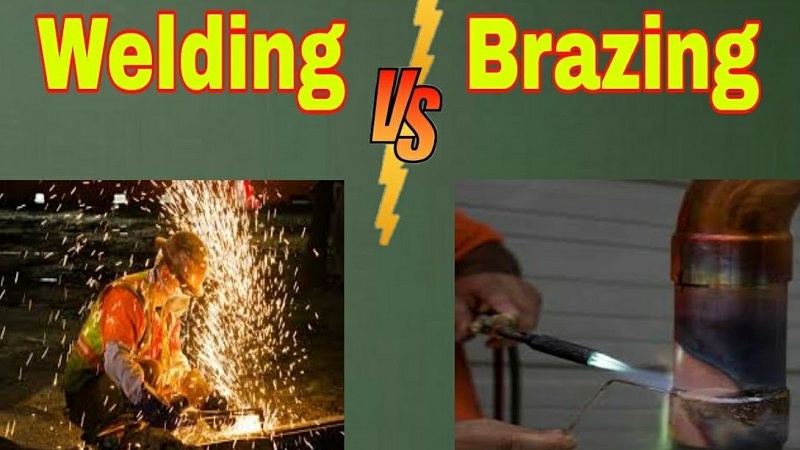
Welding and brazing are both essential techniques for joining metals, but they work in very different ways. Welding melts the actual base metals to create a strong, permanent bond, while brazing uses a filler metal that melts at a lower temperature to “glue” the pieces together. Choosing between them depends on your material, heat tolerance, and the strength requirements of your project.
If you have ever stood in a workshop staring at two pieces of metal, wondering how to turn them into one, you have likely encountered the great debate: welding vs. brazing. In 2026, as manufacturing technology pushes toward smarter, faster, and more efficient solutions, understanding these two joining methods is more important than ever for hobbyists and professionals alike.
At first glance, they might seem like the same process. You heat up metal, you add something to make it stick, and you walk away with a connected part. But beneath the surface, the chemistry and physics involved are worlds apart. One creates a singular, unified piece of metal, while the other acts like a high-tech adhesive bond. Let’s break down the difference between welding and brazing so you can pick the right tool for your next build.
Key Takeaways
- The Heat Factor: Welding requires high heat to melt the base metal, whereas brazing uses lower temperatures that keep the base metal solid.
- Bond Strength: Welds create a fusion bond that is often stronger than the parent material, while brazed joints rely on the adhesion of the filler metal.
- Material Compatibility: Brazing is better for joining dissimilar metals like copper to steel, while welding is usually reserved for similar metals.
- Heat Distortion: Because brazing uses less heat, it is much less likely to warp or distort your parts compared to welding.
- Visual Finish: Brazed joints often leave a cleaner, smoother look that requires little post-processing, unlike the raised beads left by many welds.
- Skill Requirements: Welding generally requires more practice and equipment to master, while brazing is often more accessible for beginners and small repairs.
Understanding the Basics of Welding
Welding is the heavy lifter of the metal-joining world. When you weld, you are essentially creating a small, controlled volcano. You use intense heat often from an electric arc to melt the edges of the two pieces you are joining. These edges melt together into a “weld pool,” and as they cool, they solidify into a single, fused piece of metal. Often, you add a filler rod to the pool to ensure the joint is thick and sturdy.
Why Use Welding?
The primary advantage of welding is strength. Because the two pieces of metal have physically melted into one another, the joint becomes part of the parent material. If you are building a structural frame, a trailer, or anything that needs to support heavy weight or endure high stress, welding is the gold standard. In the automotive and aerospace sectors of 2026, advanced robotics have made high-precision welding faster than ever before.
Challenges with Welding
With great strength comes great heat. Because you have to melt the base material, you are putting a massive amount of thermal energy into the part. This often leads to distortion or warping. If you are working with thin-gauge sheet metal, welding can be incredibly frustrating because it is very easy to burn a hole right through your project. It also requires a clean environment; rust, paint, or grease can ruin a weld instantly.
The Art and Science of Brazing
Brazing is the sophisticated sibling of welding. Instead of melting your base metal, you heat it up to a specific temperature and then introduce a filler metal that has a lower melting point than your parts. This filler metal melts, flows into the tiny gap between the pieces through a process called capillary action, and hardens. Think of it like soldering, but much stronger and with higher heat.
The Benefits of Brazing
Brazing is amazing because it is gentle. Since you never melt the parent metal, the risk of warping is significantly reduced. This makes it perfect for joining delicate parts or thin materials that would simply turn to liquid if you tried to weld them.
Additionally, brazing is excellent at joining dissimilar metals. Want to attach a piece of copper to a piece of steel? Brazing makes that connection easy, whereas welding two different metals together can be a metallurgical nightmare.
When Brazing Falls Short
While brazed joints are strong, they are rarely as strong as a full-penetration weld. The strength of the joint is limited by the strength of the filler metal used. If you are building a bridge or a load-bearing chassis, brazing probably isn’t the right choice. Also, the filler material is a different color than the base metal, which can make the joint stand out visually if you are looking for a seamless, uniform finish.
Comparing Heat Requirements and Metallurgy
The biggest difference between welding and brazing is the temperature threshold. Welding happens at temperatures that reach the melting point of the metal, which can be thousands of degrees. Brazing always happens below the melting point of the base metals being joined.
Thermal Impact on Materials
When you weld, you change the internal grain structure of the metal. This is known as the Heat Affected Zone (HAZ). If you aren’t careful, this zone can become brittle or lose its original mechanical properties.
Brazing keeps the heat low enough that the structural integrity of your metal remains largely untouched. This is why brazing is often the go-to method for manufacturing high-precision parts in 2026, especially in industries like HVAC and refrigeration.
Chemical Bonds vs. Physical Fusion
In welding, the metals intermix. In brazing, the filler metal creates an adhesive-like bond with the surface of the base metals. Because of this, the cleanliness of the joint is vital. While welding can burn through some impurities, a brazed joint requires a flux a chemical cleaner to prevent oxidation and ensure the filler flows correctly. Without a proper flux, the filler metal will simply bead up and refuse to bond to the surface.
Choosing the Right Method for Your Project
So, how do you decide which technique to use? Start by asking yourself what the finished part needs to do. Is it for structural support? Is it going to be exposed to extreme vibrations or heat? If the answer is yes, you are likely looking at welding. If you are doing repair work on a classic car, building custom jewelry, or connecting plumbing, brazing is likely your best friend.
Consider Your Skill Level
Welding requires a steep learning curve. You need to master the arc, the angle of the torch, the speed of the travel, and the settings of your welder. Brazing is generally easier to pick up.
Most people can learn to produce a solid, leak-proof brazed joint in an afternoon, while mastering a professional-grade TIG weld can take years of daily practice. In 2026, there are many “smart” brazing tools available that automate the temperature control, making it even friendlier for beginners.
Cost and Equipment Considerations
If you are on a budget, you might be surprised to learn that a decent oxy-acetylene torch kit for brazing can be cheaper than a high-quality TIG welder. However, you also have to factor in the cost of filler materials and flux. Welding supplies like gas and wire can add up, but the versatility of a modern multi-process welder often makes it a better investment if you plan to do a variety of projects over time.
Maintenance and Repair Context
When it comes to fixing something that is already broken, the choice between welding and brazing becomes even more critical. If you are fixing a cast iron engine block or a complex piece of vintage machinery, welding might introduce enough heat to crack the fragile metal. Brazing, however, is a common and highly effective way to repair cast iron parts without causing further damage.
Safety First
Both welding and brazing produce fumes that are not good for your lungs. In 2026, workplace safety standards are stricter than ever. Always use a well-ventilated area, wear the correct eye protection, and ensure you have proper respiratory gear.
Welding light is intense enough to cause “arc eye” in seconds, and brazing torches can reach temperatures that pose a serious fire hazard. Never skip your personal protective equipment, regardless of which process you choose.
Future Trends in Joining Metals
As we move further into 2026, we are seeing the rise of hybrid technologies. Some automated systems now utilize laser welding for the primary structure and follow up with precision brazing for decorative or secondary connections. This “best of both worlds” approach is becoming common in the production of electric vehicle frames, where weight reduction and structural rigidity are paramount.
Conclusion
The difference between welding and brazing comes down to how much heat you are willing to apply and what kind of joint you need to achieve. Welding is the process of fusion, designed for maximum strength and structural reliability. Brazing is the process of adhesion, designed for delicate, clean, and versatile connections between different materials.
By understanding these core concepts, you can stop guessing and start building with confidence. Whether you are welding a steel trailer frame or brazing a copper pipe fitting, you are mastering the fundamental forces of metalworking. Take your time, focus on your technique, and always keep your work surface clean. Happy building!
Frequently Asked Questions
Is brazing stronger than welding?
Generally, no. Welding creates a fusion bond that is usually stronger than the parent material, whereas brazing relies on the strength of the filler metal, which is typically weaker than the base metals being joined.
Can I weld two different types of metal together?
Welding dissimilar metals is very difficult because they have different melting points and chemical compositions. Brazing is much better suited for this, as it does not require melting the base metals.
Do I need a welding license to braze at home?
No, you do not need a license for hobbyist work. However, always ensure you are following local fire codes and safety guidelines when using torches or arc welding equipment in a residential area.
Which method produces less smoke and fumes?
Both methods produce fumes from the metal and the filler materials. Welding often produces more intense metal fumes, while brazing fumes depend heavily on the type of flux you use to clean the joint.
How do I know if a joint should be welded or brazed?
Ask if the part is structural; if it needs to hold heavy weight or withstand high stress, weld it. If the part is decorative, thin, or made of different metals, brazing is the better choice.
Can I use a regular propane torch for brazing?
It depends on the thickness of the metal. A standard propane torch often does not get hot enough for large steel projects, so you may need MAPP gas or an oxy-acetylene setup to reach the necessary temperatures.