
If you want to master the art of metal joining in 2026, you generally need a high school diploma followed by a specialized certification or an associate degree. Combining hands-on training with industry-recognized credentials is the fastest way to land a high-paying welding job.
So, you are thinking about becoming a welder? That is a fantastic choice! As we move through 2026, the demand for skilled tradespeople is hitting an all-time high. Many people ask, “What education do you need for welding?” The truth is that there is no single path to success. Whether you are fresh out of high school or looking for a complete career pivot, the path into the welding industry is wide open and full of potential.
Welding is not just about melting metal together. It is a mix of science, geometry, and craftsmanship. Because of this, your education needs to be a blend of book smarts and physical practice. Think of your education as the foundation for a skyscraper. The stronger your training, the higher you can climb in your career. Let’s break down exactly how you can get started, what you need to learn, and how to set yourself up for long-term success.
The Basics: Building Your Foundation
Before you even step into a welding booth, you need the basics. Most employers look for a high school diploma or a GED. While you don’t necessarily need advanced calculus, having a solid grasp of basic math is a huge help. You will use math daily for measurements, angles, and figuring out metal thickness.
Why Math and Science Still Matter
You might wonder why you need to pay attention to your algebra or physics classes. In the shop, welding is all about heat distribution and material science. Understanding how different metals react to extreme temperatures helps you avoid weak joints. In 2026, many welding programs integrate digital software training. This means you will need to be comfortable using computers to monitor your welding parameters. If you have a knack for problem-solving, you are already halfway there.
Choosing the Right Training Path
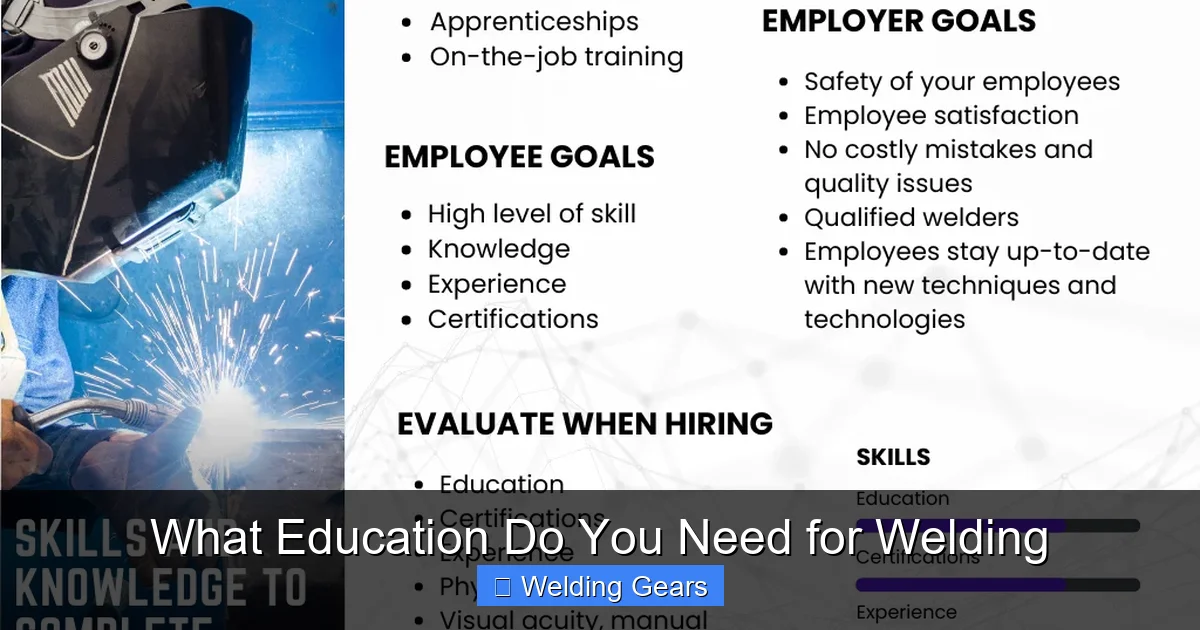
Once you have finished high school, you have to decide where to get your technical training. This is the biggest part of answering what education do you need for welding. You have three main paths to consider: trade schools, community colleges, and apprenticeships.
Trade and Technical Schools
Technical schools are the “fast track” option. These programs are laser-focused on welding. You won’t waste time on general education subjects. Instead, you will spend most of your day in the shop. These programs can last anywhere from six months to a year. They are great if you want to enter the workforce as quickly as possible. The downside is that they can be expensive, so check for financial aid or scholarships.
Community Colleges and Associate Degrees
If you want a more rounded education, look at local community colleges. They offer associate degrees in Welding Technology. These programs usually take about two years. The advantage here is that you get a broader education. You might take classes on business, communication, and blueprint reading. Many employers appreciate this extra depth, as it prepares you for management roles later on.
Apprenticeships: The “Earn While You Learn” Model
If you are someone who learns by doing, an apprenticeship might be your best bet. An apprenticeship allows you to work alongside experienced welders while getting paid. You are essentially being trained on the job. This is one of the most respected forms of education in the industry.
How to Find an Apprenticeship
Look into local labor unions or large industrial companies. Many of these organizations have structured apprenticeship programs that last three to four years. By the time you graduate, you are not just a welder; you are a journeyman. The best part? You graduate with zero student loan debt and years of real-world experience. This is a common path for those entering pipefitting or structural steel work.
The Power of Industry Certifications
In the world of welding, a degree is just a piece of paper unless you have the right certifications. This is a critical part of what education do you need for welding. Employers want to know that you can actually hold a steady hand. Certifications prove that you meet specific quality standards, such as those set by the American Welding Society (AWS).
Which Certifications Should You Aim For?
Start with a basic structural welding certification. As you progress, you can earn specialized credentials. Do you want to weld underwater? There is a certification for that. How about aerospace or nuclear work? Those require highly specific certifications. In 2026, many employers will even pay for you to get these certifications once you are hired, as it benefits them to have a highly qualified team.
Beyond the Arc: Essential Soft Skills
Education isn’t just about technical skills. To succeed in the field, you need soft skills. Welding is often a team sport. You will work with engineers, project managers, and other tradespeople. Being able to communicate clearly makes you a much more valuable employee.
Tips for Success on the Job
- Stay Curious: New technology like robotic welding arms is changing the industry. Stay updated on trends.
- Be Reliable: Showing up on time and being ready to work goes a long way in this industry.
- Focus on Safety: A good welder is a safe welder. Never cut corners when it comes to your protective gear.
- Ask Questions: Don’t be afraid to ask a mentor why they are using a certain technique. Curiosity leads to mastery.
The Future of Welding in 2026 and Beyond
The welding industry is evolving. With the rise of automation, welders are becoming “technicians” who manage smart machines. If you want to future-proof your career, you need to continue your education long after your formal school years. Keep an eye on new materials and greener welding methods that reduce emissions.
Continuous Education and Growth
You might start out as an entry-level manual welder, but you could end up as a welding inspector, a robotic programmer, or even a business owner. The path is what you make of it. Remember, welding is a lifelong craft. There is always a new technique to learn or a new metal alloy to master. Your education in welding is never truly “finished.”
Conclusion
So, what education do you need for welding? It is a mix of fundamental training, hands-on experience, and industry-backed certifications. Whether you choose a quick technical program or a long-term apprenticeship, the most important thing is to get started. You are entering a field that is the backbone of modern society, from the cars we drive to the buildings we live in. Take that first step, stay committed to learning, and you will build a rock-solid career that lasts a lifetime.
Frequently Asked Questions
Do I need a college degree to be a welder?
No, you do not need a traditional four-year college degree. A certificate from a trade school or an apprenticeship is often sufficient to start your career.
How long does welding school usually take?
Most intensive trade school programs last between six months and one year, while community college programs typically take about two years.
Is it possible to become a welder without formal schooling?
Yes, though it is much harder. Some companies offer on-the-job training, but most employers prefer candidates who have at least some formal safety and technique training.
What is the most important certification to get?
The American Welding Society (AWS) certification is the gold standard in the industry and is recognized by employers across the country.
How much does welding education cost?
Costs vary widely, ranging from a few thousand dollars for a certificate program to higher costs for associate degrees. Many students use financial aid or find employers who offer tuition reimbursement.
Will robots replace welders in the future?
While automation is growing, skilled welders are needed to program, maintain, and troubleshoot these robots. The human touch remains essential for complex and creative work.