As of 2026, the average salary for a welder continues to rise due to a high demand for skilled trade professionals across global infrastructure projects. While base pay varies by location and expertise, dedicated welders can earn significantly more by specializing in underwater, aerospace, or pipeline welding sectors.
If you are thinking about picking up a torch, you are probably wondering: what is the salary for a welder? It is a great question. In 2026, welding is no longer just a “blue-collar job”—it is a high-tech, high-demand career path that offers some of the best financial stability in the skilled trades. Many people overlook welding, yet it serves as the literal glue holding our modern world together.
Whether it is building bridges, fixing pipelines, or crafting custom art, welders are the backbone of construction and manufacturing. The good news is that because we face a global shortage of skilled tradespeople, companies are paying top dollar to attract and keep talent. Let’s dive deep into what you can expect to earn and how to make the most of your welding career.
Key Takeaways
- Experience Matters: Entry-level welders typically start at a baseline, but annual income grows rapidly as you earn advanced certifications and gain hands-on field experience.
- Specialization Pays: Niche welding roles, such as pipe welding or underwater welding, often command double the standard hourly rate compared to general manufacturing roles.
- Location Impacts Income: Welding pay scales shift significantly based on the cost of living and the volume of industrial activity in specific states or regions.
- Travel Opportunities: Taking on contract or “traveler” welding jobs often includes per diem payments, overtime bonuses, and higher base rates, which can drastically increase your yearly salary for a welder.
- Certification Boosts: Obtaining certifications from organizations like the AWS can be a major catalyst for salary negotiations and career advancement.
- Industry Demand: The transition toward sustainable energy and infrastructure upgrades in 2026 has created a shortage of skilled labor, driving wages upward.
Understanding the Basics of Welder Compensation
When you ask, “what is the salary for a welder,” you have to look at how pay is calculated. Most welders are paid by the hour. This is great for your wallet because it means when you put in extra time, you actually get paid for it. Unlike a salaried office job where you might work sixty hours for the same pay, a welder’s check reflects every single minute of work.
Hourly Wages vs. Annual Salary
In 2026, the median hourly rate for a welder usually sits between $25 and $40 per hour, depending on where you work. If you work a standard forty-hour week, that adds up to a comfortable yearly income. However, most welders do not work a standard forty-hour week. Between overtime, weekend shifts, and emergency repair calls, it is very common to see that annual number climb significantly higher than the base rate suggests.
The Impact of Overtime
Overtime is the secret weapon of the welding world. Most projects operate on tight deadlines. When a project is behind, the boss needs you on-site. This is where “time and a half” or even “double time” comes into play. If your base pay is $30 an hour, overtime at time-and-a-half is $45 an hour. A few months of heavy overtime can add thousands of dollars to your total salary for a welder by the end of the year.
Factors That Influence Your Pay
Not every welder makes the same amount of money. If you are starting out, you might wonder why your buddy is making more than you. There are a few core factors that dictate your paycheck in 2026.
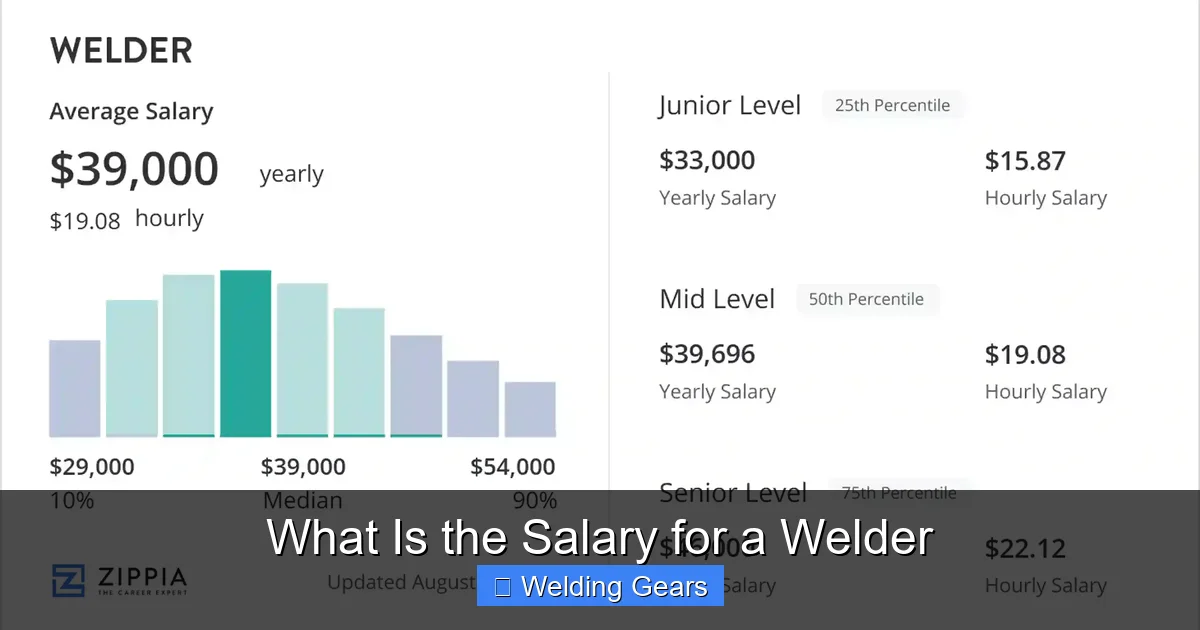
Visual guide about What Is the Salary for a Welder
Image source: static.zippia.com
Geography and Regional Demand
Where you live changes everything. If you are working in a city with a massive shipyard, a booming aerospace industry, or huge oil refineries, the demand for your skills is higher. Higher demand equals higher pay. States like Alaska, North Dakota, and Texas often have very high pay scales for welders because of the heavy industry presence and the often harsh conditions of the work environment.
Certification Levels
Think of certifications as your professional report card. If you are certified by the American Welding Society (AWS) or similar bodies, you are signaling to employers that you can handle complex, high-stakes jobs. A simple welding certificate is a start, but having specialized certifications in exotic metals or high-pressure pipe welding puts you in a different league entirely.
The Power of Specialization
If you want to know how to maximize the salary for a welder, the answer is simple: specialize. General manufacturing welding is stable, but niche fields offer the “big money.”
Underwater Welding
This is arguably the most famous high-paying welding job. It is dangerous, difficult, and requires immense mental fortitude. Because of these factors, underwater welders are compensated very well. You aren’t just paying for the welding skill; you are paying for the diving expertise and the risk factor involved in working beneath the surface.
Pipeline and Travel Welding
Pipeline welders are the nomads of the industry. They travel from site to site, working on large-scale infrastructure projects. These jobs often come with a “per diem” (a daily allowance for food and housing) on top of a high hourly wage. If you are single or have a flexible lifestyle, being a traveler can make your total compensation package much higher than a stationary shop welder.
Aerospace and Defense
Working on rockets, aircraft, or military equipment requires extreme precision. You are often working with aluminum, titanium, or specialized alloys that cannot have a single microscopic flaw. This work is clean and highly technical. Because the stakes are so high, aerospace companies pay premium rates to ensure they have the absolute best welders on their team.
Education and Career Growth
You don’t need a four-year degree to succeed, but you do need training. Trade schools, community colleges, and apprenticeships are the traditional paths to becoming a welder. In 2026, apprenticeships are increasingly popular because you get paid to learn. You start as a helper, learn the ropes, and eventually move up to become a journeyman welder.
The “Welding Helper” Stage
Every pro started as a helper. Your salary will be lower at this stage, but it is an investment. Use this time to watch the experienced guys, learn their techniques, and ask questions. In the welding world, skill acquisition is the fastest way to get a raise. Once you can prove you can weld a perfect bead on the first try, your boss will have no problem bumping up your rate.
Advancing to Management
After a few years in the field, you might decide you want to move into a role like Welding Inspector, Shop Foreman, or Project Manager. These roles typically move away from an hourly rate and into a salary structure. While you might lose the ability to clock in for overtime, these positions offer a more consistent work-life balance and often include benefits like performance bonuses and company vehicles.
Practical Tips for Earning More
If you have already started your career, here are a few ways to boost your salary for a welder starting today.
- Be Reliable: It sounds simple, but showing up on time, every single day, makes you the most valuable person on the job site. Reliability is rare and highly rewarded.
- Learn Different Processes: Don’t just stick to MIG welding. Learn TIG, Stick, and Flux-cored. Being a “multi-process” welder makes you an essential asset to any company.
- Take Care of Your Gear: A welder who maintains their equipment is a welder who keeps the project moving. Employers notice when you treat the gear with respect.
- Get Your Certs Updated: Don’t let your certifications expire. Keeping your paperwork current proves you are committed to professional excellence.
Conclusion
So, what is the salary for a welder in 2026? It is whatever you decide to make of it. While the averages provide a good baseline, the true ceiling for a welder is incredibly high. By combining technical skill, the right certifications, and a willingness to work in specialized industries, you can build a career that is both financially rewarding and personally satisfying.
The industry is changing, with more automation and high-tech tools, but one thing remains constant: the world will always need people who can join metal together with precision. Whether you are looking for a job in your hometown or wanting to travel the country, welding provides a path to success that is hard to find in other industries. Stay curious, keep practicing, and never stop looking for ways to improve your craft.
Frequently Asked Questions
Is it hard to start a career in welding?
Starting out requires dedication and physical stamina, but it is very accessible through trade schools or apprenticeship programs. Once you learn the basic safety protocols and welding techniques, your progression depends entirely on your commitment to practice.
Does a welder’s salary include benefits?
Many welding jobs, especially in manufacturing or large-scale construction, include full benefits like health insurance, retirement plans, and paid time off. However, some contract or “traveler” positions might offer higher hourly pay in lieu of traditional benefits.
Is welding a safe career choice in 2026?
Yes, welding is a very stable career because the infrastructure, energy, and aerospace industries rely on welders to function. With the global push for new energy and transportation systems, the demand for skilled welders is expected to grow steadily.
Can I earn six figures as a welder?
Absolutely, many specialized welders who work in underwater welding, hazardous environments, or high-end pipeline construction earn well over $100,000 annually. Achieving this usually requires years of experience and specialized, high-level certifications.
Do I need a degree to be a high-paid welder?
You do not need a college degree, but you do need vocational training and industry-recognized certifications. Employers prioritize your ability to pass a “weld test” and your certification credentials over traditional academic degrees.
How does the cost of living affect my salary?
The salary for a welder is often adjusted based on the local cost of living and the availability of talent in the area. In states where living is expensive, employers typically increase hourly rates to attract and retain skilled laborers.