
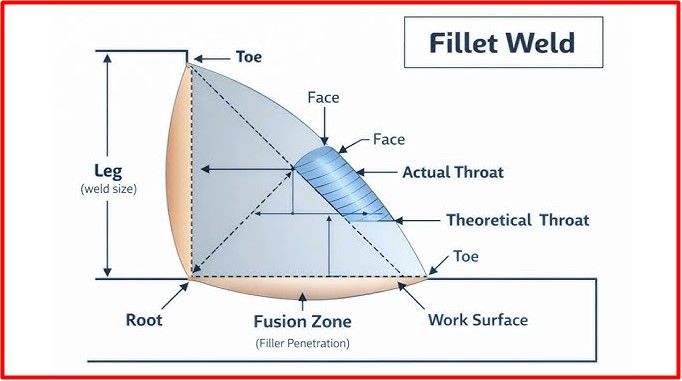
The root of a weld is the deepest point of the joint where the base metals first meet. Achieving a high-quality root is critical for structural integrity, as it determines the total penetration and strength of the connection.
If you have ever spent time in a fabrication shop or watched a welder work on a high-stakes project, you have probably heard them talk about the “root.” You might have wondered, what is the root of a weld? Simply put, the root is the very bottom of the joint.
It is the starting point where the magic happens and where the two pieces of base metal officially become one solid piece. Understanding the root of a weld is more than just learning technical jargon. It is about understanding the foundation of your work. If the root is weak, the entire joint is compromised.
In the world of welding, we often say that a weld is only as strong as its weakest link, and in many cases, that link is the root. Whether you are working on a simple backyard project or complex aerospace components in 2026, getting the root right is the ultimate test of a welder’s skill.
Key Takeaways
- Definition of the Root: It is the bottom-most point of a weld joint where the two pieces of metal are fused together.
- Structural Importance: Proper root penetration prevents stress concentrations and potential cracks in high-load applications.
- Joint Preparation: Proper beveling and gap spacing are essential to ensure the electrode or filler material reaches the root.
- Root Pass Challenges: Mastering the first pass requires precise control of heat input to avoid burn-through or lack of fusion.
- Inspection Techniques: Visual inspection, ultrasonic testing, and X-rays are commonly used in 2026 to verify root integrity.
The Anatomy of a Weld Joint
To really grasp what is the root of a weld, we need to look at the anatomy of the joint itself. Think of your weld as a three-layer cake. You have the root at the bottom, the fill passes in the middle, and the cap pass on top. Each layer has a specific job to do, but the root is the anchor.
What Defines the Root Face and Gap?
The root face is the portion of the base metal that hasn’t been beveled. It is the flat part of the edge. The root gap, on the other hand, is the physical space between the two pieces you are joining. If your gap is too wide, you risk blowing a hole right through the metal, which we call “burn-through.” If the gap is too tight, the filler metal cannot reach the bottom, resulting in “lack of penetration.”
The Role of the Root Pass
The root pass is the first bead laid down in the joint. This is where you create the initial bridge between the two plates. In high-pressure piping or structural steel welding, the root pass must be perfect. It needs to show uniform penetration and a smooth transition into the sidewalls of the joint. If there is a void or a crack in the root, it can grow over time, leading to catastrophic failure under stress.
Why the Root of a Weld Determines Strength?
When engineers design a structure, they calculate the load based on the assumption that the weld will be a full-penetration joint. This means the root is fully fused. If you miss the root, you are effectively leaving a crack at the bottom of your weld before the part is even finished.
Avoiding Stress Concentrations
Imagine bending a piece of plastic. If it has a tiny notch in it, that is exactly where the plastic will snap. A weld with an incomplete root acts exactly like that notch. It creates a stress concentration point where the metal cannot distribute the forces applied to it. By ensuring a proper root, you eliminate that notch and create a path for force to travel smoothly through the metal.
The Importance of Penetration
Penetration is the depth to which the filler metal melts into the base metal. A “full penetration” weld means the metal is fused all the way through to the other side. You can often see this on the backside of a pipe or plate as a small bead, known as “reinforcement.” If you cannot see this on the backside, the root of your weld likely isn’t as strong as it needs to be.
Techniques to Master the Root Pass
Mastering the root of a weld takes practice, steady hands, and an understanding of heat. You aren’t just melting wire; you are managing a molten pool of liquid metal that wants to fall through the hole you are trying to fill. Here are a few tips to get it right.
Managing Heat Input
Heat is the welder’s best friend and worst enemy. If you move too slowly, the metal gets too hot and gravity pulls the puddle right out of the joint. This is a common struggle for beginners.
If you move too quickly, the metal doesn’t have time to melt, and you get a “cold” weld. In 2026, many modern power sources offer “pulsed” welding modes that help manage heat, allowing for better control at the root without the risk of overheating.
Choosing the Right Electrode and Angle
Your electrode angle dictates where the arc force pushes the molten metal. For a root pass, you generally want to maintain a consistent angle that pushes the puddle forward while ensuring the arc is striking both edges of the joint.
If you focus the arc too much on one side, you will get “undercut,” which is a groove melted into the base metal that never gets filled back up. Undercut at the root is a major defect that inspectors look for immediately.
Modern Technology and the Root of a Weld
As we move through 2026, technology is making the root pass much easier than it used to be. Robotic welding and advanced software have changed the game for structural fabrication.
Automated Welding Systems
Robotic arms can maintain the perfect distance, angle, and travel speed for a root pass every single time. By using high-speed sensors, these robots can adjust their parameters in milliseconds if they detect a slight variation in the root gap. This consistency is why modern skyscrapers and bridge components are safer than ever before.
Backing Bars and Ceramic Tapes
Sometimes, getting a perfect root is physically impossible due to the thickness of the metal or the shape of the joint. In these cases, welders use “backing bars” or “ceramic backing tape.” These materials sit behind the root and provide a surface for the molten metal to rest against. It essentially acts as a mold, ensuring that the root is perfectly shaped and fully supported while it cools down.
Common Root Defects to Avoid
Even the best welders have days where the root just doesn’t look right. Knowing what to look for is the first step toward fixing it. If you are inspecting your work, watch out for these common issues.
Lack of Penetration
This happens when the arc doesn’t reach the bottom of the joint. It is common when the root face is too thick or the current is too low. If you are welding something that will carry a load, this is a deal-breaker. Always check your setup before you start.
Porosity in the Root
Porosity looks like tiny pinholes in the weld. It is usually caused by contamination, such as rust, oil, or paint, or even a shielding gas issue. If your root pass has porosity, it is usually best to grind it out completely and start over. You cannot “weld over” porosity, as it will just migrate to the surface of the next pass.
Conclusion
So, what is the root of a weld? It is the heart of your joint. It is the foundational bond that ensures your fabrication will stand the test of time, weather, and pressure. While it might be hidden away under layers of weld metal, its quality is what separates a professional, safe structure from one that is destined to fail.
By focusing on proper joint preparation, managing your heat, and utilizing modern tools, you can master the art of the root pass. Remember that every great welder started where you are, asking questions and seeking to understand the fundamentals. Keep your arc steady, keep your gaps clean, and always take pride in the root of your work. Your welds are only as strong as the foundation you build for them.
Frequently Asked Questions
What happens if the root of a weld is not fully fused?
If the root is not fully fused, it creates a “lack of penetration” defect. This acts as a stress riser, meaning the joint is significantly weaker and more likely to crack under tension or vibration.
Can I fix a root defect by welding over it?
No, you should never weld over a root defect. You must grind out the area to clean metal and re-weld it to ensure the structural integrity of the joint is maintained.
What is the best way to inspect a weld root?
For critical joints, professionals use non-destructive testing (NDT) methods like ultrasonic testing or X-rays. For general work, a visual inspection of the backside reinforcement is the standard check.
How does the root gap affect the welding process?
The root gap allows the arc to penetrate deep into the joint. If the gap is too small, you cannot get enough heat to the bottom; if it is too large, the heat will blow through the base metal.
Do all welds require a root pass?
Not necessarily. Thin materials or lap joints do not require a root pass in the same way a beveled butt joint does. A root pass is most critical when joining thick plates or high-pressure piping.
Is it harder to weld a root pass in vertical or overhead positions?
Yes, gravity makes the root pass much more difficult in out-of-position welds. You must use precise technique and heat management to prevent the molten pool from sagging or dripping out of the joint.