
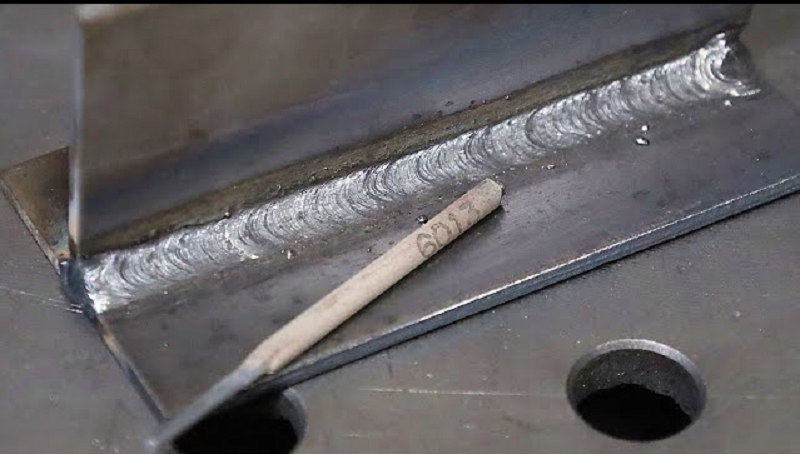
If you find your welding rods keep sticking, it is usually due to incorrect amperage settings, poor arc length control, or damp electrodes. By adjusting your machine settings and refining your striking technique, you can achieve a smooth, consistent weld every time.
Every welder, from the absolute beginner in a backyard garage to the seasoned professional in a heavy-duty shop, has experienced the frustration of a stuck rod. You are ready to lay a bead, you strike the metal, and instead of a beautiful crackle of electricity, the rod fuses to the steel like it is glued there. If you are asking yourself, “Why do my welding rods keep sticking,” you are certainly not alone. It is a rite of passage, but it is also a sign that something in your process needs a quick tweak.
In 2026, we have access to some incredible welding technology, from advanced inverter welders to smart-sensing electrodes. However, the basic physics of Shielded Metal Arc Welding (SMAW) remains the same. When the electrode touches the base metal without a stable arc established, the circuit completes, heats up instantly, and welds itself to the plate. Let’s dive into the reasons why this happens and how you can fix it for good.
Key Takeaways
- Amperage Settings: Running your machine at an amperage that is too low is the most common reason for sticking rods.
- Arc Length Control: Maintaining a consistent distance between the rod and the metal prevents the arc from snuffing out.
- Electrode Quality: Moisture in your welding rods can ruin your arc, so always store them in a rod oven.
- Work Angle: Adjusting the angle of your electrode helps prevent the flux from burying itself in the puddle.
- Material Cleanliness: Rust, paint, and scale create electrical resistance, causing the rod to grab the metal.
- Striking Technique: Use a “scratch and flick” motion to initiate the arc without letting the electrode fuse to the workpiece.
1. The Science of Current: Amperage Matters
The most common culprit when your welding rods keep sticking is simply having your machine set too low. Every electrode has a recommended amperage range. If you are operating at the very bottom of that range or below it, you aren’t creating enough heat to maintain the arc once the metal starts melting.
Finding Your Sweet Spot
Look at the box your rods came in. Manufacturers provide a range for a reason. If you are using a 1/8 inch 7018 rod, you might see a range of 90 to 140 amps. If you set your machine to 80, the rod will struggle to stay lit. Every time you touch the base metal, it will stick. Try bumping up your amperage by 5 or 10 increments. You will be surprised at how much easier it becomes to start and maintain the arc.
Voltage Drop and Extension Cords
Sometimes the issue isn’t the welder, but the power supply. If you are running an extension cord that is too long or too thin, you experience a voltage drop. This starves your machine of the power it needs. Always use heavy-gauge welding extension cords to ensure your machine gets the full current it requires to keep the arc alive.
2. Mastering Arc Length
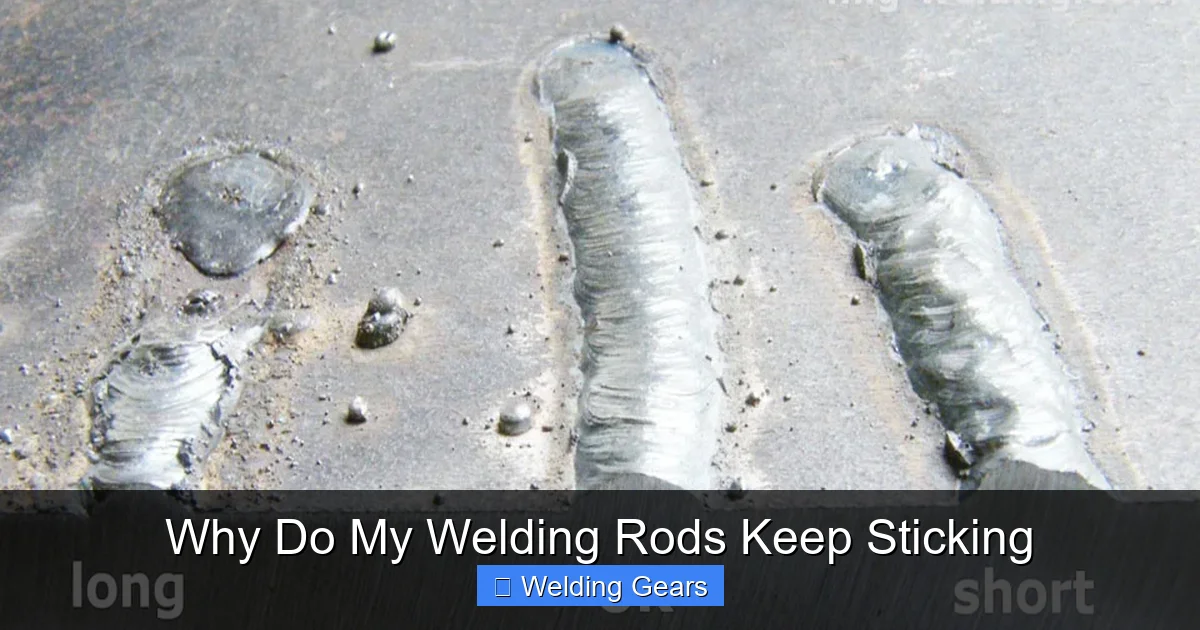
Arc length is the distance between the tip of the rod and the metal you are welding. If you get too close, the rod touches the puddle and sticks. If you pull away too far, the arc gets unstable and goes out. Keeping a steady hand is the biggest challenge for new welders, but it is the secret to stopping the sticking.
The “Hold and Move” Technique
When you first strike the arc, you need to lift the rod just a tiny bit. Think of it like a match strike. Once the arc lights, you must maintain a gap roughly equal to the diameter of the metal core of the rod. If the rod starts to burn off, you need to feed it into the puddle at the same speed it is consuming. If you don’t feed it, the arc length increases until it breaks. If you feed too fast, you crash into the puddle and stick.
Why Beginners Struggle
Beginners often pull away too far out of fear of sticking. When the arc starts to stutter, they pull back, the arc dies, and they lose their spot. Practice moving your hand at a consistent speed. It is all about muscle memory, and eventually, your hand will naturally compensate for the rod consumption.
3. The Problem with Moisture
If you have ever left your welding rods out in a damp garage or a humid shed, you have likely encountered sticking issues. Welding electrodes, especially Low Hydrogen rods like the 7018, act like sponges. They soak up moisture from the air. When you try to weld with a damp rod, the arc becomes erratic, and the rod is much more likely to freeze to the workpiece.
Storing Your Rods Properly
In 2026, affordable rod storage containers are a must-have for any home shop. You don’t necessarily need a massive industrial rod oven. A simple airtight container with a pack of silica gel can help, but for best results, use a small, heated rod oven. Keeping your electrodes dry makes a world of difference in how they burn and how often they stick.
Recognizing Damp Rods
How do you know if your rods are damp? Often, you will hear excessive popping or cracking, and the flux coating may start to flake off in large chunks. If your rods are acting finicky and sticking more than usual, swap them out for a fresh, dry set and see if the problem persists.
4. Material Cleanliness
We often forget that welding is an electrical process. For the arc to flow, it needs a clean path. If you are trying to weld over rust, thick paint, heavy grease, or mill scale, you are creating a barrier that acts like an insulator. The electricity cannot jump from the rod to the base metal effectively, causing the arc to snuff out and the rod to stick.
The Importance of Prep Work
Take 30 seconds to run a grinder or a wire wheel over your metal. Cleaning the surface down to bare, shiny steel ensures that the arc starts immediately upon contact. You will notice that as soon as you clean your metal, your rods stop sticking and the arc becomes much more stable.
Ground Clamp Placement
Check your ground clamp. If your clamp is attached to a rusty spot or a piece of metal that is disconnected from your workpiece, you will have a poor circuit. Always ensure your clamp is biting into clean, conductive metal as close to your weld area as possible.
5. Striking Technique and Angle
If you are pushing the rod straight down into the metal like a nail, you are guaranteed to stick. The physics of the arc requires a bit of movement. Think of the “match strike” motion. You aren’t just placing the rod; you are dragging it across the surface to initiate the spark and then immediately moving to your starting position.
The Scratch and Flick
Try the scratch method. Drag the tip of the electrode along the surface like you are striking a match. As soon as you see the arc spark, you “flick” your wrist to pull the rod into the correct welding gap. This quick motion prevents the rod from lingering on the surface long enough to fuse.
Adjusting Your Angle
The angle at which you hold the rod matters too. For most flat-position welds, you want a lead angle of about 10 to 15 degrees. If you are dragging the electrode at too flat an angle, the flux coating can get “buried” in the molten puddle, which can cause the electrode to grab the base metal. Keep the angle upright to maintain a clear view of your puddle and prevent mechanical sticking.
Conclusion
When you find that your welding rods keep sticking, don’t get frustrated. It is rarely the fault of your equipment and almost always a combination of simple variables. By checking your amperage settings, ensuring your rods are dry, cleaning your base metal, and refining your striking technique, you can overcome these hurdles. Welding is a craft that rewards patience and attention to detail. Every time you troubleshoot why a rod stuck, you are learning more about how the arc behaves, which makes you a better welder in the long run. Keep practicing, stay safe, and enjoy the process of mastering the art of the arc.
Frequently Asked Questions
Why do my welding rods keep sticking even when the amperage is high?
If your amperage is already high, the issue is likely your arc length or material cleanliness. If you hold the rod too close to the workpiece, it will weld itself to the metal; if the metal is dirty, the arc cannot sustain itself even at high heat.
Does the type of electrode affect how often it sticks?
Yes, different electrodes require different techniques. For example, 6010 rods are known for being “fast-freeze” and are generally easier to prevent from sticking compared to 7018 rods, which require a steadier hand and proper moisture control.
Should I use a higher or lower amperage for thin metal?
For thin metal, you should use a lower amperage to prevent burn-through, but this makes sticking more likely. To avoid this, use a smaller diameter electrode, which allows you to maintain a stable arc at lower current levels.
What should I do if my rod sticks during a weld?
If the rod sticks, do not pull straight up. Instead, quickly twist the electrode holder side-to-side to break the rod loose from the puddle. If it remains stuck, release the electrode from the holder immediately to prevent overheating your lead cables.
Can cold weather cause my welding rods to stick?
Yes, cold metal can cause the arc to struggle, as it pulls heat away from the rod tip very quickly. Preheating your base metal with a torch before you begin welding can significantly improve arc stability and prevent sticking.
Is my welding machine broken if the rods keep sticking?
It is rarely the machine. Before assuming your welder is faulty, check your ground connection, your power cable integrity, and try a fresh pack of electrodes. Most sticking issues are caused by operator technique or environmental factors.