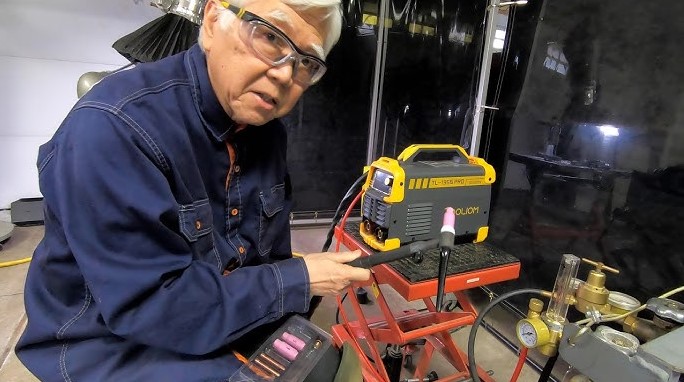
A lift TIG welder uses a specific arc-starting method where you touch the tungsten electrode to the metal and lift it to initiate the arc. Unlike high-frequency start methods, this process prevents electrical interference, making it an excellent, reliable choice for modern sensitive electronics and home workshops in 2026.
If you have been hanging around welding forums or browsing the latest shop gear in 2026, you have probably heard the term lift TIG tossed around quite a bit. It sounds technical, but it is actually one of the most practical and accessible ways to get into precision welding.
If you are asking yourself, what is lift TIG welder technology, you are in the right place. It is a game-changer for hobbyists and professionals who want clean, professional welds without needing a massive, expensive machine.
At its core, a lift TIG welder is simply a machine that uses a touch-and-lift method to start an electrical arc. Imagine gently tapping the metal with your welding torch and lifting it just a hair to create a stable, glowing bridge of electricity.
It feels intuitive, it is easy to learn, and it produces some of the most beautiful welds you will ever see. Whether you are fixing a stainless steel kitchen counter or crafting custom parts for a classic car, this method is your new best friend.
Key Takeaways
- Control is Key: Lift TIG allows you to precisely place your electrode before the arc starts, minimizing accidental damage to the workpiece.
- Reduced Interference: Because it does not use high-frequency current for starting, it is safe for welding near computers or delicate sensors.
- Affordability: Most modern multi-process machines include a lift TIG welder feature, making it a budget-friendly option for beginners.
- Electrode Longevity: While it requires a gentle touch, proper technique prevents the tungsten from sticking and keeps your tips clean.
- Versatility: You can use this method for everything from stainless steel fabrication to artistic metal sculptures in your garage.
Understanding the Mechanics of Lift TIG
To really understand what is lift TIG welder functionality, we need to look at how it starts the arc. Traditional TIG welders often use high-frequency (HF) starts. Think of HF as a spark plug; it jumps an electrical current across a gap through the air. While this is fancy and convenient, it produces a high-voltage surge that can fry sensitive electronics if you are welding on a car’s frame or near a computer.
Lift TIG does things differently. When you set your machine to lift mode, it sends a very low voltage to the electrode. When you touch that electrode to your base metal, nothing happens – it does not stick or spark wildly.
But the moment you lift that electrode away from the metal, the machine senses the change and instantly ramps up the power to create a perfect, stable arc. It is smooth, quiet, and precise.
The Step-by-Step Lift Process
Executing a lift start is a rhythm you will learn in about ten minutes of practice. First, you set your tungsten tip exactly where you want your weld to begin. Second, you tap the metal. Third, you lift it away with a quick, fluid motion.
Because there is no harsh spark, you do not have to worry about the “arc jump” that sometimes happens with cheaper HF starters. You are in total control of the weld pool from the very first millisecond.
Why It Stays Popular in 2026
As we move through 2026, many makers are opting for “all-in-one” machines. A good multi-process unit that includes a lift TIG welder feature allows you to switch from MIG to TIG in minutes. It is space-efficient for those of us with limited garage space. Plus, because you don’t need the complex circuitry required for high-frequency arcs, the machines themselves are often more reliable and less prone to breaking down over time.
The Benefits of Using a Lift TIG Welder
One of the biggest reasons people choose this method is safety both for the operator and the equipment. When you use an HF start machine, you are dealing with a localized electrical burst that can damage automotive ECUs or delicate sensors.
By learning what is lift TIG welder capability, you gain a tool that is perfectly safe for modern vehicles and home appliances. You get to weld with peace of mind, knowing your surroundings are protected.
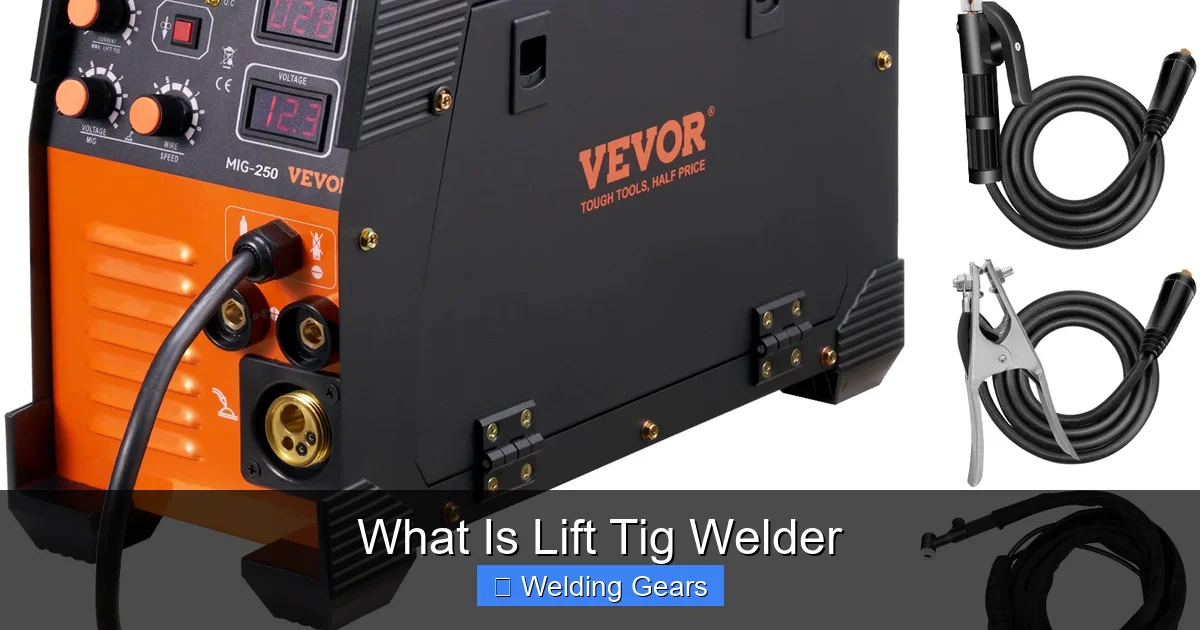
Visual guide about What Is Lift Tig Welder
Image source: d2qc09rl1gfuof.cloudfront.net
Another benefit is the simplicity of the equipment. If you are a beginner, you do not want to spend two hours fiddling with complex high-frequency settings or balance controls. Lift TIG is “plug and play.” You connect your torch, connect your ground clamp, set your amps, and you are ready to start melting metal. It removes the intimidation factor that keeps so many people from picking up a torch for the first time.
Cleaner Welds for Better Projects
Cleanliness is next to godliness in welding. Because lift TIG does not rely on a chaotic initial spark, you have much less risk of “tungsten inclusion.” This is when a little piece of your electrode breaks off and gets stuck in the weld. It is a common problem for beginners, but the controlled lift method drastically reduces this. Your welds come out cleaner, smoother, and stronger, requiring less grinding and polishing afterward.
Cost-Effective Entry Point
Let’s be honest: welding gear is an investment. High-frequency TIG machines carry a premium price tag because of the sophisticated electronics required to generate that start. A lift TIG welder, by contrast, is much more affordable. You can get a high-quality machine that delivers professional-grade results without clearing out your savings account. It is the smartest way to start if you are just building your shop inventory.
Techniques for Mastering the Arc
Once you understand what is lift TIG welder physics, it is time to practice. The secret to a perfect start is the “flick.” You do not want to drag the electrode like a matchstick; that will just contaminate your tungsten and create a messy start. Instead, try to keep the motion vertical. Just tap and lift. If you find your electrode sticking to the metal, you are likely applying too much pressure or holding it there too long.
Keep your tungsten tip sharp. A sharp point helps the arc initiate exactly where you want it. In 2026, many welders are using specialized sharpeners, but a simple handheld grinder works just fine for hobbyists. Remember to grind in the direction of the tip, not sideways. This helps the electrical current flow smoothly off the tungsten and into your work, resulting in a more focused, stable arc.
Managing Your Heat Input
One challenge with lift TIG is managing your heat when you start. Because you are touching the metal, you have to be ready to get your filler rod into the pool as soon as the arc forms. Practice on scrap metal first. Run a few “dry” passes where you just start the arc and move along without filler. Get a feel for how the machine responds to your movement. Once you feel comfortable with the arc length, introduce your filler rod.
The Importance of Grounding
Even the best lift TIG welder will struggle if your ground is bad. Ensure you have a solid, clean connection to your base metal. If you are welding on rusted or painted metal, grind a clean spot for your clamp. A poor ground connection makes the arc sputter and dance, which makes it much harder to learn the lift start technique. Clean metal is your best friend when practicing.
Choosing the Right Machine for You
With so many options on the market in 2026, how do you pick a machine? First, check if the unit mentions “Lift TIG” specifically in the features. Many manufacturers now include this as a standard feature, but it is worth double-checking.
You also want to look for a machine that offers an adjustable “down-slope.” This allows the amperage to fade out slowly at the end of your weld, preventing the dreaded “crater” or crack at the end of the bead.
Portability is another factor. Are you working in a shop, or do you need to take your welder to the track or a friend’s house?
Many modern lift TIG units are small enough to fit in a backpack. They run on standard 120V household power, meaning you don’t need a fancy garage electrical upgrade to start welding. This level of freedom is exactly why the hobby has exploded in popularity this year.
Accessories to Consider
When you buy your first unit, don’t forget the extras. A comfortable torch is essential. Many entry-level machines come with a basic torch, but upgrading to a flexible-head torch can make a huge difference, especially when you are working in tight corners.
Also, invest in a good auto-darkening helmet. Even if the lift TIG process is safer, your eyes still need the best protection you can get. A high-quality helmet will help you see the weld puddle clearly, which is crucial for learning.
Training and Learning Resources
You don’t need to go to trade school to master this. In 2026, there is an incredible wealth of online video tutorials that show the lift start in slow motion. Watch how the professionals hold the torch, how they angle the electrode, and how they transition from the lift to the steady welding motion.
Mimicking their posture can save you hours of trial and error. Just remember that every machine is slightly different, so spend a few hours getting to know the personality of your specific unit.
Common Troubleshooting Tips
Even with the best gear, things can go wrong. If you are struggling, don’t get frustrated. One common issue is tungsten contamination. If you touch the metal and the tip turns black, you have contaminated it.
You must stop, take the electrode out, and re-sharpen it. If you keep welding with a contaminated tip, your arc will be erratic and your weld will be weak. Keep a few pre-sharpened electrodes on your workbench so you can swap them out quickly.
Another issue is “arc wander.” This happens when your arc doesn’t want to stay in one spot. This is usually due to an electrode that is too blunt or a gap that is too wide. Keep your tungsten sharp and keep your arc length short about the thickness of the electrode itself. If you can hear a steady, crisp sizzling sound, you know you are in the “sweet spot.”
Safety First, Always
We’ve talked about how safe lift TIG is, but remember that welding is still welding. Always wear your leathers, gloves, and helmet. Even though the start is safer for electronics, you are still dealing with intense heat and ultraviolet light. Take your time, set up your workspace to be comfortable, and never work in a damp area. A little bit of caution goes a long way in ensuring your welding journey is enjoyable and safe.
The Future of TIG Welding
As we look forward, the technology behind these machines is only getting better. We are seeing more digital interfaces that let you save settings, making it even easier to switch between materials. But at its heart, the lift TIG process remains a fundamental skill.
It connects you directly to the metal. You feel the current, you see the pool, and you create something permanent. That feeling is why people love welding, and it’s why learning what is lift TIG welder tech is such a valuable skill for any maker.
Conclusion
Understanding what is lift TIG welder technology is the first step toward unlocking a world of precision fabrication. By moving away from complex, expensive high-frequency systems, you have opened the door to a world of accessible, reliable, and high-quality welding. It is a method that rewards patience and practice, and it provides a tactile connection to your work that few other processes can offer.
In 2026, you have more resources and better tools than any generation of welders before you. Don’t be afraid to make mistakes. Every burnt-out tungsten and messy weld is a lesson that brings you one step closer to that perfect bead.
Grab your gear, set up your bench, and start your journey. Whether you are building furniture, restoring cars, or just tinkering on the weekends, mastering the lift TIG technique is a skill that will serve you for a lifetime.
Frequently Asked Questions
Is lift TIG welding hard to learn for a complete beginner?
It is actually one of the most intuitive ways to learn TIG welding. The “touch-and-lift” motion is very natural, and most beginners find they can strike a consistent arc within their first hour of practice.
Can I use a lift TIG welder on aluminum?
Most basic lift TIG welders are designed for DC (Direct Current) output, which is great for steel and stainless steel, but not for aluminum. You would need an AC/DC machine to weld aluminum properly, though some advanced units offer this capability.
Will lift TIG hurt the electronics in my car?
No, that is the primary advantage of this method. Unlike high-frequency start welders, lift TIG does not emit the electrical interference that can damage vehicle computers, making it the preferred choice for automotive repair.
Do I need expensive gas to use a lift TIG welder?
Yes, TIG welding requires 100% Argon shielding gas to protect the weld pool from the atmosphere. While it is an extra cost, it is essential for achieving the high-quality, clean welds that TIG is famous for.
What is the biggest difference between lift TIG and scratch start?
Scratch start is an older, more aggressive method that can easily damage your tungsten tip and mark your metal. Lift TIG uses a special circuit to prevent this, ensuring a clean start without the mess of scratching.
Can I use a lift TIG welder for professional fabrication?
Absolutely, many professional shops use lift TIG for site work or precision fabrication where high-frequency interference might be a concern. It provides the same high-quality weld integrity as more complex machines when used correctly.