
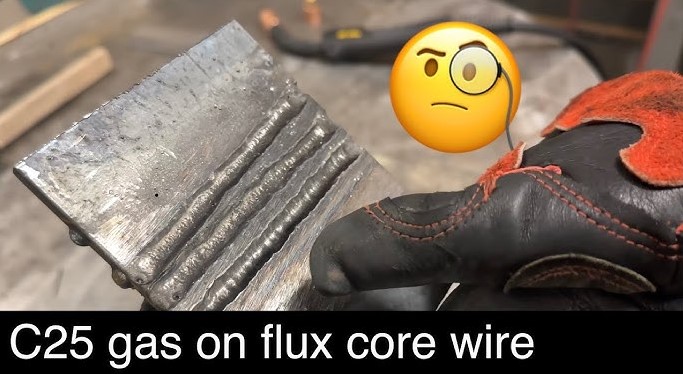
C25 welding gas is a precise mixture of 75% Argon and 25% Carbon Dioxide, widely considered the industry standard for MIG welding mild steel. It offers the perfect balance of arc stability and deep penetration, making it an essential tool for both professional fabricators and home garage welders in 2026.
If you have spent any time in a welding shop or browsing DIY fabrication forums, you have surely heard the term C25. But what is C25 welding gas, and why does everyone seem to recommend it for almost every project?
As we navigate through 2026, the technology behind gas mixtures has refined, yet C25 remains the undisputed king of the workshop floor. Whether you are building a custom car frame or just fixing a fence, understanding your shielding gas is the first step toward professional-grade results.
Welding is as much about chemistry as it is about heat. When you pull that trigger on your MIG gun, you are creating a tiny, intense environment where metal melts and fuses. Without the right protection, the air around that weld would ruin your metal instantly, causing bubbles and weak spots.
That is where C25 comes in. It acts as a shield, keeping the bad stuff out while allowing the weld to form a strong, clean bond. Let’s dive into why this specific mix is the secret weapon you need in your shop.
Key Takeaways
- The Mixture: C25 welding gas consists of 75% Argon and 25% Carbon Dioxide, engineered specifically for steel fabrication.
- Superior Arc Stability: The Argon content allows for a smooth, consistent arc, while the CO2 provides the heat needed for deep penetration.
- Reduced Spatter: Using C25 typically results in less clean-up time compared to pure CO2, saving you money on grinding discs.
- Versatility: It is the go-to gas for short-circuit MIG welding on mild steel ranging from thin sheet metal to thicker structural plates.
- Easy Handling: C25 is user-friendly for beginners, as it produces a more forgiving puddle than straight CO2.
- Proper Storage: Always secure your gas cylinders upright in a well-ventilated area to ensure safety and equipment longevity.
Understanding the Chemistry of C25
The Magic of Argon and CO2
To really understand what is C25 welding gas, you have to look at the ingredients. It is a blend of two distinct gases. The first is Argon, an inert gas. Being inert means it does not react with the molten metal. Its main job is to create a clean, stable environment for the arc. Argon is like a calm, steady hand that keeps the arc from wandering all over your workpiece.
The second ingredient is Carbon Dioxide, or CO2. Unlike Argon, CO2 is an active gas. When it hits the heat of your arc, it breaks down and helps generate high heat. This heat is vital for penetration, which is how deep your weld goes into the metal.
If you had only Argon, you might get a pretty bead, but it might just sit on top of the metal without bonding well. If you had only CO2, you would get great penetration, but your arc would be erratic, and you would deal with a massive amount of spatter. C25 is the perfect marriage of the two.
Why the 75/25 Ratio Matters
You might wonder if you can just mix your own gas. While you could technically experiment, the 75/25 ratio is the result of decades of industrial testing. In 2026, this ratio is the sweet spot for short-circuit MIG welding.
It provides just enough CO2 to push through surface impurities and get a deep weld, while the Argon keeps the spray of metal droplets to a minimum. It is reliable, consistent, and predictable the three things any welder wants.
The Advantages of Using C25 in 2026
Cleaner Welds and Less Cleanup
Time is money, especially in a fabrication shop. One of the biggest complaints new welders have is the amount of spatter left behind after a long welding session. If you have ever spent hours grinding away little metal balls from your workpiece, you know the frustration.
Because C25 is chemically balanced, it reduces the amount of spatter compared to using pure CO2 or cheaper, poorly mixed gasses. This means you spend less time cleaning and more time welding.
Visual guide about What Is C25 Welding Gas
Image source: welderology.com
Improved Bead Appearance
We all want our welds to look good. While a pretty weld does not always guarantee a strong one, the consistency of C25 makes it much easier to lay down a uniform, “stacked-dime” look. Because the arc is stable, your puddle control becomes significantly better.
You will find that you can maintain a more constant travel speed, which results in a smoother, more attractive finished bead. This is a massive confidence booster for beginners learning the trade.
Versatility Across Materials
C25 welding gas is primarily used for mild steel. From thin-gauge body panels to quarter-inch structural steel, it handles the job with grace. You do not need to switch gases constantly. You can adjust your voltage and wire feed speed on your MIG machine, and the C25 will adapt to the change in heat input perfectly. It is the “Swiss Army Knife” of shielding gases for the average welder.
Practical Tips for Gas Management
Setting Your Flow Rate
Having the right gas is only half the battle; you also have to deliver it correctly. A common mistake beginners make is opening the tank valve too wide. They think more gas is always better, but that is simply not true. If your flow rate is too high, you create turbulence at the nozzle, which actually pulls outside air into your weld pool, causing porosity. For most indoor shop settings, 15 to 25 cubic feet per hour (CFH) is the ideal range for C25.
Checking for Leaks
Gas is an ongoing expense, and you do not want it leaking into the air. In 2026, modern regulators are quite efficient, but hoses and fittings can still fail. Every time you set up your machine, listen for a faint hissing sound near the tank and the gun. If you suspect a leak, use a little bit of soapy water on the connections. If you see bubbles, you have found a leak that is wasting your money. Tighten it up or replace the O-ring immediately.
Storage and Safety
Always remember that your gas cylinder is under high pressure. Treat it with respect. Always chain your bottle to a cart or a wall bracket. Never leave a tank standing freely in the middle of the floor where it could get bumped over. A falling tank can break the valve off, turning the cylinder into a dangerous projectile. Always keep your C25 tank in a cool, dry place away from extreme heat sources.
C25 vs. Other Shielding Gases
The Pure CO2 Comparison
If you look at the price, pure CO2 is cheaper. You might think, “Why not save the money?” The reality is that pure CO2 is very aggressive. It creates a very hot, violent arc. You will get great penetration, sure, but you will also get a lot of spatter and a very rough-looking bead. For most projects, the slight extra cost of C25 is well worth it for the reduction in cleanup time alone.
Tri-Mix Gases
You might hear about “Tri-mix” gases, which usually include Helium. These are typically used for stainless steel or specialized alloy welding. Unless you are doing highly specialized work, these gases are overkill. They are also significantly more expensive. Stick with C25 for your daily steel projects, and you will rarely find yourself wishing for anything else.
Troubleshooting Common Issues with C25
Porosity in the Weld
If you see tiny holes like a honeycomb in your weld bead, that is called porosity. This usually means your gas isn’t shielding the metal. First, check your tank level. If you are low, you might be getting a weird mix at the end of the bottle. Next, check for drafts. If you are welding with a fan blowing nearby, it will strip the gas away from the weld. Move the fan or put up a welding screen.
Poor Penetration
If your weld is sitting on top of the metal rather than biting in, it might be a settings issue rather than a gas issue. However, ensure your gas flow is not too low. If your flow is too low, the weld will be dirty and weak. Check your gas lens and nozzle for clogs, as spatter buildup inside the nozzle can disrupt the gas flow pattern, causing your welds to look inconsistent.
Conclusion: Why C25 Remains King
As we look at the state of welding in 2026, it is clear that some things don’t need to be over-complicated. C25 welding gas is a tried-and-true solution that works. It offers the stability, heat, and cleanliness that every welder, from the weekend warrior to the professional, needs to produce high-quality work.
By mastering your gas settings and taking care of your equipment, you set yourself up for success on every project. Do not be intimidated by the technical jargon. Once you get the settings dialed in, C25 feels like second nature.
It provides a reliable, forgiving environment that lets you focus on your technique rather than fighting your equipment. Whether you are welding at home or on the job site, stick with the 75/25 blend, keep your flow consistent, and enjoy the process of turning raw metal into a solid piece of craftsmanship.
Frequently Asked Questions
Is C25 gas suitable for welding aluminum?
No, C25 is specifically formulated for mild steel. For aluminum, you typically need 100% Argon to prevent oxidation and ensure a proper, clean weld pool.
Can I use C25 gas for stainless steel?
While you can use it in a pinch, it is not recommended for high-quality stainless work because the CO2 content can cause carbon pickup. A specialized Tri-mix gas is usually preferred for stainless steel to maintain corrosion resistance.
How long should a standard tank of C25 last?
The lifespan depends on your flow rate and how much welding you do. On average, a standard 80-cubic-foot tank used at 20 CFH will provide about 4 hours of continuous arc-on time.
Does temperature affect the C25 gas flow?
Extreme cold can sometimes affect the pressure inside the cylinder, but generally, ambient temperature does not significantly impact the flow rate provided your regulator is high quality.
Is it dangerous to breathe in welding gas?
While C25 is not toxic, shielding gases displace oxygen. Always ensure you are working in a well-ventilated area to avoid asphyxiation hazards in confined spaces.
Can I switch between pure CO2 and C25 on the same machine?
Yes, you can use the same machine, but you must ensure your regulator is compatible and you adjust your machine settings. Switching to C25 will usually require you to dial back your wire speed and voltage compared to pure CO2 settings.