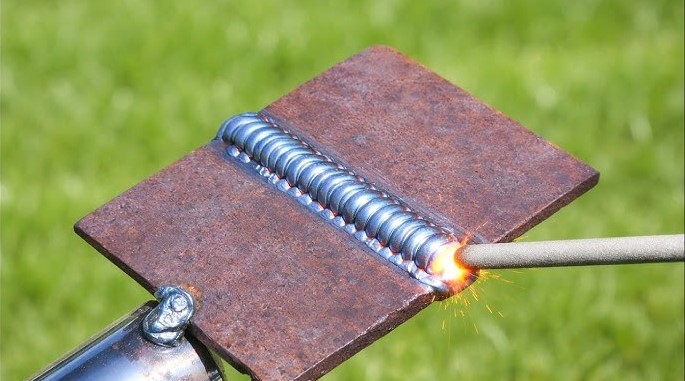
Welding is a skill that balances physical coordination with technical precision, making it accessible to beginners but challenging to master. While anyone can pick up a torch, becoming a high-level welder requires dedicated practice, patience, and the right safety mindset.
Have you ever watched a skilled welder join two pieces of metal together like magic? It looks effortless, doesn’t it? If you have been wondering, “Is welding easy to learn?” you are certainly not alone. Whether you want to start a new hobby, fix things around the garage, or pivot to a high-paying career, welding is a fantastic skill to add to your toolkit.
The short answer is that welding is easy to learn at a basic level but takes a lifetime to master. In 2026, with the help of smarter machines and better training resources, the barrier to entry is lower than ever. You do not need to be a genius to start, but you do need to be patient. Let’s dive into what it really takes to lay down that perfect bead.
Key Takeaways
- The Learning Curve: Welding is easy to start, but achieving professional-grade results takes hundreds of hours of hands-on practice.
- Prioritize Safety: Proper protective gear is not optional; you must understand how to protect your eyes, skin, and lungs from day one.
- Start with SMAW: Most experts recommend Stick welding (SMAW) as the best entry point for beginners to understand the basics of the arc.
- Focus on Heat Control: Mastering the relationship between heat, travel speed, and filler metal is the secret to clean welds.
- Technology Matters: In 2026, modern digital welding machines make learning easier through guided interfaces and predictive software.
- Consistency is Key: Muscle memory is built through repetition; practicing for 30 minutes daily is better than one long session per week.
Understanding the Basics: Where to Start
When you first step into the shop, it can feel a bit overwhelming. There are so many types of welding gear, settings, and techniques to keep track of. To determine if welding is easy to learn for you, it helps to understand that welding is simply the process of melting metal to fuse it together. Think of it like using a glue gun, but with molten steel instead of plastic.
Choosing Your First Process
Most beginners start with Stick (SMAW) or MIG (GMAW) welding. Stick welding is like the “manual transmission” of the welding world. It teaches you to control the arc and the puddle without too many moving parts. MIG welding is more like an “automatic transmission.” It is generally considered easier for beginners because the machine does a lot of the work for you, like feeding the wire at a steady speed.
If you want to know if welding is easy to learn, try a MIG machine first. You pull a trigger, hold a steady distance, and move along the seam. It is very satisfying to get a clean, consistent weld in your first few hours of practice.
The Importance of Preparation
One secret most veterans won’t tell you is that the actual welding is only 20% of the job. The other 80% is preparation. Cleaning your metal, setting your machine, and ensuring your angles are right make the actual welding much easier. If you learn to prep your workspace correctly, you will find that the welding part falls into place much faster.
The Learning Curve: What to Expect in 2026
In the past, learning to weld meant trial and error with heavy, clunky equipment. Today, the 2026 landscape is much more user-friendly. Many modern welding machines come with digital “synergic” controls. This means you plug in the thickness of the metal you are using, and the machine automatically adjusts the voltage and wire feed speed for you. This technology makes it much easier to avoid common beginner mistakes.
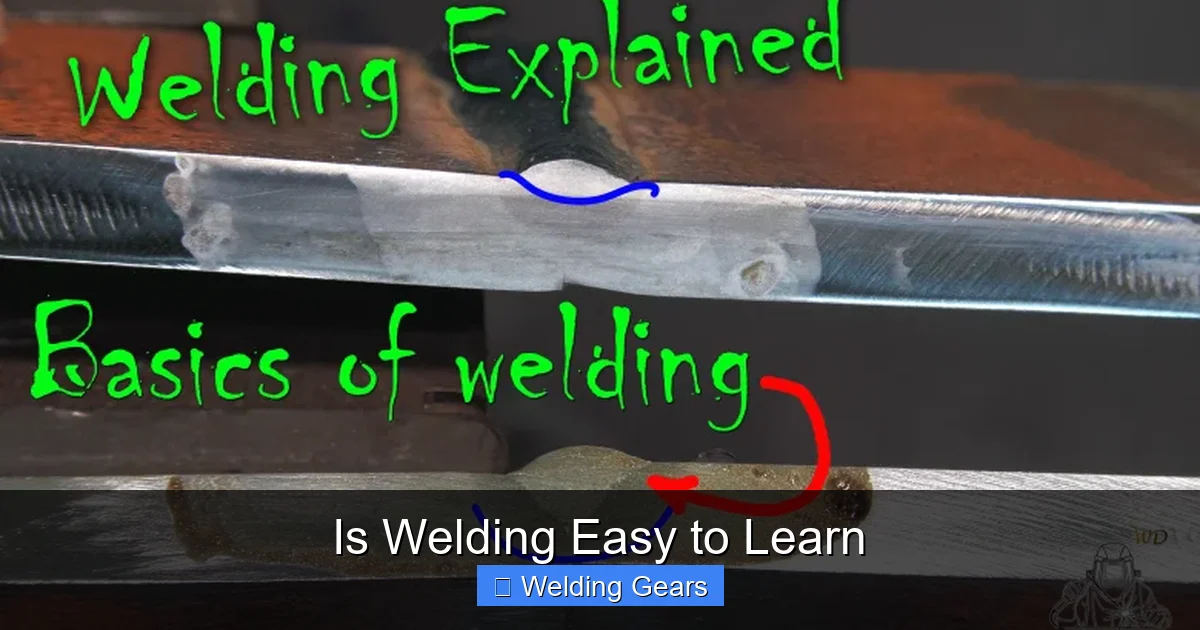
Muscle Memory and Hand-Eye Coordination
Is welding easy to learn? It depends on your hand-eye coordination. You need to keep a steady hand while watching the “puddle” of molten metal. Think of it like drawing a line with a pen. If your hand shakes, the line gets wobbly. If you move too fast, the weld is weak. If you move too slow, you might burn a hole through the metal. Practice is the only way to build the muscle memory required to keep that distance consistent.
The “Click” Moment
Every student has a moment where it just clicks. You stop worrying about your hand and start reading the arc. Once you reach that stage, welding feels more like second nature. Most beginners reach this phase after about 20 to 40 hours of supervised practice. If you are practicing at home, try to focus on one technique at a time rather than trying to weld complex structures immediately.
Essential Welding Gear and Safety
You cannot talk about whether welding is easy to learn without talking about safety. If you do not prioritize your gear, you will have a bad time. Fortunately, safety gear in 2026 is lighter, more comfortable, and offers better protection than ever before.
Protecting Your Senses
Your helmet is your most important piece of equipment. Invest in an auto-darkening helmet. These helmets switch from clear to dark the instant you strike an arc. This allows you to position your torch perfectly before you start welding, which significantly simplifies the process for beginners. Never skip this investment; it is the difference between a frustrating learning experience and a smooth one.
Clothing and Ventilation
Always wear natural fibers like cotton or leather. Synthetic materials can melt to your skin if a spark hits them, which is a scary thought. Also, remember that welding creates fumes. If you are learning at home, ensure your garage or workspace has plenty of airflow. A simple box fan or a specialized fume extractor can make your practice sessions much healthier.
Common Challenges for Beginners
Even if you find that welding is easy to learn, you will still hit a few walls. The most common issues are usually related to settings and posture. If your weld looks like a messy glob of bubblegum, don’t get discouraged. This is a rite of passage for every welder, including the pros.
Adjusting Your Settings
If your machine is set to the wrong heat (amperage), you will struggle. Too much heat and you burn through the metal. Too little heat and your metal doesn’t fuse, leading to a “cold” weld that will break easily. Always keep a scrap piece of metal nearby to test your settings before you start working on your actual project.
Improving Your Posture
It sounds strange, but your posture affects your weld. If you are cramped or uncomfortable, your hand will be less steady. If you can, sit down or find a way to brace your hands against the table. By creating a stable platform, you remove the “shaky hand” factor, making the actual bead-laying much smoother.
Professional Training vs. Self-Taught
Should you join a class or teach yourself? Both are valid, but they lead to different results. If you want to weld as a career, formal training is the best path. You will learn the physics of the metal, how to read blueprints, and the industry standards for safety.
The Benefits of Mentorship
If you want to know if welding is easy to learn, talk to someone who has been doing it for a while. Even a few hours of watching a professional and getting feedback on your technique can save you months of frustration. Mentors can spot things you cannot, like whether you are holding your torch at the wrong angle or moving too fast.
Online Resources and Communities
In 2026, the internet is a goldmine for welders. There are countless forums, video tutorials, and interactive apps that simulate welding. While digital simulation isn’t a replacement for the real thing, it can help you understand the visual cues of a good weld. Use these resources to complement your physical practice.
Staying Consistent and Having Fun
At the end of the day, welding is a skill that rewards consistency. It is better to weld for 15 minutes a day than for four hours once a month. The more you strike an arc, the more comfortable you will become. Don’t worry about making perfect pieces right away; focus on making a clean, straight bead on a flat piece of scrap metal.
Start Small
Don’t try to build a complex metal sculpture or a trailer for your first project. Start by just running lines of beads. Once you can make them look clean and uniform, try joining two pieces of metal at a 90-degree angle. By breaking down the task into smaller goals, you will find that the learning process feels much more manageable.
Conclusion
So, is welding easy to learn? It is a rewarding skill that is absolutely within your reach. It requires a bit of gear, a healthy respect for safety, and a good amount of practice, but the satisfaction of creating something strong and permanent is unmatched. Whether you are building a tool for your workshop or starting a new career path, grab a helmet, find some scrap metal, and start striking an arc. You might just find that you have a natural talent for it!
Frequently Asked Questions
How long does it take to learn welding?
Most beginners can learn the basics of simple joints in 20 to 40 hours of practice. However, achieving professional certification or master-level skills usually takes years of consistent, hands-on experience.
Is it expensive to start welding?
It can be, but it doesn’t have to be. You can pick up a decent entry-level MIG or Stick welding machine for a few hundred dollars, plus the cost of essential safety gear like a helmet, gloves, and a jacket.
Do I need to be good at math to weld?
You don’t need advanced calculus, but basic math is helpful. You will need to calculate measurements, angles, and sometimes heat settings to ensure your welds are structurally sound.
What is the easiest type of welding for a beginner?
MIG welding is widely considered the easiest for beginners to learn because the machine feeds the wire automatically, allowing you to focus on your hand speed and the angle of the torch.
Can I teach myself to weld at home?
Yes, you can certainly learn at home by following online tutorials and practicing on scrap metal. Just be sure to set up your workspace in a well-ventilated area and always prioritize your safety gear.
Is welding a dangerous hobby?
Welding involves high heat, electricity, and bright light, so it carries inherent risks. However, if you wear the correct protective gear and follow safety guidelines, it is a very safe and manageable activity.