MIG welding works well for many metal projects, from small home repairs to automotive work and fabrication. A good MIG welder gives you steady wire feeding, simple controls, and enough power for the materials you plan to weld. The right machine can also make it easier to learn proper welding techniques and produce clean, consistent beads.
Modern MIG welders come with different power levels and features. Some models run from a standard 120V outlet, while dual-voltage machines can also use 240V power for heavier work. Many models also support flux-core wire, which lets you weld without a shielding gas setup.
This guide covers five MIG welders for different welding needs and budgets. We consider welding power, input voltage, wire-feed control, duty cycle, portability, ease of setup, and overall value. These factors can help you choose a machine that matches your projects and workshop setup.
5 Best Mig Welders
| Image | Title | Best For | Link |
|---|---|---|---|
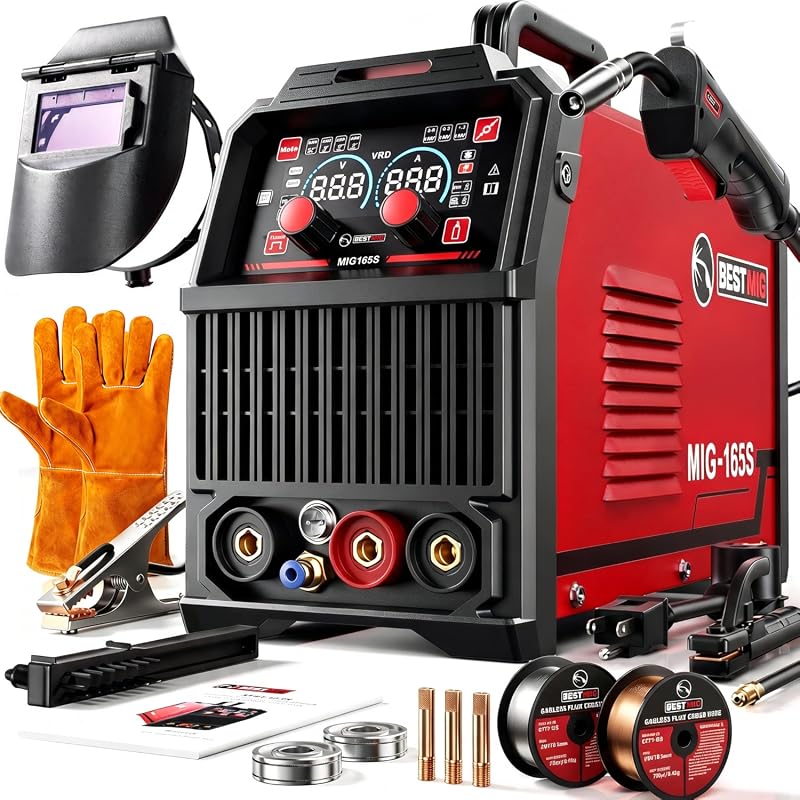 |
BESTMIG 165S 4-in-1 Multi-Process Welder | Best overall for versatile, high-quality home welding projects. | View on Amazon |
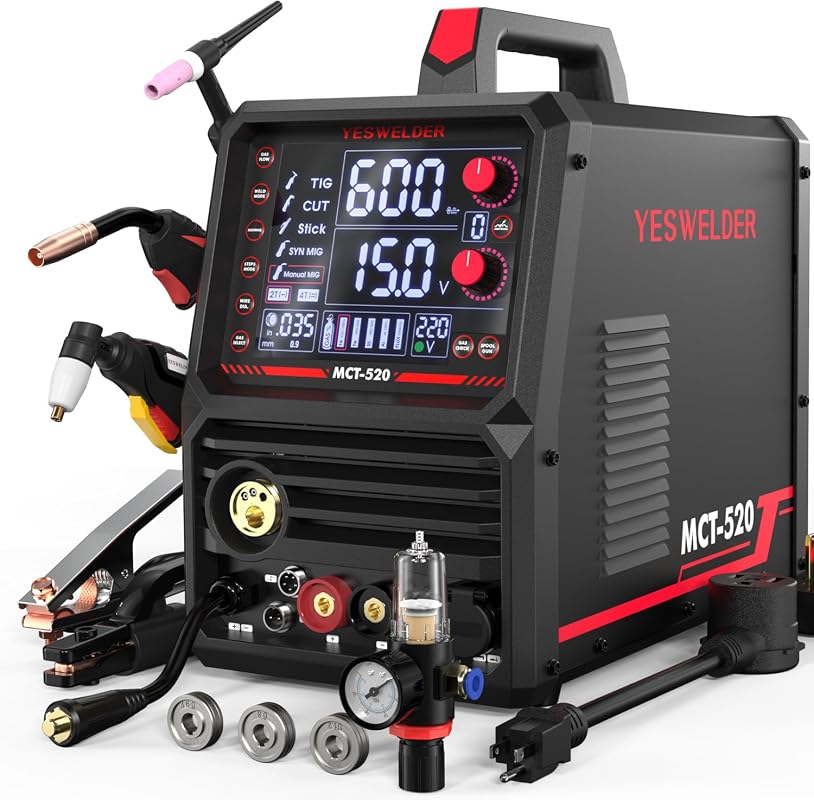 |
YESWELDER MCT-520 6-in-1 Welder Cutter | Perfect for shops needing both cutting and welding capabilities. | View on Amazon |
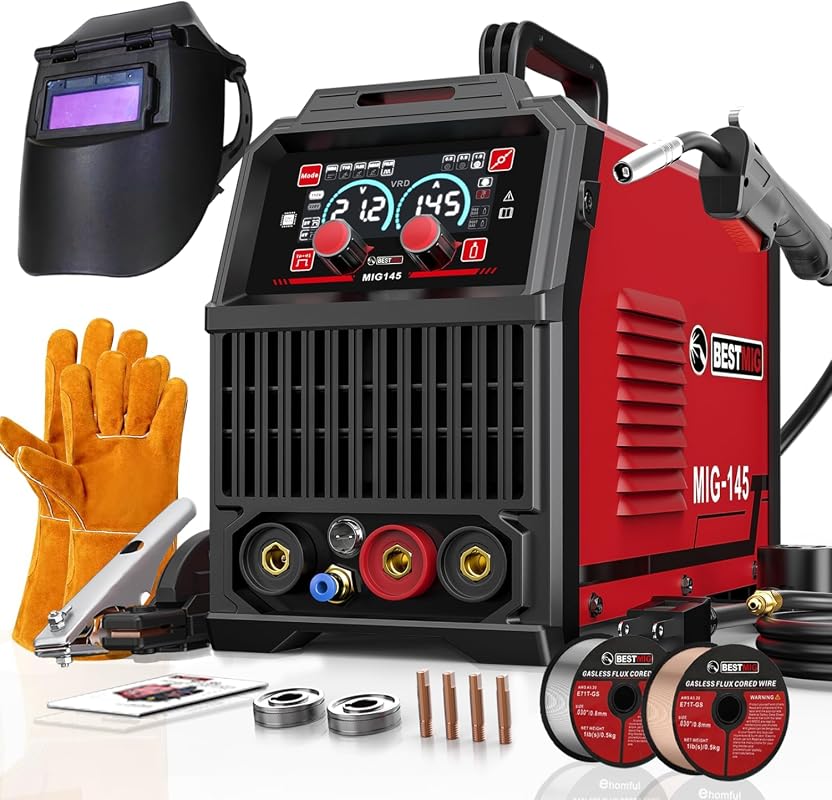 |
BESTMIG 145A 4-in-1 Multi-Process Welder | Top choice for budget-conscious beginners needing a complete kit. | View on Amazon |
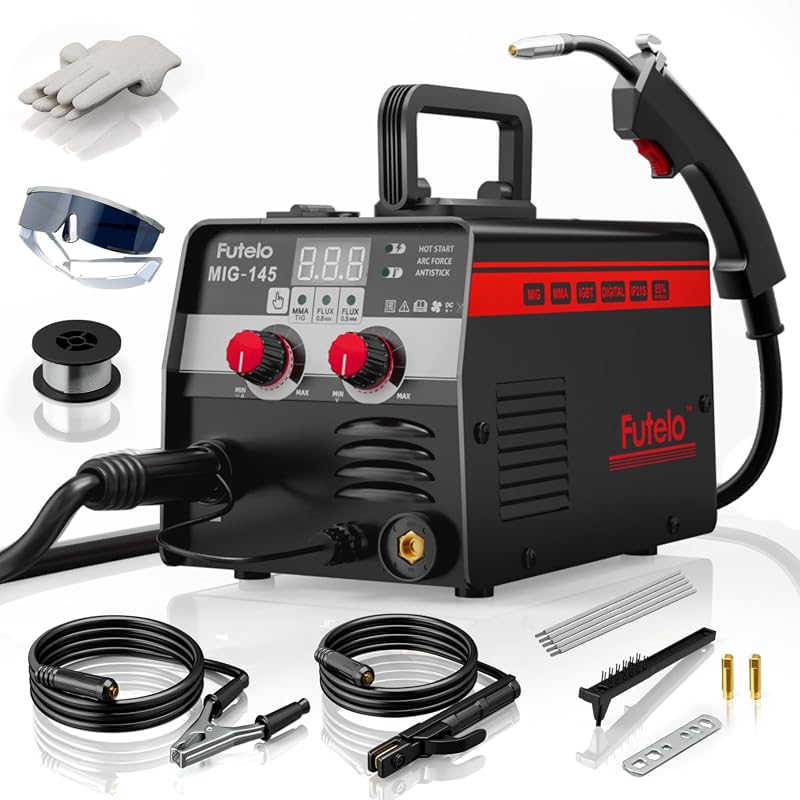 |
145A 3-in-1 Portable MIG Welder | Lightweight and highly portable for mobile repair tasks. | View on Amazon |
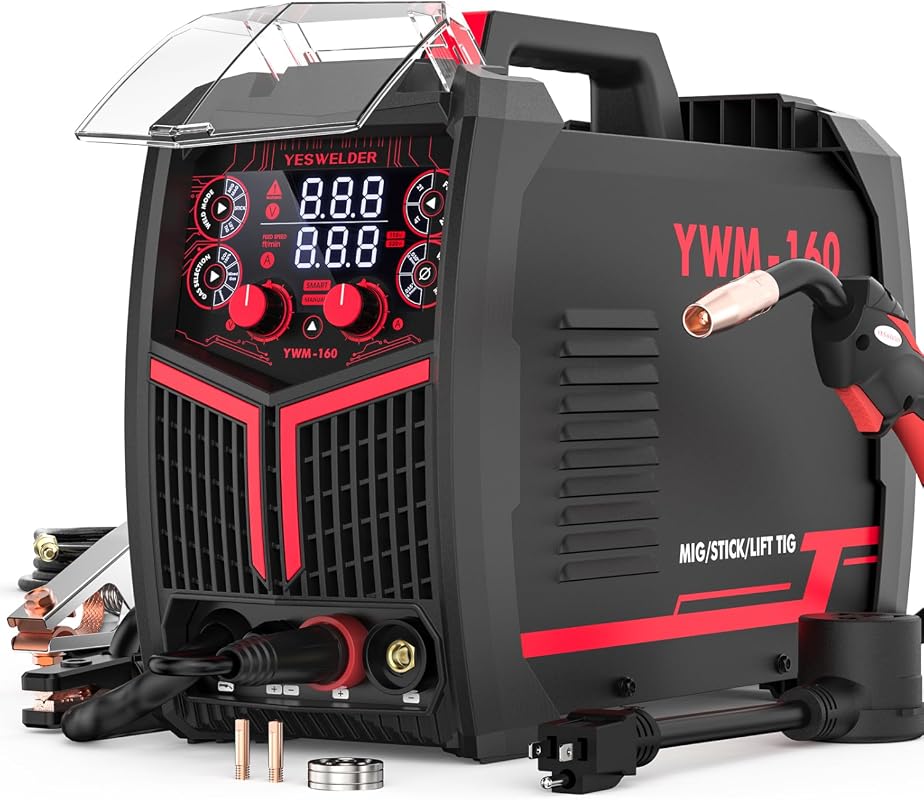 |
YESWELDER 160A Multi-Process MIG Welder | Great balance of power and smart control for standard projects. | View on Amazon |
Our Top 5 Best Mig Welders Reviews – Expert Tested & Recommended
1. BESTMIG 165S 4-in-1 Dual Voltage MIG Welder Kit
The BESTMIG 165S is a powerhouse that brings professional-level versatility into your home garage. Its 4-in-1 design allows you to transition between gas and gasless MIG, Stick, and TIG modes with ease, making it an incredibly useful tool for various welding tasks.
Key Features That Stand Out
- ✓ Advanced IGBT inverter technology for stable arc performance.
- ✓ Synergic control that automatically adjusts settings based on your parameters.
- ✓ Dual voltage compatibility for use with standard home outlets or shop power.
- ✓ Expert Manual mode for those who want full control over voltage and amperage.
Why We Recommend It
This welder stands out because it caters to both beginners and experts. The synergic mode takes the guesswork out of setup, while the expert manual mode ensures that experienced welders can fine-tune their work for perfect results.
Best For
Ideal for DIY enthusiasts and professionals who need a reliable, all-in-one machine for daily repairs and fabrication.
Pros and Cons at a Glance
2. YESWELDER MCT-520 6-in-1 Welder Cutter
If you need a workshop workhorse, the YESWELDER MCT-520 is a dream machine. It combines a high-quality MIG welder with a plasma cutter, effectively saving you space and money while giving you everything you need for complex metal projects.
Key Features That Stand Out
- ✓ 6-in-1 functionality including plasma cutting and various welding modes.
- ✓ Extra-large LED display for easy parameter monitoring.
- ✓ Glove-friendly control knobs designed for real shop environments.
- ✓ Adjustable inductance settings to reduce weld spatter significantly.
Why We Recommend It
The ability to switch from cutting to welding without swapping machines is a game-changer for productivity. The interface is intuitive, and the precision controls allow you to achieve professional-grade finishes even if you have never used a plasma cutter before.
Best For
Best for hobbyist fabricators and professional metal workers who want to maximize shop efficiency.
Pros and Cons at a Glance
3. BESTMIG 145A 4-in-1 Multi-Process Welder
If you are looking for an affordable way to get started, the BESTMIG 145A is an excellent value proposition. It arrives as a full kit, including safety gear, so you can start learning the craft without hunting for extra accessories.
Key Features That Stand Out
- ✓ Complete kit includes a welding helmet and protective gear.
- ✓ 4-in-1 functionality supports gas and flux core welding.
- ✓ HD large LCD display for clear visibility of settings.
- ✓ Reliable synergic mode for quick, hassle-free setup.
Why We Recommend It
You cannot beat the price for what you get here. It removes the barrier to entry by providing all the basics while still offering decent power for household projects. It is a fantastic starter machine for someone wanting to learn.
Best For
Perfect for absolute beginners or students who need a complete, budget-friendly welding setup.
Pros and Cons at a Glance
4. 145A 3-in-1 Portable MIG Welder
Portability is key with this 145A 3-in-1 welder. Weighing only 7.5 pounds, it is incredibly easy to move around the shop or take with you on mobile repair jobs. Despite its size, it packs enough power for most standard home welding tasks.
Key Features That Stand Out
- ✓ Lightweight, compact design—perfect for storage and transport.
- ✓ 3-in-1 functionality supports MIG, Stick, and Lift TIG.
- ✓ Dual voltage support allows versatility in power sources.
- ✓ Smart synergic control for rapid, accurate setup.
Why We Recommend It
If you have limited space or find yourself moving your welder often, this is your best friend. It manages to deliver a stable, reliable arc without the bulk, making it one of the most convenient welders for small workshops.
Best For
Excellent for mobile workers, small garages, and those who need a grab-and-go welding solution.
Pros and Cons at a Glance
5. YESWELDER 160A Multi-Process MIG Welder
The YESWELDER 160A is a reliable, versatile unit that handles a wide range of projects with stable performance. It is a 4-in-1 powerhouse that gives you enough amperage to handle most common garage metalwork, making it a solid choice for the serious hobbyist.
Key Features That Stand Out
- ✓ 160A output for stable performance across most materials.
- ✓ Versatile support for flux core, gas MIG, Stick, and TIG.
- ✓ Smart synergic control optimizes settings based on wire diameter.
- ✓ Dual voltage flexibility for different workshop environments.
Why We Recommend It
We like this model because it balances raw power with smart, user-friendly features. It is a workhorse that consistently produces clean, reliable welds, and it is easy enough to operate that it feels natural after just a few practice runs.
Best For
Best for hobbyists and DIYers who want a consistent, powerful machine for regular home shop use.
Pros and Cons at a Glance
Complete Buying Guide for Best Mig Welders
Essential Factors We Consider
When choosing the best MIG welder, you need to look at duty cycle, voltage options, and versatility. A higher duty cycle means you can weld for longer before the machine needs to cool down. Dual-voltage capability is also vital if you plan on taking your welder to different locations, such as a friend’s shop or out in the field.
Budget Planning
Do not just look at the price of the machine itself. Remember to factor in the cost of shielding gas, wire, protective equipment, and potentially a welding cart. Our list includes budget-friendly options that often come with starter kits to help you save significantly on initial setup costs.
Final Thoughts
Finding the right welder is about matching your project needs to the machine’s capabilities. If you are just starting out, a multi-process machine with synergic control is usually the safest bet because it simplifies the learning curve. If you have bigger dreams, a machine with plasma cutting or higher amperage might be the better investment.
Frequently Asked Questions
Q: What is the benefit of a 4-in-1 welder?
A: It allows you to switch between different welding processes like MIG, Stick, and TIG using one unit, giving you the flexibility to tackle almost any project without buying multiple expensive machines.
Q: Is a synergic welder good for beginners?
A: Absolutely. Synergic controls take the guesswork out of setting your voltage and wire speed, allowing you to focus on your technique while the machine handles the complex settings.
Q: Can I use these welders on a standard house outlet?
A: Many of the machines listed feature dual-voltage capability, meaning they can run on standard 110V household outlets, though you may need a 220V connection to unlock their full power potential.
Q: Do I always need shielding gas?
A: It depends on the process. If you are welding with solid MIG wire, you will need gas. If you are using flux-core wire, the gas is generated internally by the flux, so you do not need an external tank.