Becoming a welder in 2026 is an excellent career choice offering job stability and high earning potential. This guide covers the essential steps, from choosing the right vocational program to selecting your first set of welding gears, ensuring you build a successful foundation in this skilled trade.
If you enjoy working with your hands, solving complex problems, and seeing tangible results at the end of every shift, you are likely a perfect candidate for a career in welding. As we step into 2026, the demand for skilled welders is higher than ever. From building massive infrastructure projects to crafting delicate components for the aerospace industry, welders are the backbone of modern construction and manufacturing.
You might be wondering exactly what to do to become a welder in today’s landscape. It is not just about holding a torch; it is about understanding metal properties, mastering safety, and staying current with modern technology. This guide will walk you through the path of turning a spark of interest into a lucrative, lifelong career.
Key Takeaways
- Education: Formal training at a vocational school or community college is the fastest way to learn industry-standard safety and technique.
- Certifications: Obtaining AWS (American Welding Society) certifications validates your skills to potential employers and increases your starting pay.
- Gear Matters: Investing in high-quality welding gears like a reliable auto-darkening helmet is crucial for both safety and long-term comfort.
- Physical Readiness: Welding is physically demanding; staying fit and practicing proper ergonomics will help you avoid injuries and extend your career.
- Adaptability: In 2026, proficiency with automated and robotic welding systems is becoming just as important as traditional manual stick or MIG welding.
- Continuous Learning: The industry evolves quickly, so keep updating your skills with new technologies, alloys, and specialized processes.
The Foundations of Welding Education
The first step on your journey is getting the right education. While you can learn basic techniques from a mentor or a friend, formal training provides the theoretical knowledge necessary to pass strict industry tests. In 2026, most employers prefer candidates who have completed a certificate or degree program from an accredited institution.
Choosing a Vocational School
Vocational and technical schools offer focused curricula designed to get you on the job market as quickly as possible. You should look for programs that focus heavily on “arc time,” which is the actual time you spend welding. A good school will provide you with a variety of processes, including MIG (Gas Metal Arc Welding), TIG (Gas Tungsten Arc Welding), and Stick (Shielded Metal Arc Welding).
Community College Paths
If you want a more comprehensive background, community colleges often provide two-year Associate degrees. These programs often include extra coursework in blueprint reading, metallurgy, and math. Having this foundational knowledge makes you much more versatile when you enter the workforce. It also makes it easier to move into supervisory or inspection roles later in your career.
Investing in Your Welding Gears
As you start your training, you will quickly realize that having the right equipment is non-negotiable. Quality welding gears can mean the difference between a clean, strong weld and a frustrating day of grinding and re-doing work. You do not need to buy everything at once, but certain items are essential for your toolkit.
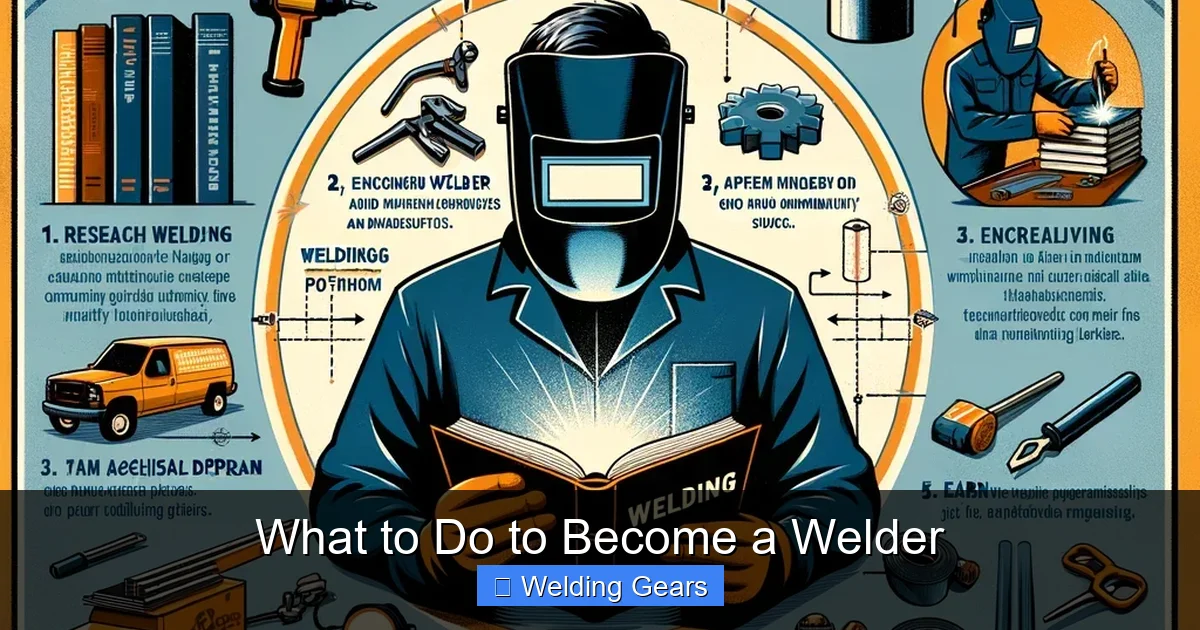
Visual guide about What to Do to Become a Welder
Image source: landmarktools.com
The Helmet: Your Most Important Protection
In 2026, the standard for helmets has advanced significantly. Look for an auto-darkening helmet with a wide field of view. These helmets adjust instantly when the arc strikes, saving your eyes from fatigue and allowing you to see your weld puddle more clearly. Don’t skimp on this piece of gear—your vision is your most valuable asset.
Clothing and Safety Apparel
Welding involves heat, sparks, and UV rays. You need high-quality flame-resistant jackets, leather gloves, and steel-toed boots. Remember that welding gears also include proper ventilation masks. Modern respirators are lightweight and designed to fit comfortably under your helmet, keeping your lungs safe from welding fumes.
Essential Hand Tools
Beyond the machine itself, you need tools for preparation and cleanup. Keep a high-quality welding hammer for slag removal, a sturdy wire brush, and a set of locking pliers in your kit. A good set of soapstone markers is also necessary for marking your cuts and joints on metal surfaces.
Mastering the Welding Processes
Once you are in the shop, you will spend most of your time perfecting your technique. In 2026, being a “one-trick pony” isn’t enough. The most employable welders are those who can switch between different processes depending on the project requirements.
MIG Welding (GMAW)
MIG is often the first process taught because it is relatively easy to learn and very productive. It uses a continuous wire feed, making it ideal for long, consistent welds. Most entry-level jobs in fabrication shops will start you on a MIG machine.
TIG Welding (GTAW)
If you want to work on high-precision projects, TIG welding is the gold standard. It is slower and requires more finesse, but it produces the cleanest, strongest, and most aesthetically pleasing welds. This skill is highly sought after in industries like food manufacturing, medical equipment, and automotive customization.
Stick Welding (SMAW)
Stick welding is the veteran of the trade. It is portable, reliable, and works well in windy or dirty environments. Even if your daily job involves automated systems, knowing how to stick weld will make you much more useful on job sites where conditions aren’t perfect.
Getting Certified and Landing Your First Job
After you have completed your training, certifications are the final step in proving your value. The American Welding Society (AWS) offers various certifications that verify your ability to perform specific types of welds. Having these credentials on your resume is a major advantage.
Why Certifications Matter
Employers have a lot at stake when hiring a welder. If a weld fails on a bridge or a pressure vessel, the consequences can be catastrophic. A certification tells an employer that you have been tested by a neutral third party and that you meet the rigorous quality standards required by law.
Finding the Right Role
When you start searching for jobs in 2026, look for companies that offer mentorship. Your first job is not just about the paycheck—it is about gaining experience. Look for shops that handle diverse projects, as this will help you expand your skill set faster than working on a single assembly line.
Embracing the Future of Welding Technology
The industry is changing rapidly. Robotic welding and automated systems are becoming common in large-scale manufacturing. Some might worry this makes human welders obsolete, but the opposite is true. We need more skilled people to program, maintain, and troubleshoot these robots than ever before.
The Rise of Collaborative Welding
In 2026, “cobots” (collaborative robots) work alongside human welders. You might set up the jig and handle the complex, tight-access welds, while the robot handles the long, straight seams. Understanding how to integrate your manual skills with these machines will make you a high-value asset in any shop.
Sustainability and Green Tech
There is a growing emphasis on energy-efficient welding equipment and cleaner processes. Shops are looking for welders who understand how to minimize waste and optimize energy consumption. By learning these green practices, you can help your employer save money and become more sustainable.
Safety and Longevity in the Trade
Welding is a career that can last for decades if you take care of your body. One of the most important things to do to become a welder is to commit to a lifetime of safety. It isn’t just about the immediate danger of burns; it is about protecting your long-term health.
Ergonomics and Posture
Many welding-related injuries come from repetitive strain or poor posture. Always try to set up your work at a comfortable height. If you find yourself hunched over or reaching too far, stop and adjust your position. Your knees, back, and neck will thank you later in life.
Mental Health and Focus
Welding requires deep focus. The meditative state of watching the weld pool is part of why many people love the craft. Ensure you get enough rest and stay hydrated. Mental fatigue is often when safety protocols are forgotten, so if you feel tired or stressed, take a step back and reset.
Ultimately, becoming a welder is a journey of continuous improvement. By combining formal education, reliable welding gears, and a dedication to safety, you can build a stable and rewarding future. Start by researching local programs, talking to professionals in your area, and getting your hands on a torch to see if this trade is the right fit for you.
Frequently Asked Questions
What is the hardest part about becoming a welder?
The most challenging aspect is often mastering the hand-eye coordination required for consistent, high-quality welds. It takes hours of repetitive practice to “read the puddle” and maintain the correct arc length and travel speed simultaneously.
Do I need a college degree to be a welder?
No, you do not need a four-year university degree. Most professional welders earn a certificate or an Associate degree from a vocational school or community college, which provides the necessary training in a much shorter time.
How long does it take to learn how to weld?
Basic welding skills can be learned in a few months of intensive training. However, becoming a master welder who can handle complex alloys and difficult positions usually takes several years of on-the-job experience.
Is welding a safe career in 2026?
Yes, welding is safe provided you strictly follow all safety protocols, wear your protective equipment, and ensure your workspace is properly ventilated. Modern advancements in PPE have made it much easier to protect yourself from fumes, radiation, and heat.
Can I make good money as a welder?
Yes, experienced welders, especially those who specialize in underwater welding, pipeline work, or aerospace, can earn a very high salary. Your earning potential grows significantly as you obtain more advanced certifications.
What should I prioritize when buying my first welding gears?
Prioritize high-quality eye and respiratory protection first, such as an auto-darkening helmet and a comfortable respirator. After that, invest in durable, flame-resistant clothing and gloves that offer both protection and dexterity.