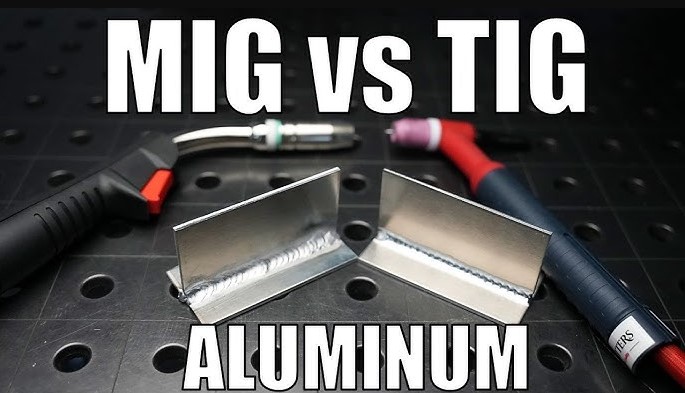
MIG welding is widely considered the faster, easier process for beginners and industrial production, while TIG welding offers superior precision and control for intricate or aesthetic projects. Understanding the difference between TIG welding and MIG welding is essential for selecting the right technique for your specific metalworking goals in 2026.
If you are stepping into the world of metal fabrication in 2026, you have probably heard the constant debate: TIG or MIG? Choosing between these two methods is often the biggest hurdle for new welders. Whether you are building a custom car, fixing a broken gate, or crafting art, knowing the difference between TIG welding and MIG welding will save you time, money, and a lot of frustration.
Both methods rely on an electric arc to melt metal, but that is where the similarities end. Imagine MIG as a glue gun that feeds its own stick, and TIG as a delicate paintbrush that requires you to feed the paint yourself. Both create strong joints, but they serve different masters. One is built for raw speed, and the other is built for perfection.
Key Takeaways
- Efficiency: MIG welding uses a wire-feed gun, making it much faster for long welds and thick materials.
- Control: TIG welding uses a non-consumable tungsten electrode and a separate filler rod, offering unmatched precision.
- Skill Level: MIG is generally easier to learn, while TIG requires significant practice and hand-eye coordination.
- Aesthetics: TIG produces clean, stack-of-dimes welds that are visually stunning and require little cleanup.
- Versatility: TIG can weld almost any metal, including thin aluminum and exotic alloys, whereas MIG is better for steel.
- Equipment: MIG setups are often more portable and affordable for hobbyists, while TIG rigs can be complex and expensive.
Understanding MIG Welding: The Speed Demon
MIG stands for Metal Inert Gas. In the professional world, it is officially called Gas Metal Arc Welding (GMAW). Think of it as the workhorse of the welding shop. If you walk into a factory or an automotive assembly line, you will see MIG welders everywhere. It is efficient, reliable, and gets the job done fast.
How the Process Works
MIG welding works by feeding a continuous solid wire electrode through a welding gun. When you pull the trigger, the wire melts and creates an arc that fuses your base metal together. Because the machine handles the wire feed for you, you only have to focus on your travel speed and the angle of the gun. It is remarkably similar to using a hot glue gun, which is why most beginners start here.
When Should You Use MIG?
MIG is your best friend when you are working on thicker steel. If you are building a structural frame, a trailer, or doing heavy-duty automotive repair, MIG is the way to go. It allows you to put down a lot of metal in a short amount of time. If your primary goal is to get the project finished before the weekend is over, MIG welding will get you there.
Mastering TIG Welding: The Surgeon’s Tool
TIG stands for Tungsten Inert Gas, or Gas Tungsten Arc Welding (GTAW). If MIG is the workhorse, TIG is the surgeon. It is a slow, methodical process that produces the most beautiful, high-quality welds you will ever see. In 2026, as high-end fabrication becomes more popular, TIG has become the gold standard for quality.
Visual guide about What’s the Difference Between Tig Welding and Mig Welding
Image source: i.pinimg.com
The Skill Required for TIG
Unlike MIG, TIG welding requires both hands and sometimes your feet. You hold a torch in one hand to create the arc and a filler rod in the other hand to add material to the pool. Meanwhile, many TIG welders use a foot pedal to control the heat. It sounds like a lot to handle, and that is because it is! You need to sync your movements perfectly to get those signature “stack of dimes” ripples.
The Precision Factor
TIG is the only choice when precision is non-negotiable. Because you can control the heat input so precisely, you can weld paper-thin aluminum or stainless steel without burning through. This makes TIG the favorite for aerospace, high-end automotive parts, and custom sculpture.
Comparing the Differences: TIG vs MIG
The Cost of Entry
When looking at the difference between TIG welding and MIG welding, the budget often takes center stage. A basic MIG welder is generally more affordable. You can buy a reliable “plug and play” MIG machine for a hobby garage at a great price. TIG machines, especially those capable of AC/DC welding for aluminum, carry a steeper price tag and require extra supplies like shielding gas and high-quality tungsten electrodes.
Speed and Efficiency
MIG wins the race every single time. Because you don’t have to manually dip a rod into the puddle, you can maintain a steady, high-speed pace. TIG is slow. If you tried to TIG weld a long structural beam, you would be there for days. TIG is meant for smaller, precise sections where the quality of the joint is more important than the speed of the output.
Cleanup and Aesthetics
TIG welds look like professional art pieces. They are smooth, clean, and require almost no cleanup after the arc is extinguished. MIG welding, by contrast, can be a bit messy. It often produces “spatter,” which are tiny balls of molten metal that stick to the surrounding area. You will likely spend a lot of time with a grinder or a wire wheel if you use MIG and want it to look polished.
Environmental and Setup Considerations
Working Indoors vs Outdoors
One major difference between TIG welding and MIG welding is their sensitivity to the environment. MIG is much better for outdoor use, though you still need to be careful with wind. TIG is extremely sensitive. Even a slight breeze can blow away the inert shielding gas that protects your weld, causing the metal to become porous and weak. If you are working in a drafty garage, you will definitely want a MIG welder.
Gas Requirements
Both processes require shielding gas to keep impurities out of the weld. MIG usually runs on a CO2 or Argon mix, which is fairly common. TIG almost exclusively uses pure Argon. Understanding which gas to use is part of the learning curve, but your local welding shop can easily guide you based on the material you are using.
Practical Tips for Your First Weld
Start with MIG for Confidence
If you have never touched a welder, I always suggest starting with MIG. You will feel a sense of accomplishment quickly, which is crucial for staying motivated. Once you can produce a solid bead with MIG, you can move on to the more artistic challenges of TIG. Do not rush the process; muscle memory is built through repetition.
Preparation is Everything
Regardless of the method, the most important part of welding isn’t the machine – it’s the prep work. Clean your metal until it shines! Any grease, rust, or paint will cause contaminants in your weld, leading to cracks or weak spots. Spend 80 percent of your time cleaning and setting up, and the actual welding will take care of itself.
Conclusion: Which One Should You Choose?
There is no “better” choice between these two methods, only the right tool for the job. In 2026, the gap between these technologies is closing, but the fundamental difference remains: MIG is for speed and thick materials, while TIG is for control and aesthetic perfection.
If you are a beginner, start with MIG to learn the basics of the weld pool. If you are ready to master the craft and create professional, beautiful work, TIG will take you to the next level.
Whatever path you choose, remember that welding is a journey. You will make mistakes, you will burn holes through metal, and you will learn how to fix them. Grab some scrap metal, gear up with your safety equipment, and start burning wire. The satisfaction of holding two pieces of metal together with your own hands is an experience unlike any other.
Frequently Asked Questions
Can I use a TIG welder to perform MIG welding?
No, you cannot use a TIG welder to perform MIG welding as the equipment is designed differently. TIG welders require a tungsten electrode and a separate filler rod, while MIG welders use a mechanical wire-feed system.
Is TIG welding harder than MIG welding for a beginner?
Yes, TIG welding is widely considered more difficult because it requires high levels of manual dexterity and simultaneous coordination of both hands and feet. MIG welding is much more straightforward, making it the preferred choice for those just starting out.
Which process is better for aluminum?
TIG welding is generally superior for aluminum because it allows for precise heat control, which prevents burning through the delicate metal. While advanced MIG setups can weld aluminum, TIG is preferred for high-quality, clean results.
Does MIG welding produce more smoke and fumes?
MIG welding often produces more spatter and fumes compared to the relatively clean TIG process. Always ensure your workspace is well-ventilated, regardless of the method you choose, to keep your lungs safe.
What safety gear do I need for both?
For both processes, you need a high-quality auto-darkening welding helmet, flame-resistant gloves, a welding jacket, and steel-toed boots. Safety should always be your number one priority in any welding project.
Can I weld stainless steel with either method?
Yes, both MIG and TIG are excellent for stainless steel, though the choice depends on your end goal. Use TIG for projects where the finish and appearance are critical, and use MIG if you need to complete the work quickly on thicker sections.