
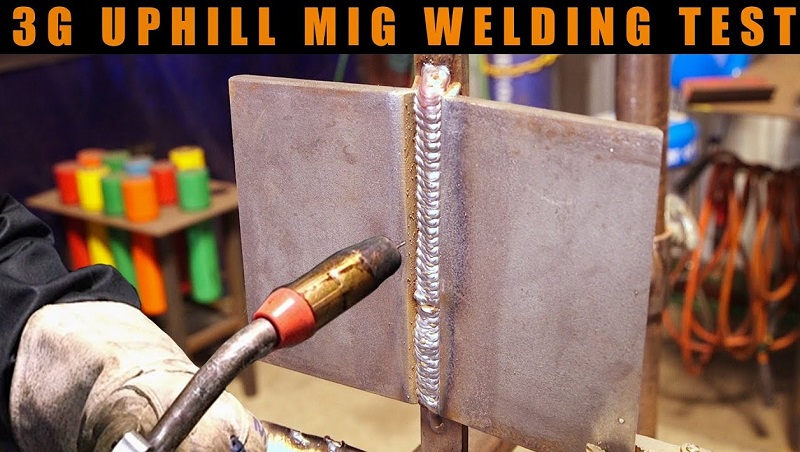
A 3G weld test is a professional qualification that evaluates a welder’s ability to perform vertical groove welds on plates. It is essential for structural steel work and proves you can handle gravity while maintaining weld integrity in 2026.
If you are stepping into the world of professional welding in 2026, you have likely heard the term “3G” thrown around the workshop. It sounds like a tech specification for a mobile network, but in our world, it is the golden ticket to career advancement. A 3G weld test is one of the most important benchmarks you will face. It separates the hobbyists from the certified pros who can build the skylines of tomorrow.
When you take a 3G weld test, you are proving that you can weld in the vertical position. Think about it: welding flat on a table is one thing. You let gravity do the work and focus on your bead. But once you stand that plate up and start welding from bottom to top, gravity becomes your toughest opponent. Learning to overcome that pull is what this certification is all about.
Key Takeaways
- The 3G Designation: The “3” refers to the vertical position, while “G” denotes a groove weld, which is a fundamental skill for structural projects.
- Gravity Management: You must master heat control to prevent the molten metal from sagging or dripping during the vertical climb.
- Certification Value: Passing a 3G weld test opens doors to high-paying jobs in bridge construction, skyscraper assembly, and industrial manufacturing.
- Preparation Matters: Success relies on proper joint fit-up, travel speed, and precise rod angle to ensure total penetration.
- Continuous Improvement: Even experienced pros practice for the 3G test because the margin for error is razor-thin compared to flat-position welding.
Understanding the Mechanics of a 3G Weld
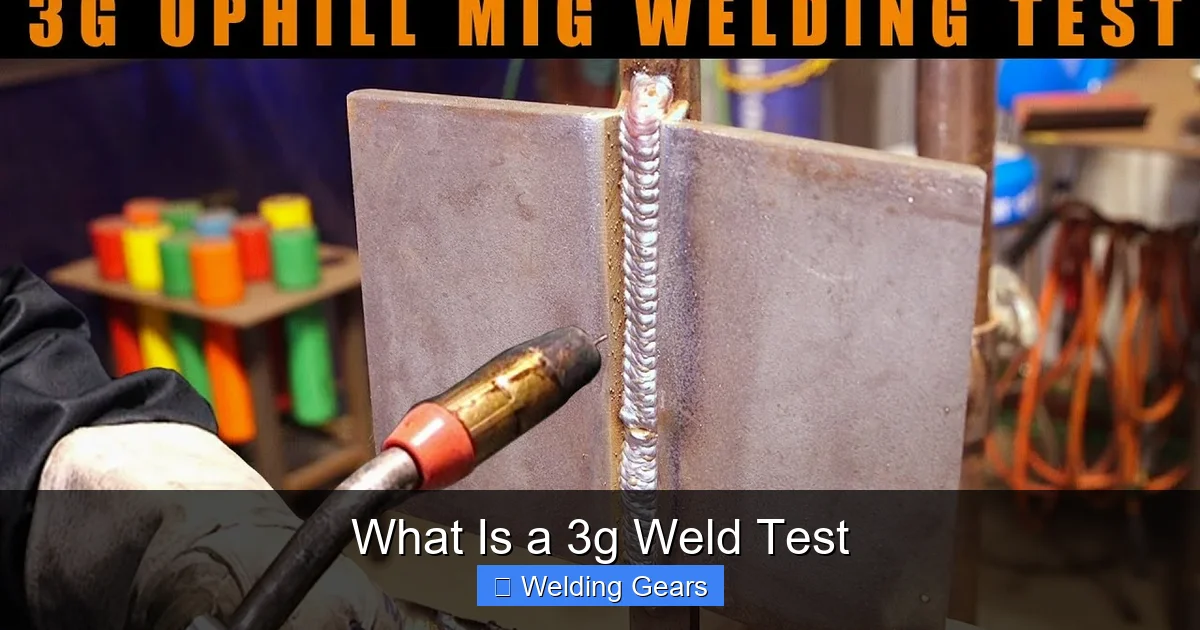
To really grasp what a 3G weld test is, we need to break down the language. The “3” stands for the vertical position. The “G” stands for groove weld. When you combine them, you are looking at a butt joint or a groove weld performed on a plate that is standing vertically. Your goal is to move the electrode from the bottom of the plate to the top without losing control of the weld puddle.
Why Vertical Welding is Tricky
The biggest challenge in a 3G weld test is the behavior of the puddle. When you are welding vertically, the molten metal wants to drip down. If you do not have your heat settings right or your travel speed matched, your weld will sag. You end up with a mess of “cold lap” or uneven buildup. The test inspector is looking for a clean, consistent bead that bridges the root of the joint perfectly.
In 2026, we have better equipment than ever, but the physics remains the same. You need to control the heat input so that the puddle sets quickly enough to hold its own weight but stays fluid enough to fuse the base metal. It is a balancing act that requires a steady hand and a calm mind.
How to Prepare for Your 3G Weld Test
Passing a 3G weld test is not about luck; it is about preparation. Before you ever step into the booth for the official exam, you need to spend hours under the hood practicing. Start by setting your machine correctly. Most welders prefer a slightly lower amperage for vertical work than they would use for flat welding. This helps the puddle freeze faster as you climb.
Mastering Your Technique
There are two main ways to approach a 3G weld test: the weave technique and the stringer bead. A stringer bead is narrow and usually preferred for the root pass to ensure deep penetration. The weave is often used for the fill and cover passes to tie the edges together. Practice both until you can do them in your sleep.
Always remember your rod angle. If you are using a stick electrode, you want to keep that angle tight. If you let your rod angle get too wide, you will lose the force of the arc, and the slag will get trapped in the puddle. This causes inclusions, which is an automatic fail on most code-based weld tests.
The Inspection Process: What Inspectors Look For
When the inspector walks up to your piece after the 3G weld test, they are not just looking at how pretty the bead is. They are looking for structural integrity. They might use a visual inspection first, checking for undercut, porosity, or heavy spatter. If the visual passes, they move to mechanical testing, such as a bend test.
The dreaded Bend Test
The bend test is where the 3G weld test gets serious. They will cut a strip out of your plate and literally bend it in a machine until it forms a U-shape. If your weld does not have proper penetration or has trapped slag, the weld will crack or pop open. If it holds, you pass. It is a brutal but fair way to ensure that the weld is just as strong as the steel around it.
Pro tip for 2026: keep your stop-and-starts clean. Every time you change a rod or have to pause, you leave a potential weak spot. Grind those starts down slightly so you can feather the next bead into the previous one smoothly. A seamless transition is the hallmark of a master welder.
The Importance of Safety Gear in 2026
Your gear is your lifeline. In 2026, the technology in auto-darkening helmets has made it easier to see your puddle, which is vital for a 3G weld test. Don’t skimp on your protection. Because you are welding vertically, sparks and hot slag have a tendency to fall straight down sometimes right into your sleeves or boots.
Protecting Yourself While Climbing
Wear high-quality, flame-resistant leather sleeves. When you are in the vertical position, your arms are often exposed to more heat than in other positions. Keep your collar buttoned up and ensure your gloves are snug. If you are worried about sparks falling into your boot cuffs, use boot guards. You cannot focus on your 3G weld test if you are dancing around because a spark landed in your shoe.
Common Mistakes During the 3G Test
Even the best welders fail their first few 3G tests. The most common error is rushing. Because you are fighting gravity, there is a natural urge to speed up to get it over with. However, going too fast means you aren’t letting the arc melt the sidewalls, leading to a lack of fusion.
How to Avoid Burn-Through
On the flip side, lingering too long in one spot especially on the root pass will result in burn-through, leaving a massive hole in your plate. Listen to the arc. A steady, crisp sound usually means you are in the “sweet spot.” If the sound changes, adjust your travel speed or your angle immediately before the puddle gets away from you.
Career Growth and the Future of Welding
Once you pass your 3G weld test, your career prospects change immediately. You are no longer just a “shop welder.” You are now qualified for field work, tower construction, and heavy plate fabrication. Companies in 2026 are looking for welders who can prove their skill through certification.
Keep your certification records organized. In the modern industry, your weld test records are like a resume. When you apply for a job, showing that you hold a valid 3G certification tells the employer that you have the discipline, the knowledge, and the physical skill required to hit the ground running. It is the best investment you can make in your own future.
In conclusion, the 3G weld test is a rite of passage. It challenges you to master the physics of welding while maintaining high-quality standards under pressure. Practice your heat control, master your rod manipulation, and always prioritize your safety. If you stay consistent and focused, you will walk into that test booth and pass with flying colors. The vertical climb is tough, but the view from the top of the industry is worth every second.
Frequently Asked Questions
What is the difference between 3G and 4G welding?
A 3G weld test is performed on vertical plates, while a 4G weld test is performed in the overhead position. Both are critical certifications for structural steel workers who need to weld in all positions.
How long does a 3G weld certification last?
Most welding certifications remain valid as long as you are actively welding with that process and not out of the industry for a specific period, usually six months. Always check your specific code requirements, such as AWS D1.1, for exact expiration rules.
Can I use a mig welder for a 3G test?
Yes, you can take a 3G weld test using MIG (GMAW), Stick (SMAW), or Flux-cored (FCAW) processes. Each process has its own unique challenges regarding puddle control and heat management.
Why do I keep getting porosity in my 3G test?
Porosity is usually caused by poor cleaning of the base metal, excessive wind blowing away your shielding gas, or a rod angle that is too steep. Ensure your metal is free of rust and oil, and check that your gas flow is properly shielded from drafts.
Is it harder to weld 3G than 2G?
Yes, 3G is generally considered more difficult than 2G because gravity actively pulls the molten metal away from the joint. 2G is horizontal, where you aren’t fighting vertical gravity on the same scale.
Should I use a weave or stringer bead for 3G?
Most experts recommend stringer beads for the root pass to ensure maximum penetration without burn-through. You can use a slight weave for the fill and cover passes to ensure good sidewall fusion and a professional appearance.