A Procedure Qualification Record (PQR) is the essential document that serves as the “proof” that a specific welding process is capable of creating sound, strong joints. By documenting the actual results of test welds against rigorous standards, the PQR provides the foundation for safe and reliable engineering in 2026.
If you are stepping into the world of industrial welding in 2026, you have probably heard the acronyms thrown around the shop floor: WPS, WPQ, and the big one, PQR. It can feel like a mountain of paperwork, but understanding what is a PQR in welding is the difference between a professional operation and a major safety liability. At its core, a PQR is the heartbeat of quality control.
Think of it this way: if you were building a bridge or a high-pressure boiler, you would not just guess that a weld would hold. You would need proof. The PQR is exactly that—physical, documented, laboratory-verified proof that the methods you are using work perfectly. It takes the “I think this will hold” out of the equation and replaces it with “I know this holds because we tested it.”
Key Takeaways
- The Foundation: A PQR is a record of the actual variables and test results from a successfully qualified weldment.
- Evidence-Based: It acts as the evidence required to prove that your welding procedure can meet specific mechanical requirements.
- Distinction: It is different from a WPS (Welding Procedure Specification), which is the “instruction manual” derived from the PQR.
- Safety First: PQRs are mandatory in code-governed work to ensure structural integrity and public safety.
- Versatility: Once a PQR is completed, it can support multiple WPS documents within the parameters defined by welding codes like AWS or ASME.
Understanding the Basics of a PQR
So, what is a PQR in welding? Simply put, a Procedure Qualification Record is a document that lists the specific welding variables used to create a test coupon, along with the results of the mechanical tests performed on that coupon. It is a snapshot in time. It captures exactly what the welder did, how the machine was set, and how the material performed under stress.
Why Documentation Matters in 2026
As we navigate the technology of 2026, the reliance on data-driven manufacturing has never been higher. When an inspector walks into your shop, they are not just looking at the finished bead. They are looking at your records. A PQR validates that the welding process, filler metals, and shielding gases used in your shop meet the requirements established by international codes like AWS D1.1 or ASME Section IX.
The Relationship Between PQR and WPS
People often confuse the PQR with the Welding Procedure Specification (WPS). It helps to think of it like baking. The WPS is your recipe card—it tells the welder exactly what settings to use, what temperature to maintain, and which gases to choose. The PQR, on the other hand, is the test bake. It is the evidence that if you follow the recipe on the card, the cake will actually come out of the oven edible and delicious every single time.
The Anatomy of a PQR Document
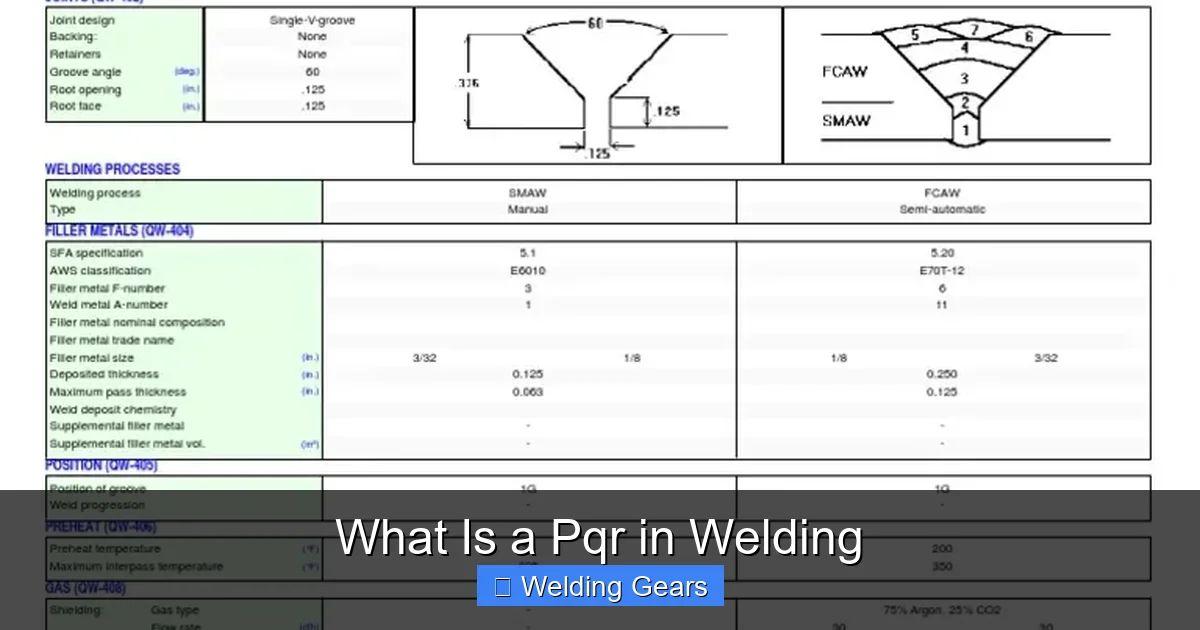
When you sit down to fill out or review a PQR, you will notice it follows a very specific structure. Each piece of information is vital to the success of the qualification. If you miss one variable, the document might be considered invalid by an auditor.
Recording the Essential Variables
What is a PQR in welding if not a collection of essential variables? These are the factors that, if changed, could affect the mechanical properties of the weld. This includes the base metal thickness, the type of joint, the filler metal classification, and the polarity used. For example, if you qualify a weld with a certain type of steel, you cannot assume the same PQR covers a different, much harder type of metal without further testing.
Documenting Testing Results
After the test weld is performed, the physical specimen must undergo testing. This often includes tension tests to see how much pulling force the weld can take before breaking, and bend tests to ensure the weld is ductile and free of internal cracks or inclusions. These results are recorded directly onto the PQR form, effectively “locking in” the procedure for future use.
The Testing Process Step-by-Step
The journey to creating a valid PQR is a disciplined process. It is not just about grabbing two pieces of metal and joining them together. It is about following a strict protocol that ensures repeatability.
Preparing the Test Coupon
First, you select the materials that represent the work you intend to perform. You prepare the edges, clean them thoroughly, and fit them up according to the joint design you want to use. This preparation phase is crucial because if your test coupon is messy or poorly fitted, the PQR will likely fail, wasting time and resources.
Witnessing and Documentation
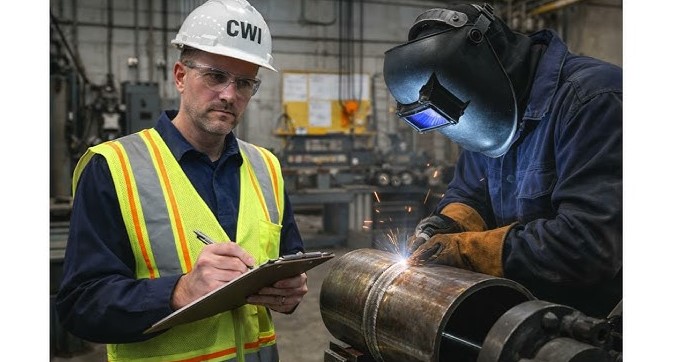
In many regulated environments, a certified welding inspector must be present to witness the weld. They are there to ensure that the welder is following the preliminary WPS. As the welder works, the inspector notes down everything: the voltage, the amperage, the travel speed, and the gas flow rate. This observational data is what fills the “recorded” section of the PQR.
Common Challenges and Pitfalls
Even seasoned professionals can stumble when trying to manage their PQR documents. Because the standards are so strict, even a small error can invalidate the entire record.
Failing to Track Changes
One of the biggest issues is when a shop decides to change a filler metal but forgets to update the PQR or run a new test. In 2026, digital documentation software has made this easier to track, but human error remains a risk. Always verify that your current shop practices align with the variables listed on your qualified PQR.
Over-Reliance on Old PQRs
Some shops try to use a PQR from ten years ago for a completely different application. Codes often have “expiration” rules or limitations on how far you can extrapolate data. If you are unsure if your existing PQR covers your current project, consult the codebook or speak with a Certified Welding Inspector (CWI). It is always better to run a new test than to risk a structural failure later.
The Role of the CWI and Quality Assurance
A Certified Welding Inspector (CWI) is your best friend when it comes to answering “what is a PQR in welding.” They are trained to navigate the complex world of code compliance. They ensure that the PQR is not just a piece of paper, but a reliable record of a successful test.
The Inspector’s Perspective
From the perspective of an inspector, the PQR is the bedrock of accountability. If something goes wrong on a job site, the PQR allows investigators to trace the process back to the source. It proves that the company exercised due diligence in testing their methods before sending them to the field.
Building a Quality Culture
By making PQRs a standard part of your workflow, you build a culture of quality. It shows your clients that you take safety seriously. In 2026, competitive advantages are often found in how reliable your work is. A company that maintains organized, accurate PQR documentation is a company that clients trust with high-stakes projects.
Looking Ahead: Future Trends in Welding Qualification
As we look further into the future of 2026 and beyond, we are seeing the integration of AI and real-time sensors into the qualification process. Some advanced welding machines can now record arc data and automatically populate digital PQR templates, minimizing the chance of manual entry errors.
Automation and Digital Records
Digital PQR systems are becoming the standard. These systems can flag when a procedure is about to reach its limit or alert the team when a test is due for recertification. This ensures that your documentation is always up to date and readily accessible for audits or client reviews.
Conclusion: Investing in Excellence
So, what is a PQR in welding? It is more than just a mandatory document. It is the hallmark of a professional. It bridges the gap between raw theory and practical reality. Whether you are a solo welder or part of a large construction team, mastering the PQR process ensures that you are providing the safest, strongest welds possible. In a world where structural integrity is non-negotiable, your PQRs are the silent proof of your commitment to excellence.
Frequently Asked Questions
What is the difference between a PQR and a WPS?
A PQR (Procedure Qualification Record) is the document containing test results that prove a weld is sound. A WPS (Welding Procedure Specification) is the instruction sheet written based on the PQR to guide the welder during production.
Do I need a PQR for every single welding job?
You generally need a PQR for code-governed work, such as pressure vessels, bridges, or structural steel. If you are doing hobby or non-critical work, you may not need formal documentation, but it is still a best practice for quality control.
Can one PQR cover multiple WPS documents?
Yes, one PQR can often support several different WPS documents, provided that the variables used in the WPS stay within the “essential” ranges qualified by the original PQR.
What happens if I fail a PQR test?
If a test coupon fails, the PQR is not valid for that procedure. You must analyze why it failed, correct the variables or techniques, and perform a new set of tests until you achieve a passing result.
How long is a PQR valid?
In most welding codes, a PQR does not expire as long as it was performed correctly according to the code version in effect at the time. However, check your specific code (like AWS D1.1 or ASME) for any unique requirements.
Is it possible to purchase pre-qualified procedures instead of doing a PQR?
Yes, some codes allow for “pre-qualified” procedures that have been historically proven to work, allowing you to skip the PQR testing phase. However, you must strictly follow the specified joint designs and parameters set by the code.