
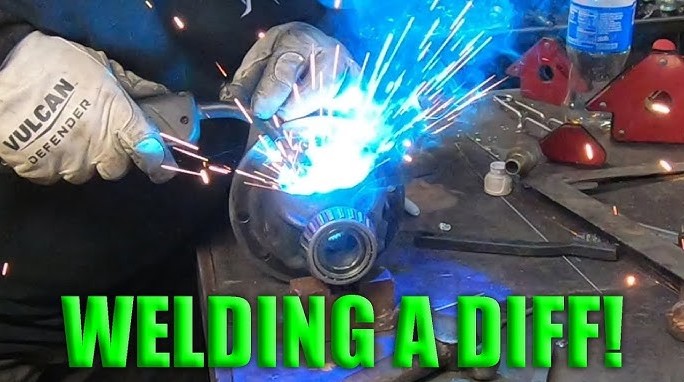
A welded differential is a permanent modification where the internal spider gears are fused together to force both wheels to rotate at the exact same speed. This setup is highly popular in the drifting world because it ensures predictable traction and consistent power delivery, though it makes daily street driving difficult and wears down tires rapidly.
If you have spent any time hanging around drift events or talking to gearheads in 2026, you have likely heard the term “welded diff” thrown around. You might be asking yourself, what is a welded differential? In the world of automotive modifications, it is often seen as the ultimate budget-friendly upgrade for anyone looking to get sideways. It is a raw, mechanical solution that turns a standard car into a drift-ready machine.
At its core, a welded differential takes the complex job of a standard differential and simplifies it through brute force. Instead of letting your wheels spin at different speeds which is great for grocery shopping it forces them to act as one solid unit. While it sounds like a simple weld job, there is a lot more going on under the metal casing. Let’s dive deep into how these units work and why they are so controversial.
Key Takeaways
- Locked Power: A welded differential eliminates the “open” function, meaning both rear wheels spin simultaneously regardless of traction.
- Drifting Performance: It is the most cost-effective way to achieve consistent, controllable oversteer required for professional drifting.
- Street Hazards: Using a welded differential on public roads causes significant “tire chirp,” increased mechanical stress, and difficult parking maneuvers.
- Irreversible Change: Once you weld the gears, the differential can no longer act as an open unit, making this a permanent alteration.
- Mechanical Wear: The drivetrain experiences higher loads, which can lead to snapped axles or transmission stress if the car is not built for the abuse.
- Safety Warning: Because the wheels are locked, cornering in rain or snow becomes extremely dangerous, increasing the risk of loss of control.
Understanding the Basics of a Welded Differential
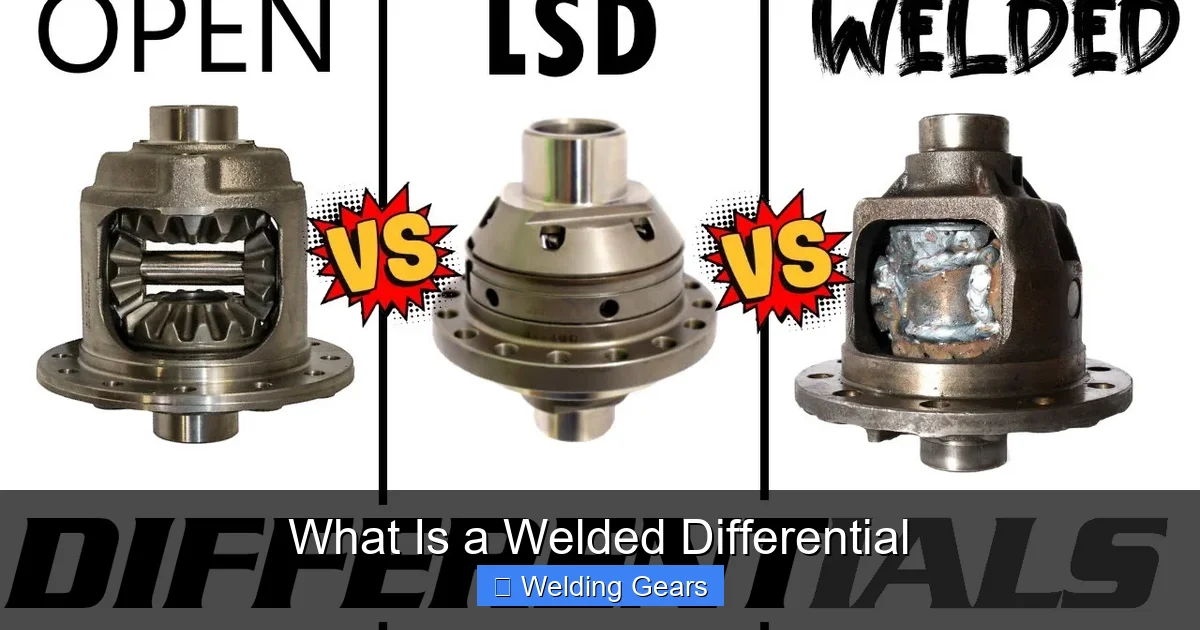
To understand what is a welded differential, we first have to look at how a factory “open” differential functions. When your car turns a corner, the outside wheel has to travel a longer path than the inside wheel. A normal differential allows the wheels to spin at different speeds to accommodate this. It uses a set of spider gears inside the housing to balance these forces.
The Concept of Locking
When you weld those spider gears together, you are effectively destroying the differential’s ability to “differentiate.” The internal gears are fused into a single block of steel. Because the gears can no longer rotate against each other, the axle shafts are forced to spin in perfect unison. This is why people call it a “welded diff” or a “spool,” because the end result is a solid axle that behaves like a racing go-kart.
Why Drifters Love It
Drifting is all about maintaining a slide. In an open differential, if one wheel loses traction, the engine sends all the power to the wheel that has the least grip. This is terrible for drifting because your car will just spin one tire and lose momentum. With a welded differential, power is always distributed 50/50. If you hit the gas, both wheels spin, ensuring the back end of the car steps out consistently every single time.
The Mechanical Process of Welding
If you are wondering what is a welded differential in terms of the actual labor, it involves taking the third member (the guts of the differential) out of the car. The mechanic strips away the oil and cleans the internal spider gears thoroughly. Using a high-strength MIG or TIG welder, they fill the gaps between the teeth of the gears.
Preparation is Everything
You cannot just slap some metal in there and hope for the best. The gears must be clean of all oil, or the weld will be brittle and prone to cracking. A good welder will add extra steel plates or “fill” material to ensure the union between the gears is rock solid. If the weld breaks while you are driving, the loose metal shards can destroy the entire housing, leading to a very expensive repair.
The Risks of Poor Welding
If you rush the process, you risk “cold welds.” These are welds that look okay on the surface but haven’t actually fused the metals together. When you take that car onto the track and apply torque, those welds can snap. That is why it is vital to have someone who knows exactly what they are doing handle the welding process, even if it is a budget mod.
Driving Dynamics and Daily Use
Now that we have established what is a welded differential, it is important to talk about how it feels on the road. Many beginners think they can drive a welded diff car to work every day. While you technically can, it is rarely a pleasant experience. Because the wheels are locked, every time you turn a corner, the inside tire has to skip or chirp to keep up with the outside tire.
Handling Characteristics
In dry conditions, the car will feel twitchy. In parking lots, your tires will make a loud “scrubbing” sound that draws stares from everyone nearby. This is just the sound of your rubber struggling to keep up with the forced rotation. It puts a lot of stress on your axles, wheel bearings, and suspension bushings. If you use this setup on your daily driver, be prepared to replace tires and suspension parts much sooner than usual.
Safety Concerns in Wet Weather
The most dangerous part of having a welded differential is driving in the rain or snow. Because both wheels are locked, the moment you hit a slick patch, the back end of the car will try to rotate. You do not have the safety net of an open differential, which would normally keep the car stable. It is highly recommended to keep a welded diff car off public streets, especially if you live in an area with unpredictable weather.
Alternatives to the Welded Differential
If you are worried about the harshness of a welded unit, there are other ways to get better traction. Understanding what is a welded differential often leads people to look for more refined solutions. Limited Slip Differentials, or LSDs, are the most common alternative.
Clutch-Type LSDs
A clutch-type LSD uses a series of internal friction plates to allow some slip when you are turning, but locks up when you apply power. It offers the best of both worlds: good handling for street driving and enough lock for occasional track use. The downside? They are significantly more expensive than the price of a welding rod and a few hours of labor.
Helical Differentials
Helical or Torsen-style differentials use gears instead of clutches to distribute torque. They are much smoother than welded diffs and require almost no maintenance. However, they are complex pieces of engineering. For a professional drifter, nothing beats the pure consistency of a weld, but for a hobbyist, an LSD is almost always the smarter choice.
Is It Right for Your Build?
So, you have read this far and you still want to know if you should do it. Ask yourself what your main goal is. If you are building a dedicated drift car that you trailer to the track, a welded differential is a fantastic tool. It is cheap, reliable, and does exactly what you need it to do to maintain a slide.
Check Your Local Laws
Before you weld your diff, check your local regulations. In many regions, modifying a differential is considered a safety violation for street-registered vehicles. Insurance companies may also refuse to cover a car with such a modification. Always prioritize safety and legal compliance before you start your project.
Final Tips for Success
If you decide to go for it, make sure you keep a spare differential housing in your garage. If you ever get tired of the locked behavior or decide to sell the car, swapping out the diff is much easier if you have an open one ready to drop in. Treat the weld as a tool for the track, not a feature for your daily commute.
Conclusion
To summarize, what is a welded differential? It is a permanent, aggressive modification that locks your rear wheels to spin as one. It is a rite of passage for many drifters, offering unparalleled consistency on the track at a price point that any budget can handle. However, it comes with the trade-offs of increased wear, loud tire scrub, and tricky handling in daily driving scenarios.
Ultimately, a welded differential is about passion and performance. It turns a standard drivetrain into a specialized piece of drifting equipment. If you understand the risks and are prepared for the mechanical realities, it can be a rewarding way to transform your car’s personality. Just remember to drive smart, keep your drifts on the track, and always respect the power you have under the hood.
Frequently Asked Questions
Is a welded differential legal on the street?
In most regions, it is not recommended for street use because it significantly alters the handling and safety of the vehicle. You should check your local traffic laws, as modifying the differential can lead to insurance issues and safety citations.
Will a welded differential break my axles?
Yes, the increased mechanical stress caused by a locked differential can snap stock axles, especially during high-torque maneuvers. Many drifters upgrade to stronger, aftermarket axles to handle the extra load created by the weld.
Can I weld an automatic transmission car’s differential?
Yes, you can weld the differential regardless of whether your car is a manual or automatic. The process is the same, though the power delivery in an automatic can sometimes make the car feel different when transitioning into a drift.
How much does it cost to weld a differential?
The cost is usually very low, often just the price of a few welding rods and your time, or a small shop fee. It is widely considered the cheapest performance modification in the drifting community.
Does a welded differential affect my gas mileage?
You may notice a slight drop in fuel efficiency due to the increased resistance and “scrubbing” of the rear tires during turns. However, most people who install a welded diff are less concerned with fuel economy and more focused on track performance.
Can I undo a welded differential?
No, the process is permanent because the gears are physically fused with metal. To return to an “open” differential, you must replace the entire internal gear set or swap the differential housing for an unwelded one.