
Electron beam welding (EBW) is a high-energy fusion process that uses a concentrated beam of electrons to join metals with unmatched precision. By operating in a vacuum environment, this technology creates incredibly narrow, deep welds with minimal thermal distortion, making it the gold standard for high-stakes industries like aerospace and medical device fabrication.
Have you ever wondered how engineers join the complex, high-strength parts found in jet engines or deep-space satellites? It isn’t done with the handheld torches you might see in a local garage. Instead, they turn to a sophisticated technology known as electron beam welding.
If you have been asking yourself what is electron beam welding, you are in the right place. It is a fascinating process that feels more like science fiction than traditional manufacturing. At its core, electron beam welding is all about focus and energy.
By accelerating a stream of electrons to incredible speeds and focusing them into a tiny point, we can melt metal with pinpoint accuracy. It is a clean, powerful, and incredibly precise way to fuse materials together. As we look at the manufacturing landscape in 2026, this technology has become more accessible and smarter than ever before.
Key Takeaways
- Extreme Precision: Electron beam welding produces very narrow heat-affected zones, which protects the integrity of the base materials.
- Vacuum Advantages: Performing the weld in a vacuum eliminates impurities like oxygen and nitrogen, leading to exceptionally strong and clean joints.
- Deep Penetration: The technology excels at joining thick metal sections in a single pass, which is much faster than traditional welding methods.
- Versatility: It can join a wide range of dissimilar metals that are usually difficult to fuse using arc welding.
- Automation Focused: As of 2026, modern EBW systems are highly automated, ensuring consistent, repeatable results for mass production.
- Low Distortion: Because the heat input is so focused, parts undergo very little warping, reducing the need for costly post-weld machining.
The Science Behind the Beam
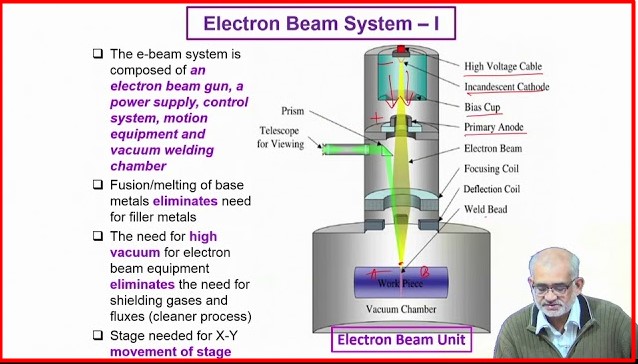
To understand what is electron beam welding, we first need to look at how it works on a physical level. Think of it like a high-powered flashlight, but instead of light particles, it shoots electrons. These electrons are generated by a cathode and accelerated through a high-voltage field. Because electrons have mass and velocity, when they strike the metal workpiece, their kinetic energy converts instantly into intense heat.
The Role of the Vacuum
One of the most important things to remember about electron beam welding is the vacuum chamber. Why a vacuum? Well, if the beam had to travel through air, the electrons would collide with gas molecules and scatter, losing their focus and power.
Inside a vacuum chamber, the beam stays tight and powerful. This environment also prevents the molten metal from reacting with oxygen or nitrogen, which keeps the weld pool incredibly pure. For sensitive materials like titanium, this is a total game-changer.
Focusing the Energy
The system uses electromagnetic lenses to focus the beam. Imagine a lens on a camera; by adjusting the electromagnetic coils, the operator can make the beam wide or tiny. This flexibility allows the welder to control the shape of the fusion zone.
When you need to join thick plates, you set the beam to a very narrow, deep focus. This creates a “keyhole” effect that allows the weld to penetrate deep into the material in one single, clean sweep.
Advantages for Modern Engineering
When you compare electron beam welding to standard methods like MIG or TIG welding, the differences are huge. The most significant benefit is the reduction of heat input. In standard welding, you have to heat a large area to melt the metal, which can cause the part to expand and warp. With electron beam welding, the heat is so concentrated that the surrounding metal stays relatively cool.
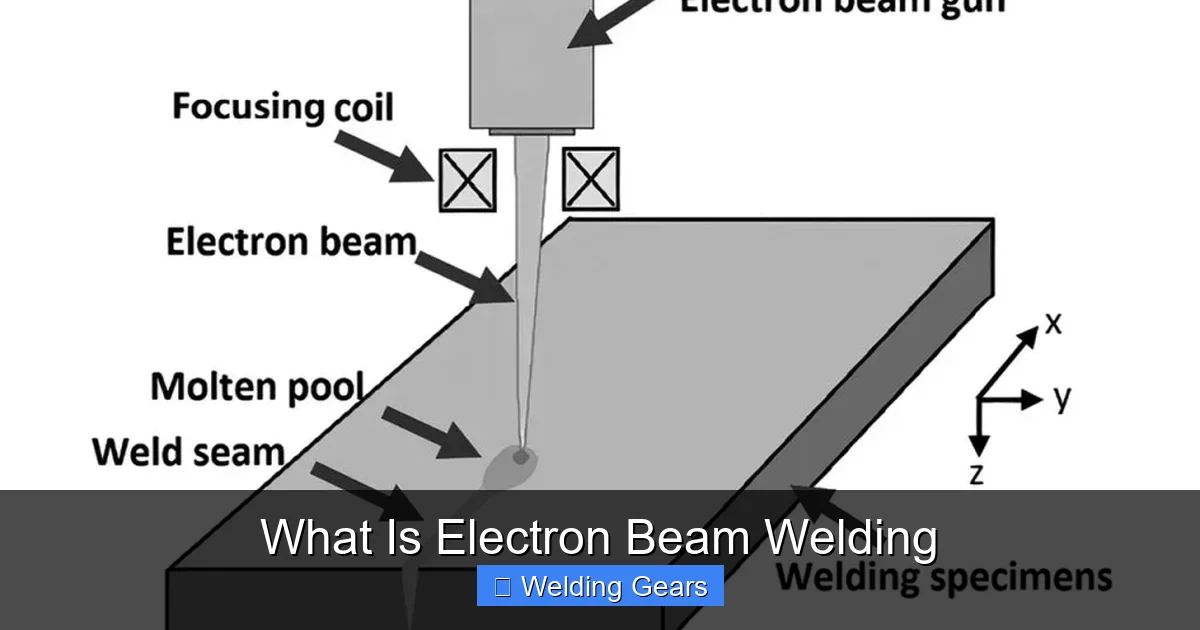
Visual guide about What Is Electron Beam Welding
Image source: weldingproperty.com
Minimal Distortion and Clean Results
Because the heat is localized, parts stay straight. This is vital for aerospace components that need to be accurate to within a fraction of a millimeter. You do not have to spend hours straightening or machining the part after the weld is done.
Furthermore, since the process happens in a vacuum, you rarely see the oxidation or scale that plagues arc welding. Your finished product looks as clean as the metal you started with.
Joining Dissimilar Metals
Can you weld copper to steel? Usually, that is a nightmare for traditional welders. Electron beam welding handles this task with grace. By adjusting the position of the beam, you can control which side gets more heat, allowing two completely different materials to meld at their respective melting points. This capability has opened up new designs for electrical connectors and high-heat mechanical components in 2026.
Applications in the 2026 Manufacturing Landscape
You might be wondering where this technology actually lives. In the world of 2026, electron beam welding is the backbone of the aerospace industry. Almost every major turbine component, from fan blades to engine casings, relies on this process to handle the extreme temperatures and pressures of flight. It creates joints that are often stronger than the parent material itself.
Medical and Automotive Uses
Beyond the skies, electron beam welding is playing a huge role in medical technology. Think about heart pacemakers or high-end surgical tools. These need to be perfectly sealed, airtight, and biocompatible.
Electron beam welding provides that hermetic seal without using fillers or chemicals that might be toxic. In the automotive world, it is used for high-performance transmission gears where strength and weight are the ultimate goals.
The Rise of Large-Scale Vacuum Chambers
In the past, you were limited by the size of your vacuum chamber. Today, manufacturers are using portable, local vacuum systems. Instead of putting the whole car in a box, they put a small seal around just the weld area. This makes electron beam welding much more versatile and cost-effective for large structures that would have been impossible to weld using this method just a decade ago.
Safety and Operational Considerations
Working with high-energy electron beams is serious business. When electrons strike metal, they don’t just create heat; they also generate X-rays. Because of this, the entire welding process must be shielded.
In 2026, the technology is safer than ever, with lead-lined chambers and automated monitoring systems that keep workers completely out of harm’s way. The controls are handled via digital interfaces outside the chamber.
The Skillset Required
You do not need to hold a torch to be an electron beam welder. Today, it is all about software and parameters. An operator needs to understand metallurgy, vacuum physics, and computer programming. You are essentially teaching a machine how to handle specific material alloys. It is a high-tech career that requires a mix of engineering knowledge and technical software skills.
Preventive Maintenance
One challenge with this equipment is keeping the vacuum system running perfectly. Dust, oil, and moisture are the enemies of a vacuum. Modern systems come with self-diagnostic tools that alert the team before a vacuum seal begins to lose pressure. Following these maintenance schedules is key to ensuring that every weld meets the strict aerospace and medical standards of 2026.
The Future: AI and Real-Time Inspection
If you are looking at what is electron beam welding in the future, it is all about artificial intelligence. In 2026, we are seeing systems that can inspect the weld pool in real-time. A high-speed camera watches the beam, and an AI model determines if the weld is forming correctly. If it detects a potential bubble or weakness, the system automatically adjusts the beam power or speed in milliseconds.
Data-Driven Quality Control
Every weld creates a massive amount of data. Engineers can now look back at the “digital twin” of a component to see exactly how it was welded. This level of traceability is essential for safety-critical components. We are moving toward a time where a certificate of authenticity is generated automatically for every single part, proving that the weld parameters stayed within the perfect range for every second of the process.
Sustainability and Efficiency
Electron beam welding is also incredibly energy-efficient. Because it is so fast and creates such deep penetration in one pass, it uses far less electricity than arc welding for the same volume of metal. As factories look to reduce their carbon footprints in 2026, this technology is being highlighted as a “green” manufacturing choice, especially when you factor in the massive reduction in scrapped parts caused by warping.
Conclusion
So, what is electron beam welding? It is the pinnacle of fusion technology. By mastering the ability to control electrons in a vacuum, we have unlocked the power to build stronger, lighter, and more complex machinery than ever before. Whether it is helping us explore deeper into space or advancing life-saving medical devices, this process remains a cornerstone of innovation.
As we continue through 2026, the barriers to entry for this technology are lowering. More shops are investing in these systems, and the software makes the process more user-friendly.
If you are in the engineering or manufacturing field, understanding the potential of the electron beam is no longer optional – it is a competitive advantage. Keep exploring, stay curious about these high-tech tools, and you will see just how bright the future of welding really is.
Frequently Asked Questions
What is the main difference between electron beam welding and arc welding?
The main difference is the energy source and environment. Electron beam welding uses a high-velocity stream of electrons in a vacuum, while arc welding uses electricity to create an arc in the open air, resulting in a much more concentrated and precise weld for the former.
Is electron beam welding expensive to set up?
Yes, the initial investment for vacuum chambers and electron guns is high compared to traditional welding equipment. However, the operational efficiency and reduced need for post-weld repair often make it more cost-effective for high-precision, large-volume production.
Can I weld any type of metal using this method?
It works on a huge variety of metals, including reactive metals like titanium, zirconium, and tantalum. It is especially effective for materials that are difficult to join with conventional methods, though some high-zinc alloys can be tricky due to vaporization.
How deep can an electron beam weld go?
Electron beam welding is capable of extreme penetration. In some specialized industrial applications, it can weld through steel sections that are over 100 millimeters thick in a single, high-speed pass.
Does the vacuum environment limit the size of parts?
Historically, yes, because the part had to fit inside a box. Modern technology now utilizes localized vacuum seals, allowing the process to be used on much larger structures that do not require an entire chamber.
Is electron beam welding dangerous to the operator?
The process itself generates X-rays, which are hazardous, but the equipment is designed with lead shielding and failsafe interlocks. In 2026, operators remain safely outside the chamber, making the process very secure when standard safety protocols are followed.