
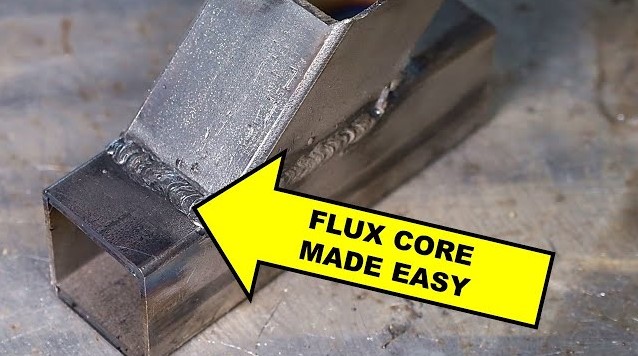
Flux core welding is an exceptionally versatile process, celebrated for its ability to penetrate thick metal and perform reliably in windy, outdoor conditions. By utilizing a continuous wire with internal shielding, it eliminates the need for bulky gas cylinders, making it the go-to choice for field repairs, heavy fabrication, and construction projects that demand both speed and portability.
When you start your journey into the world of metal fabrication, you quickly realize there are many ways to melt steel together. But if you talk to any seasoned professional or look at the gear lists of mobile repair shops in 2026, you will see one process showing up over and over again.
You might ask yourself, “What is flux core welding good for?” and the answer is that it is the ultimate tool for getting things done quickly, efficiently, and anywhere you happen to be standing. Flux core arc welding (FCAW) is a process that has evolved rapidly. While it used to be seen as a messy cousin to high-end TIG welding, today’s machines have turned it into a powerhouse.
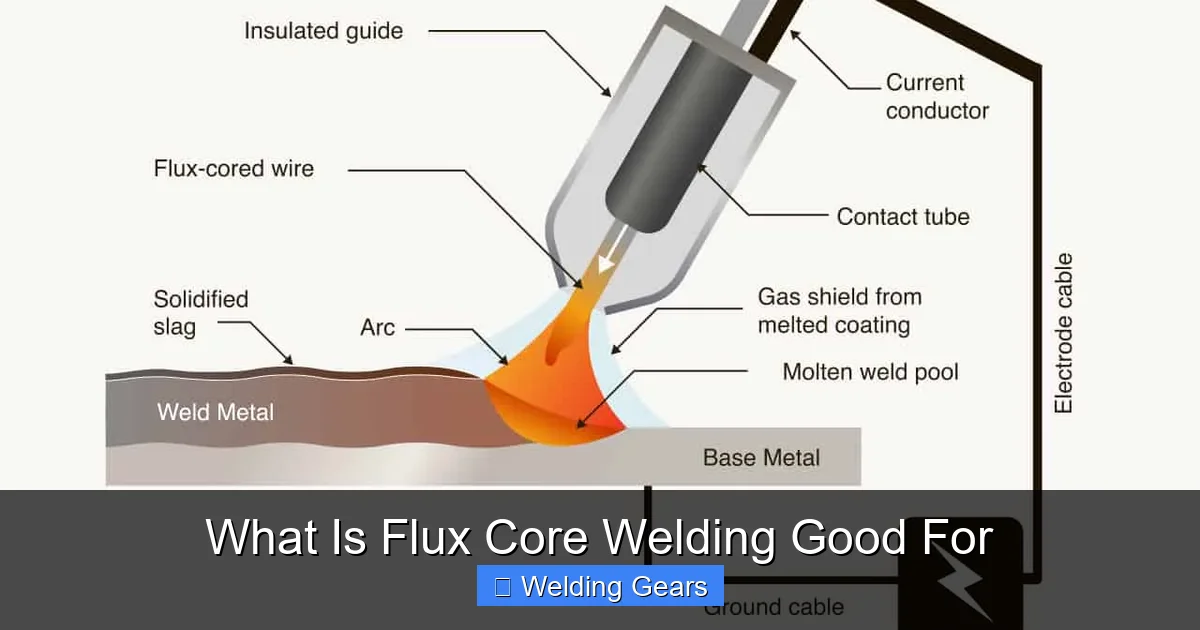
It is a process that uses a hollow wire filled with flux a chemical compound that protects the weld pool as it forms. Because the protection is inside the wire, you do not need to carry a heavy bottle of shielding gas around with you. For many of us, this is the magic ingredient that makes welding accessible.
Key Takeaways
- Outdoor Reliability: Flux core welding does not rely on external shielding gas, making it immune to wind interference that ruins other welding processes.
- Superior Penetration: It is excellent for thick steel, providing the deep penetration required for structural integrity in heavy-duty fabrication.
- High Deposition Rates: This method allows you to lay down weld metal faster than traditional MIG or stick welding, which is a game-changer for large industrial jobs.
- Portability: Without the need for gas tanks, flux core setups are lightweight and perfect for mobile repair work or remote site access.
- Ease of Use: Modern 2026 flux core machines are incredibly user-friendly, offering “synergic” settings that help beginners get professional-looking results quickly.
- Versatility: Whether you are working on farm equipment, structural beams, or home auto repairs, flux core is a workhorse that handles almost any project.
The Versatility of Flux Core Welding
The primary reason people choose this method is its incredible adaptability. When you think about what is flux core welding good for, you have to think about the environment. If you are outside and the wind starts picking up, traditional MIG welding becomes a headache because the wind blows your shielding gas away. Flux core doesn’t care about the breeze. The gas is created right at the arc, so your weld stays shielded and strong even in gusty conditions.
Perfect for Outdoor Repairs
Farmers, ranchers, and fence builders love this method. When a tractor part snaps in the middle of a hundred-acre field, you cannot exactly bring the tractor into a controlled, indoor shop. Flux core welding is the savior of mobile repair. You can throw your machine in the back of a truck, drive to the job site, and fix the equipment on the spot. It is the definition of “get it done” technology.
Working with Dirty Metal
We do not always have the luxury of perfectly clean, shiny steel. Sometimes, you are dealing with rusty fence posts or old car frames. Flux core is great here because the chemical composition of the flux actually helps clean the weld pool while you work. While you should always aim for clean metal, flux core is much more forgiving than other methods when you are working on real-world projects that aren’t perfectly polished.
Efficiency and Speed in Industrial Fabrication
If you have ever visited a structural steel job site in 2026, you have seen flux core welding in action. It is the backbone of skyscraper construction and bridge building. Why? Because it moves fast. In a professional environment, time is money. This process allows you to deposit more weld metal per hour than almost any other manual process.
Visual guide about What Is Flux Core Welding Good For
Image source: weldguru.com
High Deposition Rates
The “deposition rate” is just a fancy way of saying how much metal you can put down in a given amount of time. Because the wire is continuous, you do not have to stop every few minutes to change a rod like you do with stick welding. You just keep pulling the trigger. This efficiency is why industrial fabricators can complete massive projects without falling behind schedule.
Penetration Power
What is flux core welding good for when you need to join thick, heavy plates? It is arguably the best choice. Because the arc is hot and concentrated, you get deep penetration into the joint. This is critical for safety when you are building structures that need to hold a lot of weight. Whether you are building a custom trailer frame or a workshop crane, you can trust that your welds are going deep into the base material.
Choosing the Right Gear in 2026
The welding industry has changed a lot in the last few years. In 2026, the technology inside your welder is smarter than ever. When you are looking for a flux core machine, you aren’t just looking for a “hot box” anymore; you are looking for a computer that helps you weld better. Many new machines now feature digital displays and auto-set capabilities that make the learning curve much shorter than it used to be.
The Rise of Synergic Machines
Synergic welding machines are a huge leap forward. You tell the machine what thickness of metal you are using and what diameter of wire you have loaded, and the machine automatically sets the voltage and wire feed speed for you.
This removes the guesswork that used to frustrate beginners. If you are wondering what is flux core welding good for, it is good for getting people started on their path to becoming a skilled welder without spending years mastering the settings.
Portability Factors
When you are shopping for gear, look for “Inverter” technology. These machines use high-frequency electronics to handle the power, which means they are much smaller and lighter than the old copper-transformer welders. You can easily lift a professional-grade flux core welder with one hand. This portability is a major factor in why flux core has become the standard for mobile fabrication.
Practical Tips for Better Flux Core Results
Even though flux core is forgiving, you still need to use the right technique to get the best results. Here are some tips to help you level up your work. First, watch your travel angle. You generally want to push the wire slightly or keep it at a neutral angle. If you drag the gun too much, you might end up with too much slag trapping in your weld, which can create weak spots.
Understanding Polarity
This is a detail that trips up a lot of beginners. Most “gasless” flux core welding uses DCEN (Direct Current Electrode Negative) polarity. If you have your wires plugged in backward, the weld will look like a bird’s nest and won’t penetrate properly.
Always check the manual that came with your wire. The package will explicitly tell you which polarity to use. Getting this simple step right is the difference between a frustrating afternoon and a productive project.
Managing the Slag
When you use flux core, you will notice a crusty layer on top of your finished weld. That is the slag. It is there to protect the weld while it cools. Once the weld is cool, you need to chip it off with a hammer and scrub it with a wire brush. Do not skip this step! Not only does it make the weld look clean, but it also allows you to inspect your work to make sure there are no cracks or voids.
Comparing Flux Core to Other Methods
It is helpful to compare flux core to MIG and Stick to see where it fits in the landscape of 2026 metalworking. MIG welding is beautiful and clean, but it requires that pesky gas bottle. If you are welding in a garage, MIG is king. However, if you step outside or need to work on heavy structural steel, MIG just cannot keep up. Stick welding is also great for outdoors, but it is slow and requires constant rod changes.
The Middle Ground Champion
Flux core really sits in the sweet spot between these two. It gives you the speed and continuous wire of MIG, but the outdoor toughness of Stick. It is the hybrid hero of the welding world. This is exactly what is flux core welding good for: bridging the gap between professional-grade industrial power and the convenience required for home shop use.
Safety Considerations
Since flux core produces a bit more smoke and spatter than MIG welding, you need to be mindful of your work area. Always weld in a well-ventilated space. Because the process creates more “pop” and spatter, make sure you are wearing high-quality leather gloves and a proper welding helmet. In 2026, auto-darkening helmets are so affordable that there is no excuse for not protecting your eyes.
The Future of Flux Core Welding
Looking ahead, we are seeing more focus on environmentally friendly wire formulations and even more compact power sources. The goal of current manufacturers is to make the process as “plug-and-play” as possible.
As more people discover the joy of DIY metalworking, flux core continues to be the entry point for thousands of hobbyists each year. It is a reliable, tough, and honest way to join metal.
Whether you are fixing a broken lawn mower, building a new gate for your driveway, or learning the trade to start a career, flux core is a skill that will never leave you high and dry. It handles the dirt, the wind, and the heavy lifting.
By mastering this process, you are equipping yourself with the ability to build and repair almost anything in your world. That is the true answer to what is flux core welding good for – it is good for empowering you to be a maker in your own right.
Conclusion
Flux core welding remains an essential pillar of modern fabrication. Its ability to perform in challenging environments, combined with high deposition rates and the lack of external shielding gas, makes it a vital tool for both professionals and hobbyists in 2026.
If you are starting your journey or looking to add a reliable process to your shop, flux core is a fantastic choice that offers immediate, tangible results. Pick up a machine, grab some wire, and start building your future today.
Frequently Asked Questions
Is flux core welding suitable for beginners?
Yes, flux core is arguably the best starting point for beginners because it is easy to set up and does not require managing external gas tanks. Modern “synergic” machines further simplify the process by automatically suggesting settings based on your material.
Can I use flux core welding indoors?
You certainly can, but because flux core produces more smoke and spatter than MIG welding, proper ventilation is essential. Make sure you have a fan or a dedicated fume extraction system to keep your shop air clean.
Do I need shielding gas for flux core?
No, one of the main advantages of flux core is that it is “gasless.” The shielding mechanism is built into the core of the wire, which creates its own protection as it melts.
Is flux core welding strong enough for structural work?
Absolutely; it is the industry standard for much of the structural steel work seen in building construction. When performed correctly, flux core welds provide excellent deep penetration and high-strength bonds.
What is the biggest difference between flux core and MIG?
The primary difference is the shielding method; MIG requires a bottled gas mixture to protect the weld, while flux core carries its own protection inside the wire. This makes flux core significantly more reliable for outdoor projects where wind could blow gas away.
How do I clean up after a flux core weld?
After the weld cools, you will find a layer of slag on top of the bead. You should remove this using a chipping hammer followed by a wire brush to expose the clean weld underneath for inspection.