
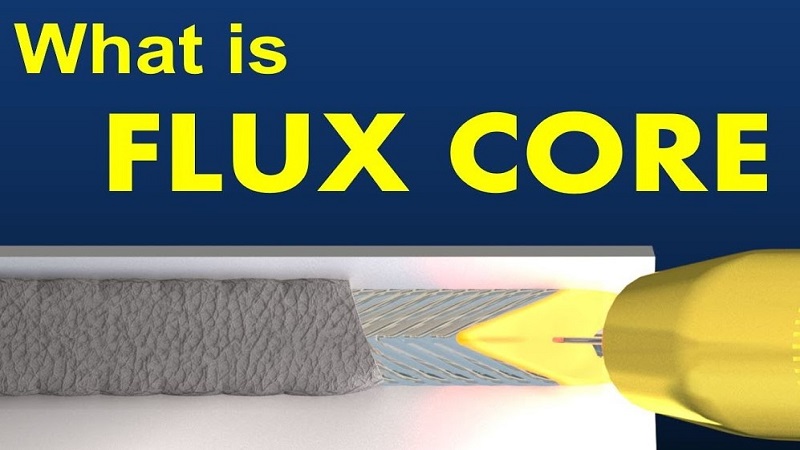
Flux core arc welding (FCAW) is a versatile welding process that uses a hollow wire filled with flux to create a strong, shielded weld. It is highly valued for its high deposition rates and portability, making it a top choice for both construction professionals and home hobbyists in 2026.
If you have spent any time hanging around a fabrication shop or browsing the welding aisle at your local hardware store, you have likely heard the term “flux core.” You might have wondered, what is flux core arc welding? In simple terms, it is a process that acts a bit like a cross between stick welding and a traditional wire-feed welder.
It is fast, tough, and incredibly handy for anyone working on projects that require strength and speed. As we move through 2026, welding technology has become more refined than ever. Whether you are building a custom gate for your backyard or working on structural steel projects, knowing how this process works can change your life.
It is the workhorse of the construction industry because it produces strong welds without needing bulky external gas tanks, provided you use the right type of wire. Let us dive into the details so you can master this craft.
Key Takeaways
- Efficiency: Flux core arc welding offers faster deposition rates than traditional MIG or Stick welding.
- Wind Resistance: Because it uses internal shielding, it works perfectly outdoors, even in breezy conditions.
- Versatility: It can be used on various metals, including carbon steel, stainless steel, and cast iron.
- Equipment: Many modern 2026 welding machines offer multi-process capabilities, making FCAW more accessible.
- Self-Shielded vs. Gas-Shielded: Understanding the difference between these two FCAW types is crucial for your project’s success.
- Ease of Use: It is generally easier to learn than TIG welding, making it a great starting point for beginners.
Understanding the Basics of Flux Core Arc Welding
At its core pun intended this process involves a hollow wire electrode. Inside that wire is a mixture of flux, which is the secret sauce of the operation. When the welding arc hits the metal, that internal flux melts and produces a shielding gas and a protective layer of slag. This process protects the molten puddle from the air, which would otherwise ruin the weld by causing porosity.
The Two Main Types
You need to know that there are two primary ways to run a flux core arc welding machine. First, we have Gas-Shielded Flux Core (FCAW-G). This version uses both the internal flux and an external cylinder of shielding gas, like CO2 or an Argon blend. This gives you a cleaner finish and is often used for heavy industrial applications.
Second, there is Self-Shielded Flux Core (FCAW-S). This is the type most hobbyists love. The wire is designed to generate its own shielding as it burns. This means you do not need a gas tank.
You can just plug the machine into a standard outlet, grab your ground clamp, and start burning metal. It is the ultimate “grab-and-go” solution for working outside where the wind would otherwise blow your gas shielding away.
The Advantages of Choosing Flux Core
Why do people choose this method over others? The biggest reason is speed. Flux core arc welding is known for its high deposition rate. You are essentially melting a lot of filler metal into the joint very quickly. If you are welding thick sections of steel, you will be done much faster than you would with a stick welder.
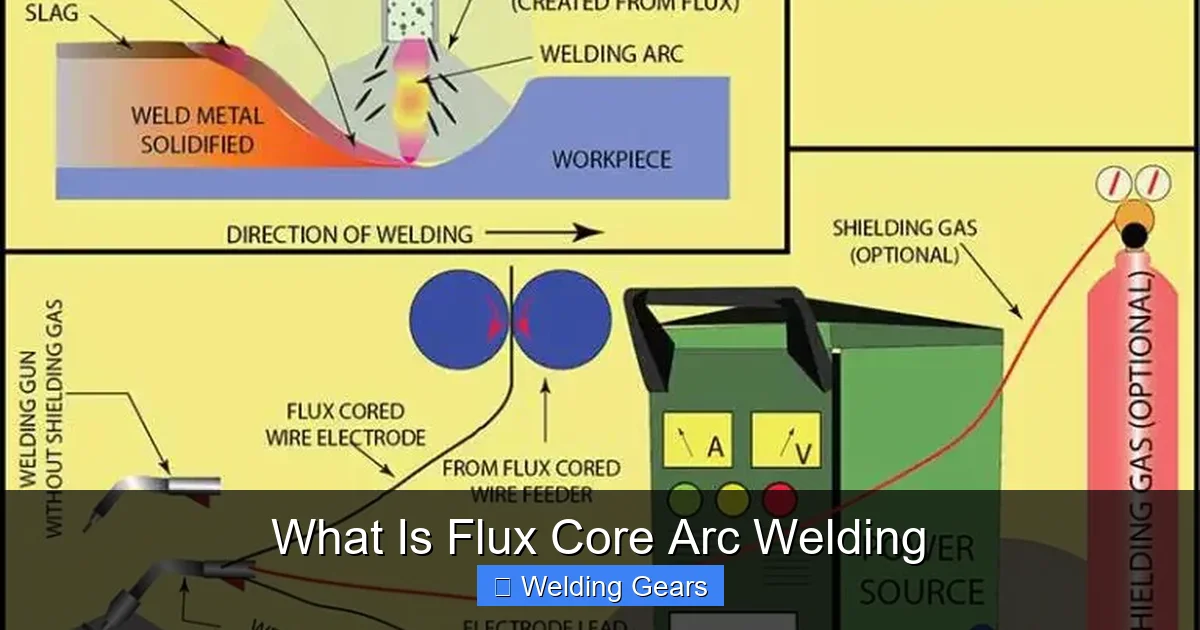
Visual guide about What Is Flux Core Arc Welding
Image source: workshopinsider.com
Portability and Convenience
In 2026, we value portability. If you are working on a farm, a remote build site, or simply out in your driveway, you do not want to drag a heavy gas cylinder around. Self-shielded flux core welding gives you the freedom to move. You only need the welder, a spool of wire, and your safety gear.
Penetration Power
Because the arc is so hot and concentrated, it is fantastic for thicker materials. Many welders love the deep penetration they get, which is essential for structural integrity. You are getting a weld that sinks deep into the metal, ensuring that your connection is as strong as the steel itself. It is also quite forgiving on “dirty” or slightly rusty metal compared to MIG welding, which requires a pristine, clean surface to work properly.
Essential Equipment for Beginners
Getting started with this process does not require a massive investment, but it does require the right mindset. You will need a constant voltage power source. Most entry-level multi-process welders sold today can handle flux core without any extra modifications.
The Importance of the Wire
Not all wires are created equal. You must select the right wire for the thickness of the metal you are using. Usually, you will see labels like E71T-11. That might look like a code, but it tells you the tensile strength, the position you can weld in, and the flux type. Always check your machine’s manual to see what wire diameter it supports. A 0.030-inch wire is a common starting point for most home projects.
Safety Gear
Never skip the safety steps. You need a good welding helmet with an auto-darkening feature. You also need heavy-duty leather gloves and a jacket. Flux core welding creates a lot of sparks more than MIG welding and produces a fair amount of smoke. Always work in a well-ventilated area to keep your lungs healthy.
Mastering the Technique
Once you understand what is flux core arc welding, it is time to practice your technique. Unlike stick welding, where you are constantly changing rods, flux core allows for continuous beads. This is a huge advantage for long joints. However, you need to manage your “stick-out.”
Managing Stick-Out
Stick-out is the distance from the tip of the contact tube to the work piece. If you hold the gun too far away, the shielding gas won’t protect the weld properly. If you hold it too close, you might melt the tip of your welding gun. Aim for about 1/2 inch to 3/4 inch of wire stick-out. This is usually the sweet spot for a steady, consistent arc.
Travel Speed and Angle
Your travel speed determines the look of your bead. If you move too fast, you will get a thin, weak weld. If you move too slowly, you will pile up too much material and potentially burn through the metal. Most people prefer a “drag” angle, where you are pulling the gun along the seam rather than pushing it. This gives you better visibility and a deeper weld pool.
Troubleshooting Common Issues
Even the pros run into trouble occasionally. One common issue is excessive spatter. While flux core is known for being a bit “spattery,” if it looks like a popcorn factory inside your helmet, check your settings. You might have your voltage too high or your wire feed speed too low. Sometimes, simply adjusting the tension on your wire drive rolls can make a world of difference.
Dealing with Slag Inclusion
Slag is the crusty layer that covers your weld. It is supposed to be there to protect the cooling metal, but it can get trapped inside the weld. If you see dark spots or trapped debris, you likely didn’t clean your base metal well enough, or you were moving too fast. Remember to always chip your slag off with a hammer and clean the weld with a wire brush between passes if you are doing multiple layers.
The Future of Welding in 2026
As we navigate through 2026, flux core technology continues to evolve. We are seeing more compact inverter-based welders that are lighter and more efficient than ever. These machines offer digital readouts that help you dial in your settings precisely. This makes it easier for a beginner to understand exactly what is happening inside the arc.
Furthermore, the variety of specialty wires available now allows you to weld things that were previously very difficult to handle. Whether you are working with high-strength alloys or specialized steel for custom automotive frames, the industry has a flux core wire to match. It is truly an exciting time to be a welder.
Conclusion
So, what is flux core arc welding? It is the perfect blend of power, efficiency, and accessibility. It allows anyone from a garage tinkerer to a bridge builder to create strong, durable bonds with relative ease. By understanding the equipment, practicing your stick-out, and always prioritizing safety, you can master this essential skill.
Do not be afraid to pick up that torch and strike an arc. The more you practice, the more intuitive the process becomes. Before long, you will be laying down professional-looking beads and tackling projects you never thought possible. Keep your eyes on your puddle, stay steady, and enjoy the sparks!
Frequently Asked Questions
Is flux core welding better than MIG welding?
Neither is strictly “better,” but they serve different purposes. Flux core is superior for outdoor work and thick materials, while MIG is generally preferred for thin, clean sheet metal in a shop environment.
Do I need an external gas tank for flux core?
It depends on the wire you buy. If you use self-shielded wire, you do not need a gas tank, making it perfect for portable jobs.
Can I use flux core wire in any welder?
You need a machine that supports flux core, which most modern multi-process welders do. You also need to ensure your machine can reverse the polarity, as flux core usually runs on Direct Current Electrode Negative (DCEN).
Why is there so much smoke when I weld?
Flux core produces more smoke than other methods because of the chemical reaction in the flux. Always weld in a well-ventilated area or use a fume extractor to keep your workspace safe.
Is it hard for beginners to learn?
It is widely considered one of the easiest welding methods to learn. The continuous wire feed makes it much simpler to maintain an arc compared to stick welding.
What should I do if my weld is full of holes?
Porosity, or holes in the weld, usually happens because of wind blowing your shielding away or dirty metal. Ensure your surface is clean and try to shield your welding area from drafts.