
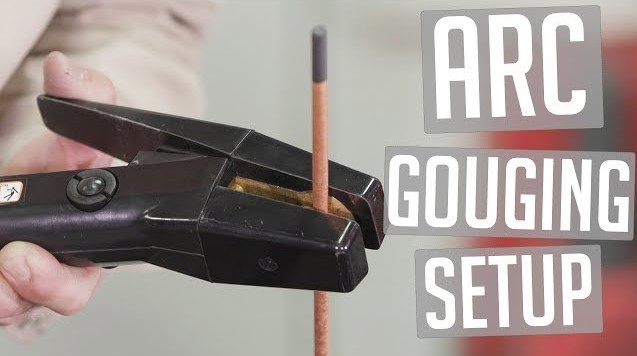
Gouging in welding is the essential process of removing base metal or weld material to create a groove or clean out defects. By mastering this skill, welders ensure deeper penetration, remove faulty joints, and prepare surfaces for high-quality repairs using advanced thermal techniques.
If you are new to the world of fabrication, you might have heard someone ask, “What is gouging in welding?” It sounds like a harsh term, but it is actually one of the most useful skills in a welder’s toolkit. Think of gouging as a surgical procedure for metal.
Just as a surgeon removes tissue to reach an injury, a welder uses gouging to remove material to fix a weld or prepare a piece for a new structural connection. At its heart, gouging in welding is a thermal metal removal process.
Whether you are working on a heavy construction site in 2026 or fixing a piece of machinery in your backyard garage, you will eventually reach a point where a weld didn’t turn out quite right. Instead of cutting the whole piece off and starting over, you use gouging to carve out the problem area precisely. It is efficient, cost-effective, and a total lifesaver when you are under a deadline.
Key Takeaways
- Purpose: Gouging in welding is primarily used for removing bad welds, preparing edges for joints, and thinning metal parts.
- Techniques: The most common methods include Carbon Arc (CAC-A), Plasma Arc, and mechanical grinding.
- Precision: High-quality gouging requires steady hands and a deep understanding of arc length and travel speed.
- Safety First: Thermal gouging produces significant molten spray and fumes, necessitating full PPE and proper ventilation.
- Economic Value: Proper gouging prevents scrap metal waste by allowing welders to fix mistakes instead of replacing parts.
- Technology 2026: Modern air-carbon arc systems have become more energy-efficient and portable, changing how we approach field repairs.
Understanding the Basics of Gouging in Welding
When we talk about what is gouging in welding, we are discussing the act of melting metal away with an electric arc. Unlike cutting, which goes all the way through a piece of metal, gouging is a controlled “carving” process. You are basically creating a U-shaped or V-shaped groove in the surface of the metal.
Why Do We Actually Use Gouging?
The primary reason for gouging is to remove defective welds. If you inspect a weld and find porosity, cracks, or lack of fusion, you have to get that bad metal out before you can put new, strong metal back in. Gouging allows you to cut right into the center of a weld joint to expose the root, making it easy to fix those internal issues.
Another big reason is joint preparation. If you need to join two thick plates of steel, a simple flat edge won’t give you the penetration you need. By using gouging, you can carve out a “bevel” or a “J-groove.” This provides more space for the weld puddle to sink in, resulting in a much stronger bond that can handle extreme stress.
The Main Types of Gouging Techniques
In 2026, technology has given us a few different ways to tackle this. The most popular method is Air Carbon Arc Gouging (CAC-A). This uses a special carbon electrode, an electrical arc, and a blast of compressed air. The arc melts the metal, and the air blows it away instantly. It is fast, loud, and very effective for heavy-duty steel work.
Plasma gouging is another great option. It works just like plasma cutting but uses a different nozzle setup. It is cleaner and more precise than carbon arc, making it a favorite for stainless steel or thinner alloys. Then, of course, there is mechanical gouging, which usually involves a high-speed grinder. It is slower and messier, but sometimes it is the only tool you have on hand.
Air Carbon Arc Gouging: The Industry Standard
If you walk onto a professional job site, you will almost certainly see workers using Air Carbon Arc Gouging. It is the heavy hitter of the welding world. When people ask what is gouging in welding, they are usually describing this specific process.
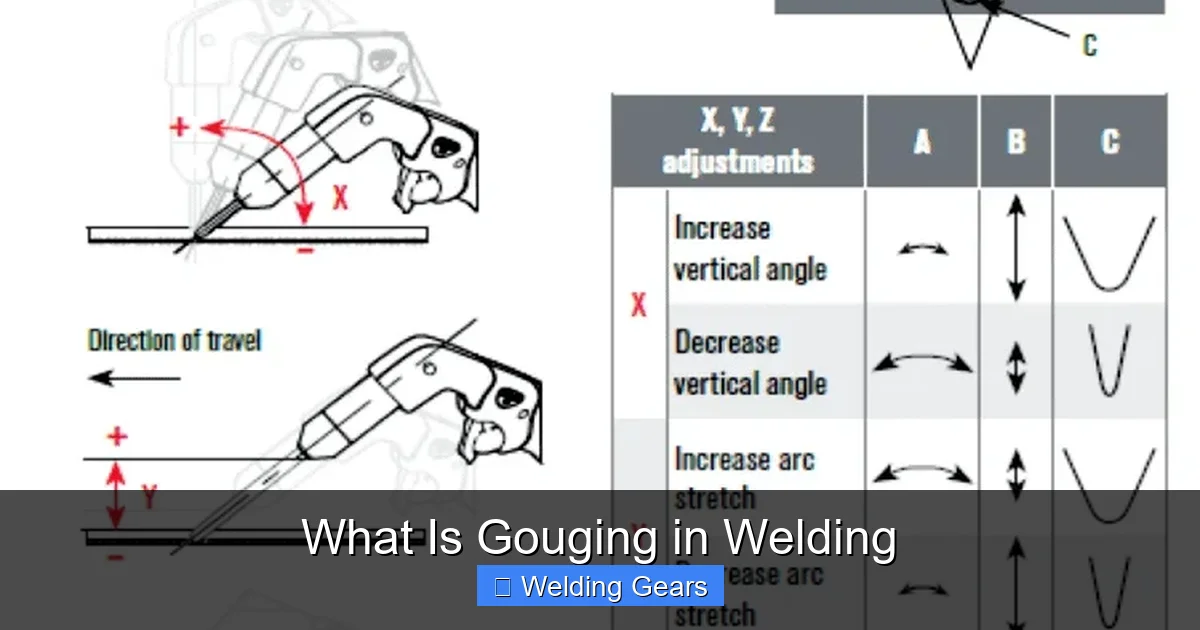
Visual guide about What Is Gouging in Welding
Image source: materialwelding.com
How the Process Works
The equipment looks a bit like a bulky welding torch. You have a copper-coated carbon rod held in a handle that connects to your power source and an air compressor. You strike an arc between the carbon rod and the metal. The heat is incredibly intense – it liquefies the metal almost immediately. As the metal turns into liquid, you trigger the air valve on the handle. The high-pressure air stream strips the molten metal away, leaving behind a smooth, clean groove.
Pro Tips for Success
The secret to getting a smooth groove is the angle of your torch. You want to keep the electrode at a low angle relative to the plate. If you hold it too steep, you will dig too deep and create a jagged, uneven trench. Keep your travel speed consistent. If you move too fast, you won’t get a clean groove.
If you move too slow, you might overheat the surrounding metal, which can lead to distortion. Always remember to blow the air in the direction of your travel so the molten metal is pushed away from you, not back into your groove.
Safety Requirements for Thermal Gouging
Safety is the most important part of answering the question, “What is gouging in welding?” Because you are dealing with molten metal flying through the air, you have to be extra careful. This isn’t like normal welding where the sparks stay relatively contained. Gouging creates a spray of hot liquid metal that can travel several feet.
Protecting Your Body
Standard welding leathers are a must. However, for gouging, you might want to upgrade to heavier flame-resistant gear. Molten metal can easily burn through thin clothing. Wear a full-face shield underneath your welding helmet to protect against flying debris if you have to lift your hood. Always wear high-quality ear protection, too. Air carbon arc gouging is loud—like a jet engine taking off in your ear.
Managing Fumes and Ventilation
Because you are melting metal and blasting it with air, you are creating a lot of smoke and dust. In 2026, we have better filtration systems than ever, but you still need to be smart. Always work in a well-ventilated area. If you are inside a tank or a confined space, a respirator is absolutely non-negotiable. Don’t take shortcuts with your lungs; the fumes from burnt paint, coatings, or certain alloys can be toxic.
When to Choose Mechanical vs. Thermal Gouging
Sometimes, thermal methods are overkill. If you are working on a small project or a delicate piece of equipment, you might not want to introduce all that heat. This is where you have to decide which version of gouging is right for the job.
The Case for Grinding
Mechanical gouging with a grinder is great for small cracks or minor cleanup. It doesn’t create the heat-affected zone (HAZ) that thermal methods do. If you are working with specialized metals that are sensitive to temperature changes, grinding is the safer bet. You won’t risk warping the material or changing its metallurgical properties.
The Case for Thermal
On the flip side, if you are working on thick structural beams, a grinder will take you all day and cost you a small fortune in grinding disks. Thermal gouging is vastly superior for speed. It allows you to move through heavy-duty repairs quickly, keeping your productivity high and your labor costs down.
Mastering the Technique: Developing a Steady Hand
Becoming an expert at gouging in welding takes practice. It is about feel as much as it is about sight. You have to learn how to listen to the arc. A healthy, steady gouging arc has a very specific, consistent roar. If the sound changes, your depth or angle has likely drifted.
Starting and Stopping
One common mistake is stopping in the middle of a cut. If you have to stop, make sure you don’t leave a “crater” at the end of your groove. To finish a cut cleanly, tilt your torch slightly to lift the electrode out of the molten pool while still maintaining the air blast for a split second. This clears the remaining puddle and leaves you with a smooth transition point for when you start your next pass.
Cleaning the Surface
After you finish gouging, don’t just jump right into welding. The heat and the air blast can leave behind a layer of carbon or oxidation. Use a wire brush or a light grinding pass to clean the area. A clean surface is the secret to a perfect weld. If you leave behind carbon deposits, you risk getting porosity in your new weld, which just forces you to start the whole cycle of gouging all over again.
The Future of Gouging in 2026 and Beyond
As we look at the landscape of welding in 2026, the technology behind gouging continues to evolve. We are seeing more portable, battery-powered air systems that allow welders to perform gouging tasks in remote areas without needing a massive air compressor nearby.
Furthermore, digital controls on modern power sources now help regulate the arc intensity more accurately, making it easier for students to learn what is gouging in welding without making as many mistakes.
As automation becomes more prevalent, we are even seeing robotic gouging systems in large factories. These machines can scan a weld, identify a defect, and perform a perfect gouge every time. While hand-held gouging will always be necessary for field repairs and custom fabrication, the move toward smarter, automated tools is making the process safer and more precise than ever before.
In conclusion, understanding what is gouging in welding is about more than just melting metal. It is a critical skill that separates a novice welder from a true craftsman.
By knowing when to use carbon arc, how to manage your heat, and how to stay safe, you can tackle any repair job that comes your way. Whether you are fixing a crack in a bridge or preparing a bevel for a new joint, gouging provides the foundation for the structural integrity of your work. Keep practicing, respect the power of the arc, and always prioritize your safety gear.
Frequently Asked Questions
Is gouging in welding the same as cutting?
No, they are different processes. Cutting goes all the way through a piece of material to separate it, whereas gouging creates a controlled groove or trench on the surface of the metal.
Can I use any welding machine for gouging?
You need a machine that can handle high amperage, specifically for air carbon arc gouging. Most standard stick or TIG welders lack the power output required for effective thermal gouging.
Do I need an air compressor for all types of gouging?
You need a high-pressure air source for air carbon arc gouging to blow the molten metal away. However, mechanical gouging with a grinder does not require compressed air.
Is it dangerous to breathe the fumes from gouging?
Yes, thermal gouging produces significant smoke and metal fumes. Always use proper respiratory protection and ensure your workspace is well-ventilated to avoid inhaling harmful particles.
How do I know if I have gouged too deep?
If you see signs of burn-through or excessive thinning of the base metal, you have gone too deep. Always measure the remaining material thickness to ensure it meets your project’s structural specifications.
What is the best way to clean metal after gouging?
Use a wire brush or a flap disk on an angle grinder to remove carbon deposits and oxidation. A clean, shiny surface is essential for ensuring your new weld bonds properly to the base metal.