A journeyman welder is a skilled professional who has successfully completed a formal apprenticeship and earned a recognized certification to work independently. These experts possess the technical mastery and safety knowledge required to handle complex welding projects across diverse industrial landscapes in 2026.
Have you ever looked at a massive skyscraper, a deep-sea oil rig, or a sleek new bridge and wondered who actually put those pieces of metal together? Welding is the invisible glue that holds our modern world in place. At the center of this vital craft stands the journeyman welder.
But what is a journeyman welder, exactly? It is more than just a job title; it is a mark of prestige, technical prowess, and a commitment to quality that defines the backbone of the construction and manufacturing industries in 2026.
For those standing at the edge of a career choice, the path to becoming a journeyman is a rewarding journey of sweat, science, and skill. You start as a novice, learning to hold a torch steady, and slowly evolve into a master of heat and metal. In this guide, we will break down the life, requirements, and responsibilities of this professional role, helping you understand why these experts are so highly valued in today’s economy.
Key Takeaways
- Professional Status: A journeyman welder has graduated from the apprentice stage and is fully qualified to work without direct supervision.
- Skill Mastery: Reaching this level requires thousands of hours of hands-on training and passing rigorous competency exams.
- Career Versatility: Journeyman welders are essential in industries ranging from aerospace and nuclear energy to structural construction.
- Earning Potential: Because of their expert status, journeyman welders often command significantly higher wages than entry-level workers.
- Safety Proficiency: These professionals are experts in reading blueprints, understanding metal properties, and adhering to strict OSHA safety standards.
- Global Demand: With the rise of advanced manufacturing in 2026, the demand for certified journeyman welders remains at an all-time high.
Understanding the Path to Journeyman Status
The journey to becoming a journeyman welder is not something that happens overnight. It is a structured process that combines classroom theory with thousands of hours of real-world application. Think of it as a professional “leveling up” system that ensures you are truly ready for the demands of the trade.
The Apprenticeship Phase
Everything begins with an apprenticeship. This is a period of “earning while you learn.” You work under the guidance of seasoned veterans who show you the ropes, point out your mistakes, and teach you the tricks of the trade.
In 2026, many apprenticeships include high-tech simulations alongside traditional hands-on work. You spend time learning about metallurgy, blueprint reading, and electrical theory before you even think about the test for your journeyman card.
The Final Examination
Once you have logged your required hours usually between 6,000 and 8,000 depending on your region you must prove your skills. This is the “Journeyman Exam.” It typically involves both a written test on safety and welding codes and a practical assessment where you perform various welds that are then tested for structural integrity. Passing this test is your official ticket to working as an independent professional.
The Core Responsibilities of a Journeyman
When you ask, “what is a journeyman welder,” the answer is largely defined by independence. Unlike an apprentice who needs constant oversight, a journeyman is trusted to manage their own projects from start to finish. This involves a level of accountability that is critical in high-stakes fields like aerospace or infrastructure.
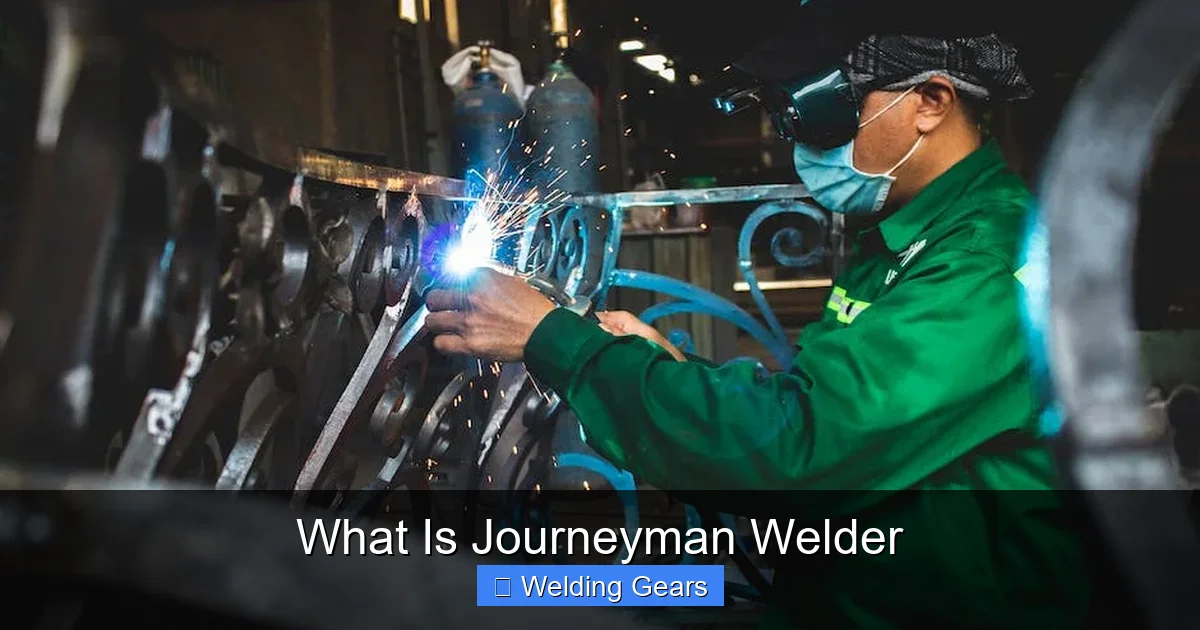
Visual guide about What Is Journeyman Welder
Image source: homeygears.com
Precision and Quality Control
A journeyman is the standard-bearer for quality. When a joint needs to hold under extreme pressure, the journeyman welder is the one the company relies on. They understand the “why” behind the weld – why this specific filler metal is needed, why the pre-heat temperature matters, and how to prevent warping during the cooling process. They don’t just melt metal; they engineer connections.
Reading Complex Blueprints
A massive part of the daily life for a journeyman is deciphering technical documents. You might look at a complex CAD drawing and translate those flat lines into a three-dimensional, perfectly fitted structure. This ability to interpret complex geometry is what separates a laborer from a true trade professional.
Welding Gears and Technology in 2026
The tools of the trade have evolved rapidly. In 2026, a journeyman welder isn’t just carrying a heavy torch and a mask; they are often integrating digital precision into their workflow. Staying updated with the latest equipment is part of the journeyman’s professional life.
Modern Protection and Safety
Safety is the primary focus. Today’s helmets feature auto-darkening filters with true-color technology, allowing the welder to see the puddle with crystal clarity. Respiratory protection is lighter and more efficient, ensuring that the welder can stay in the booth longer without fatigue. A journeyman knows that their gear is their primary line of defense.
Advanced Power Sources
Modern welding machines are now software-driven. A journeyman welder in 2026 knows how to interface with these machines to tweak pulse settings, frequency, and arc force. These aren’t just knobs; they are precise adjustments that allow the welder to manipulate the metal in ways that were impossible a few decades ago.
Industry Opportunities for the Journeyman
Where does a journeyman welder work? The short answer is: everywhere. If it is made of metal, a journeyman welder likely played a role in its creation or maintenance. This versatility is one of the biggest perks of the career.
Construction and Infrastructure
From skyscrapers to subways, the structural integrity of our cities rests on the welds performed by journeymen. This sector offers high job stability and the chance to leave a lasting mark on the skyline.
The Energy Sector
Whether it is traditional oil and gas or the rapidly growing field of renewable energy, the energy sector relies on highly skilled welders. Building wind turbine towers or massive solar array frames requires the kind of precision that only a certified journeyman can provide.
Manufacturing and Automotive
In 2026, the shift toward electric vehicles and advanced robotics has created a high demand for welders who can work with exotic materials and lightweight alloys. If you enjoy repetitive precision and fast-paced environments, manufacturing is a top-tier path.
Tips for Success in the Welding Trade
If you want to thrive as a journeyman, your learning should never stop. The trade is constantly changing, and the people who succeed are the ones who treat their craft like a lifelong study.
Keep Your Certifications Current
Certifications are your currency. Whether it is an AWS (American Welding Society) credential or a specific pipe-welding certification, keeping these up to date makes you more employable. Never let a qualification lapse if you can help it.
Network with Peers
The welding community is smaller than you think. Build relationships with other tradespeople, supervisors, and inspectors. A good reputation as a reliable, skilled journeyman will open doors for you that job boards never could.
Focus on Soft Skills
Communication is vital. You will often work in teams where explaining a complex weld to an engineer or a client is just as important as the weld itself. Be the professional who makes the job easier for everyone else on the site.
The Future of the Journeyman Welder
Is there a future in this career? Absolutely. While automation and robotics are changing the landscape of welding, they are not replacing the human element. Robots are excellent for repetitive, straight-line tasks, but they lack the intuition and adaptability of a human journeyman welder.
In 2026, we see a trend where the journeyman welder is becoming a “welding technician.” They often manage the robots, program the paths, and perform the final quality assurance checks. The role is becoming more mental and less purely physical, which is great news for the longevity of the career. You can stay in the industry for decades, moving from hands-on production into specialized inspection, teaching, or project management.
The bottom line is that the world will always need people who can join metal reliably. As long as we are building, growing, and innovating, the journeyman welder will remain a vital, respected, and highly compensated professional. If you have the patience to learn and the drive to improve, this career offers a path to genuine stability and professional pride.
In conclusion, when you ask, “what is a journeyman welder,” you are asking about someone who has mastered a critical craft. It is a title earned through hard work, tested by time, and respected across industries. Whether you are considering entering the trade or simply want to appreciate the work that goes into the structures around you, it is clear that these professionals are the glue that holds our future together.
Frequently Asked Questions
How long does it take to become a journeyman?
The timeline typically ranges from three to five years, depending on the specific apprenticeship program. This includes roughly 6,000 to 8,000 hours of combined on-the-job training and classroom instruction.
What is the difference between a welder and a journeyman welder?
A welder is anyone who performs the task of welding, while a journeyman welder is a certified professional who has completed a formal apprenticeship. The journeyman title confirms a high level of competency and the ability to work independently.
Can I become a journeyman without an apprenticeship?
While some people gain skills through self-teaching, most industries require proof of formal apprenticeship for the journeyman title. Employers prioritize those who have completed recognized programs due to the safety and quality standards they represent.
Does a journeyman welder make good money in 2026?
Yes, journeyman welders are considered skilled tradespeople and typically earn significantly higher wages than entry-level workers. Their pay scales are often competitive with white-collar professions, especially in high-demand fields like pipe welding or underwater welding.
What happens after I become a journeyman?
Many journeyman welders choose to specialize in fields like underwater welding, robotic programming, or metallurgy. Others advance into roles like welding inspector, project manager, or shop foreman to take on more leadership responsibilities.
Are journeyman certifications valid everywhere?
Many certifications, especially those issued by organizations like the American Welding Society (AWS), are recognized internationally. However, some local jurisdictions may require specific additional licenses, so it is best to check regional requirements.