
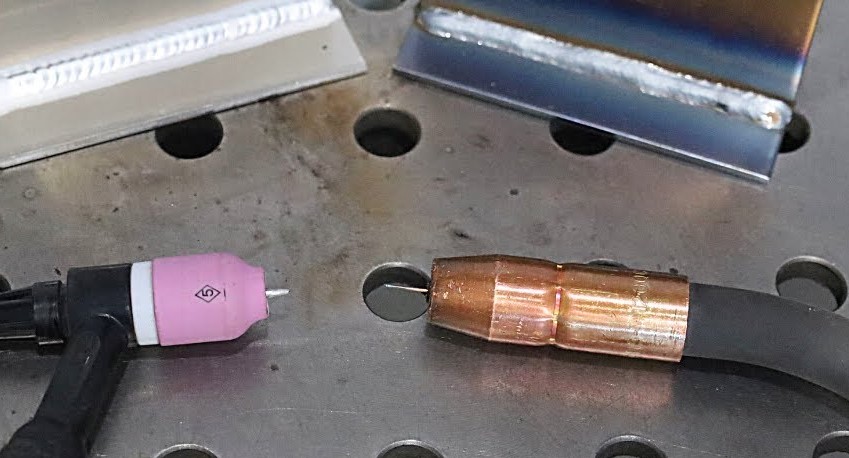
TIG welding is generally considered superior in structural integrity and purity, but “stronger” depends on the application and the welder’s skill. While TIG produces cleaner, high-precision welds, MIG offers unmatched speed and efficiency for thick metal fabrication.
If you have spent any time hanging out in a fabrication shop or browsing welding forums in 2026, you have probably heard the age-old debate: is TIG welding stronger than MIG? It is one of those questions that seems simple on the surface, but the answer really depends on what you are trying to build. Whether you are working on a custom car frame, repairing farm equipment, or just learning to weld in your garage, picking the right process is vital for safety and performance.
At its core, welding is all about fusion. Both Tungsten Inert Gas (TIG) and Metal Inert Gas (MIG) welding aim to join two pieces of metal permanently. However, they go about it in very different ways. By understanding how the heat input, filler material, and technique interact with your base metal, you can stop worrying about which is “better” and start focusing on which is best for your specific project.
Key Takeaways
- Strength vs. Application: TIG provides cleaner, more precise welds, while MIG is often better for heavy-duty structural work due to heat penetration.
- Skill Requirements: TIG welding requires significant manual dexterity, whereas MIG is more accessible for beginners and hobbyists.
- Material Compatibility: TIG is the gold standard for thin, exotic metals like titanium and aluminum, while MIG excels with mild steel.
- Production Speed: MIG is the preferred method for high-volume production lines where time is the primary constraint.
- Cleanliness: TIG welding produces no slag or spatter, resulting in a cleaner final product that often requires zero post-weld grinding.
- Cost Factors: TIG equipment and gases are typically more expensive than MIG, making it a higher-investment choice for your garage.
Understanding the Basics of TIG and MIG
The Science of TIG Welding
TIG welding, technically known as Gas Tungsten Arc Welding, is the surgical instrument of the welding world. You use a non-consumable tungsten electrode to create an arc, and you manually feed a filler rod into the puddle. Because you have total control over the heat and the filler metal, the results are incredibly clean and precise. It is slow, methodical, and arguably the most beautiful way to join metal.
The Efficiency of MIG Welding
MIG welding, or Gas Metal Arc Welding, is the workhorse of the industry. In this process, the welding machine automatically feeds a continuous wire through the gun. This wire acts as both the electrode and the filler material. It is fast, efficient, and great for covering a lot of ground in a short amount of time. If you look at any major factory floor today, you will see MIG guns humming away because they get the job done quickly.
Comparing Weld Strength and Integrity
Why People Think TIG is Stronger
Many fabricators will tell you that TIG is stronger because it produces a purer weld. Because the process is slower and more controlled, there is less chance for impurities like slag or gas pockets to get trapped in the molten pool. A perfect TIG weld often exhibits superior grain structure, which can translate to better fatigue resistance in high-stress components. If you are welding something that needs to be perfect like an aerospace part or a high-performance bicycle frame TIG is almost always the go-to choice.
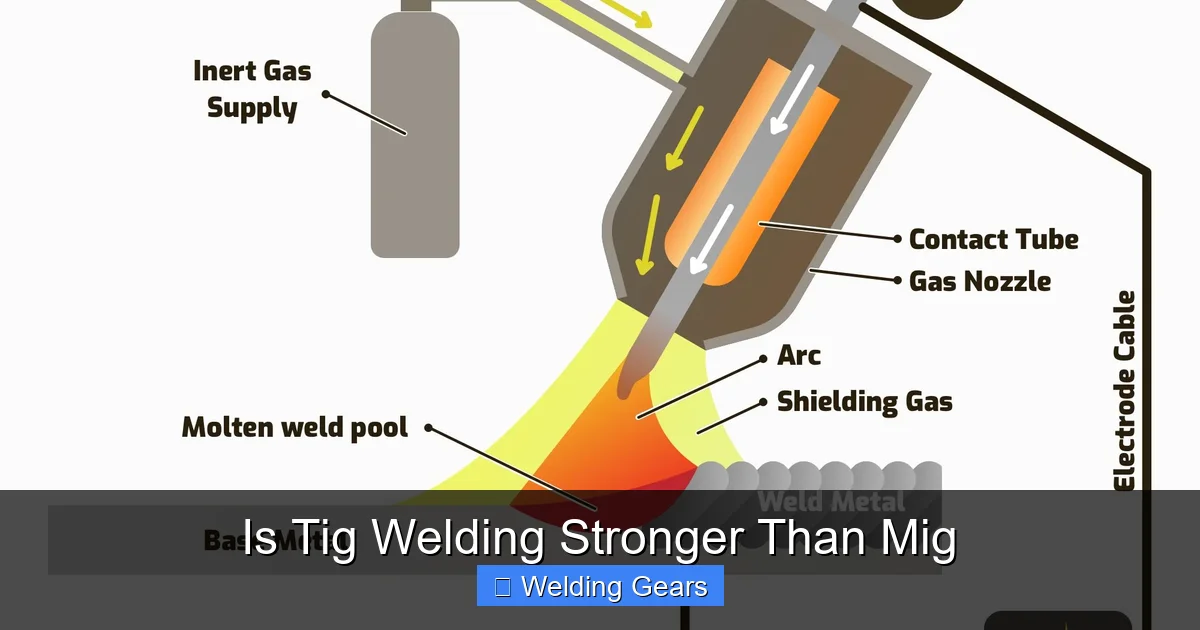
Visual guide about Is Tig Welding Stronger Than Mig
Image source: weldguru.com
The Hidden Strength of MIG
However, it is a mistake to think that MIG is “weak.” When performed correctly by a skilled operator, a MIG weld is just as strong as the base metal itself. In fact, for thicker materials, the higher heat input of MIG can lead to deeper penetration, which is exactly what you want when joining thick structural steel. A MIG weld on a thick steel plate will hold up to immense pressure and weight without breaking a sweat.
Choosing the Right Process for Your Metal
Thin Metals and Exotic Alloys
If you are working with thin-gauge stainless steel or delicate aluminum, TIG is the undisputed champion. Because you control the heat via a foot pedal or finger switch, you can manage the heat input to prevent warping or burning through the material. MIG can be difficult to use on thin, fragile metals because the wire feed speed is often too aggressive, leading to messy, “pancake-like” welds that lack aesthetic quality.
Thick Structural Projects
For the DIYer building a heavy-duty trailer or a workbench, MIG is usually the winner. Not only is it faster, but it is also more forgiving when you are dealing with slightly dirty or rusted steel. MIG welding allows for a wider “bead” that can bridge gaps effectively, providing solid structural integrity without requiring the extreme precision of TIG.
Skill Levels and The Learning Curve
The Difficulty of Mastering TIG
Learning to TIG weld is a journey. You need to develop a steady hand, learn to coordinate your eyes with your feet, and understand how to manage the filler rod. Most beginners find their first few weeks of TIG training frustrating. It is an art form that takes years to master. If you are in a rush to finish a project, TIG might hold you back simply because the learning curve is so steep.
The Accessibility of MIG
MIG welding is widely considered the easiest process to pick up. Most people can lay down a decent, structurally sound MIG bead after just a few hours of practice. This accessibility makes it the perfect entry point for hobbyists. In 2026, many modern MIG machines come with “synergic” settings, where the computer does most of the heavy lifting for you, setting the voltage and wire speed automatically based on the thickness of your metal.
Production and Efficiency Factors
Speed in a Modern Workshop
If you are running a business or trying to manufacture multiple copies of a part, time is money. MIG welding wins every time in this department. Because the wire is continuous, you do not have to stop to add filler rods. You can maintain a consistent travel speed and keep the arc running for long stretches. This is why you will rarely see TIG welding used in high-volume, structural steel fabrication.
The Hidden Costs of TIG
Beyond the time it takes to learn and perform the welds, TIG is generally more expensive. The equipment costs are higher, and you need a constant supply of high-purity argon gas. MIG welding, while still requiring gas (usually an argon-CO2 mix), is generally cheaper to set up and maintain. For the budget-conscious welder, the cost-benefit analysis often tilts heavily toward MIG.
Final Thoughts on Strength and Selection
So, back to the big question: is TIG welding stronger than MIG? The short answer is that TIG offers cleaner, more refined, and theoretically more consistent welds, which makes it ideal for critical, high-stress, or thin-material applications. However, MIG welding is fully capable of creating welds that are stronger than the metal itself, provided the settings and technique are correct.
Ultimately, your choice should be based on your project goals. Are you restoring a vintage motorcycle where every weld bead needs to look like a stack of dimes? Go with TIG. Are you building a structural steel shed or a sturdy shop table? MIG is your best friend. By focusing on your heat control and preparation, you can achieve professional-grade strength with either method. Happy welding!
Frequently Asked Questions
Is TIG welding harder to learn than MIG?
Yes, TIG welding is significantly more difficult because it requires you to coordinate both hands and a foot pedal simultaneously. MIG welding is much more intuitive and is often recommended as the first process for beginners to learn.
Can MIG welding be used for structural projects?
Absolutely, MIG welding is the industry standard for most structural steel fabrication. When the settings are tuned correctly, a MIG weld provides excellent penetration and strength for heavy-duty applications.
Which process is better for aluminum?
TIG welding is the preferred method for aluminum because it offers the precision needed to manage the metal’s high thermal conductivity. While you can use MIG on aluminum with a spool gun, TIG provides much higher aesthetic and structural quality.
Do I need different gas for TIG and MIG?
Yes, TIG almost exclusively uses 100% argon, while MIG typically uses a mixture of argon and carbon dioxide. Using the wrong gas mixture will result in poor weld quality and potential porosity in your final bead.
Is TIG welding faster than MIG?
No, TIG welding is a much slower, more meticulous process compared to the high-speed, continuous wire-feed process of MIG. If speed is your primary goal, MIG will always outperform TIG.
Why do my MIG welds have so much spatter?
Excessive spatter in MIG welding is usually caused by incorrect wire feed speed, improper voltage settings, or incorrect gas shielding. Check your machine’s manual for recommended settings based on your material thickness to clean up your welds.