
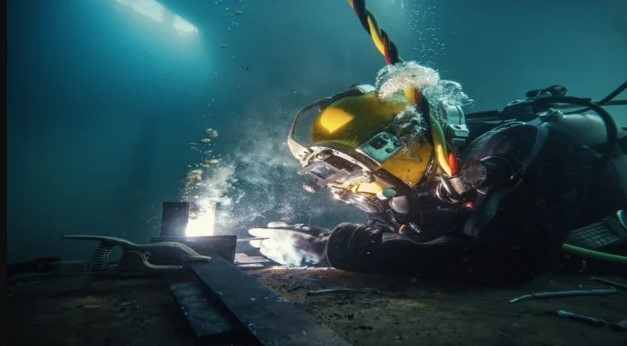
Underwater welding is frequently cited as one of the most perilous professions on the planet, balancing technical skill with extreme environmental hazards. While modern technology and rigorous safety protocols have significantly reduced risks by 2026, divers still face unique life-threatening challenges that require immense discipline and specialized training to master.
Have you ever watched a documentary about deep-sea oil rigs and wondered if the people working down there are actually superheroes? It is easy to see why people ask the question: is underwater welding the most dangerous job? When you think about working hundreds of feet below the surface, surrounded by freezing water and massive amounts of pressure, it sounds like something straight out of a science fiction movie. But for thousands of men and women, this is just a typical Tuesday.
As we look at the industry in 2026, the perception of underwater welding has shifted. While it is certainly not a desk job, the narrative that it is a guaranteed death sentence is a bit outdated. Advances in gear, safety management, and remote-operated vehicles have changed how the job is done. Even so, it remains a high-stakes environment where one small mistake can have serious consequences. Let’s peel back the layers of this fascinating and intense career path.
Key Takeaways
- Risk vs. Reality: While underwater welding is incredibly dangerous, it is not always the number one most lethal job globally, though it remains in the top tier of high-risk sectors.
- Primary Hazards: Divers must manage electrical shock, decompression sickness, drowning, and entrapment while working in high-pressure, low-visibility environments.
- Rigorous Training: Mastery requires a unique dual-certification in both professional diving and industrial welding, a process that takes years of dedication.
- Technological Advancements: By 2026, improvements in communications, atmospheric diving suits, and robotic assistance have made the work safer than it was in previous decades.
- Environmental Factors: Factors like water current, visibility, temperature, and marine life make every job site unique and unpredictable.
- Financial Reward: The high danger level is compensated by premium pay, making it a lucrative career for those who prioritize safety and precision above all else.
Understanding the Hazards of the Deep
To understand if underwater welding is the most dangerous job, we have to look at the specific threats. It is not just about the welding itself; it is about the entire environment. When you go beneath the waves, you are entering a world that is not designed for human life.
The Threat of Electricity
The most famous concern is electricity. People often ask how you can weld underwater without getting electrocuted. The physics behind it is quite clever. In an underwater circuit, the water acts as a conductor, but the welding equipment is specifically insulated and designed to work within that environment. However, if the gear is damaged or the diver does not follow the correct protocols, the risk of shock is very real. This is why checking equipment is a religion for underwater welders.
Pressure and Decompression Sickness
The human body is built for one atmosphere of pressure. When you dive deep, that pressure increases significantly. If a diver ascends too quickly, the nitrogen in their blood can form bubbles, leading to decompression sickness, also known as the bends. It is a painful and potentially fatal condition. Managing gas mixtures and precise ascent times is a massive part of the job that a land-based welder never has to think about.
Environmental Unpredictability
The ocean is never still. Even in calm weather, currents can be surprisingly strong. An underwater welder might be working on a pipe in a shipping channel where the visibility is near zero. Add in the threat of marine life, loose debris, and the sheer fatigue of moving through water, and you realize that the environment itself is a major part of the difficulty.
The Evolution of Safety in 2026
Safety has come a long way in the last twenty years. If you compare today to the 1990s, the statistics tell a much different story. We have better communication systems, high-tech suits, and automated safety monitors that alert the surface team the moment a reading looks off.
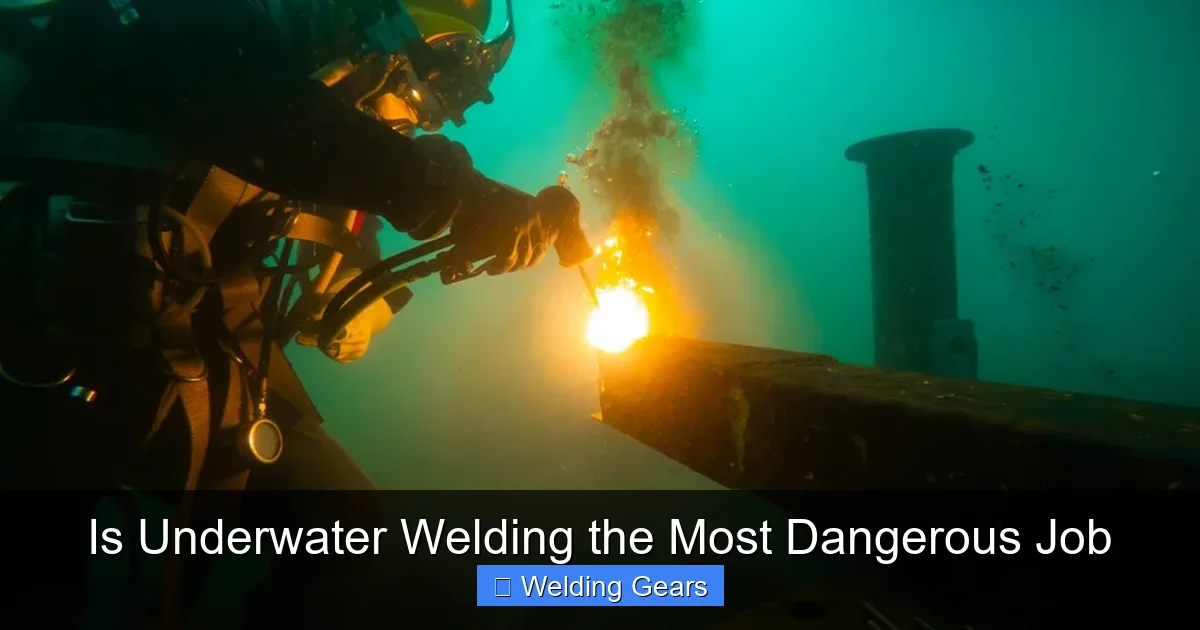
High-Tech Diving Suits
Modern suits are much more than just rubber shells. In 2026, many underwater welders use suits that offer better insulation and protection against both the elements and the electrical hazards. These suits are integrated with sensors that monitor the diver’s heart rate and oxygen levels in real-time. If a diver loses consciousness, the surface team knows immediately.
Robotic Assistance and Automation
Is underwater welding the most dangerous job if a robot does half the work? That is a question we are answering today. We are seeing a massive increase in the use of Remote Operated Vehicles (ROVs). These robots can perform simple welding tasks or inspections, allowing the human welder to act as a supervisor or handle only the most complex, precise welds. This reduces the time a human needs to spend in the water, which inherently lowers the danger profile.
The Training Path: Why It Is More Than Just Welding
You cannot just sign up for a weekend course to become an underwater welder. This career requires a double-certification. First, you must be a skilled welder who can produce perfect welds in the most difficult conditions imaginable. Second, you must be a certified commercial diver.
Welding Certification
You start by mastering welding on land. You need to understand how metals behave, how to prepare joints, and how to work with different alloys. Underwater, you don’t have the luxury of perfectly clean, dry conditions. You have to be able to weld by touch or by feel, often when you can’t even see your own hand in front of your face.
Diving School
Once the welding part is handled, you go to commercial diving school. This is where you learn to work under pressure, handle gas mixtures, and manage emergency situations. The training is grueling. It is meant to weed out those who are not mentally prepared for the isolation and the physical toll. It is not just about physical strength; it is about keeping your cool when things go wrong.
The Psychological Toll of the Profession
Being an underwater welder requires a very specific type of person. You need to be cool under pressure. If you panic, you die. That is the simple truth of the job. Many people ask, is underwater welding the most dangerous job for your mind? The isolation of working alone in the dark, knowing that your life depends on your air supply and your team, requires a high level of mental fortitude.
Living the Life
Many of these professionals live on ships or oil platforms for weeks at a time. The shift work is intense. When you are on a “hitch,” you are working long hours, often in difficult conditions. It is a lifestyle that requires a lot of sacrifice regarding family time and social stability. You have to be comfortable with solitude and be able to trust your team with your life every single day.
Comparing Risks: Is it Really the Most Dangerous?
When we look at the data, other jobs often fight for the top spot. Logging, fishing, and roofing have historically had very high fatality rates. Often, these jobs are dangerous because they involve repetitive, high-speed tasks where accidents happen because of fatigue or complacency. Underwater welding is dangerous because of the environment, but it is also highly regulated.
The Role of Regulation
Because underwater welding is so specialized, it is governed by very strict safety codes. Every weld is inspected. Every dive is logged. Because the equipment is so expensive and the projects are so critical (like repairing an oil pipeline or a bridge support), companies are heavily incentivized to prioritize safety. A major accident can cost a company millions or even billions of dollars.
Complacency as the Real Enemy
The most dangerous thing an underwater welder can do is get comfortable. When you have done a thousand dives, you might start to think you have seen it all. That is when shortcuts happen. That is when you skip a gear check. Even in 2026, the biggest risk is not the water it is the human factor.
The Future of the Industry
As we move further into the decade, we will see even more changes. The goal is to move as much of the dangerous work as possible to automated systems. We are already seeing “smart” welding torches that can detect the quality of the weld instantly, reducing the need for post-weld testing. This makes the job more technical and less about brute force.
A Rewarding Career Path
Despite the risks, many people find this career deeply rewarding. There is a sense of pride that comes with working in an environment that most people will never see. There is also the financial aspect. Because the job is so challenging and the talent pool is so small, underwater welders are among the highest-paid laborers in the skilled trades.
Ultimately, to answer the question, “is underwater welding the most dangerous job?” it depends on how you measure danger. If you measure it by the potential for a fatal incident, it is definitely in the top tier. But if you measure it by the training, the safety culture, and the support systems in place, it is a managed risk. It is a job for those who respect the water, respect the craft, and never stop learning.
Whether you are looking to enter the field or just curious about what these professionals do, remember one thing: the industry is safer than ever, but it will always demand the best. If you have the nerves for it, it is a career that offers an adventure unlike any other on earth.
Frequently Asked Questions
Is underwater welding the most dangerous job?
While underwater welding is consistently ranked as one of the most high-risk professions due to environmental factors, it is often not the absolute deadliest job. Occupations like logging and commercial fishing frequently report higher annual fatality rates per capita.
What is the most common cause of accidents for underwater welders?
The most common risks involve decompression sickness, equipment failure, and environmental hazards like drowning or entanglement. Modern safety protocols have significantly minimized these risks compared to previous decades.
Do I need to be a good swimmer to be an underwater welder?
Being a strong swimmer is a prerequisite, but you must also be a highly skilled welder on dry land. The profession requires a combination of professional diving certifications and advanced welding expertise.
How does the pay for underwater welding compare to other trades?
Underwater welders are generally compensated at a premium compared to traditional land-based welders. The high pay reflects the specialized skill set required, the physical risk involved, and the demanding, often isolated nature of the work.
How does technology make the job safer in 2026?
By 2026, advancements include better-integrated communication systems, real-time physiological monitoring, and increased use of remote-operated vehicles (ROVs). These tools reduce the time a human welder must spend in high-risk zones.
Can you get electrocuted while welding underwater?
Yes, the risk of electrical shock exists, but it is managed through strict insulation requirements and specialized equipment design. Modern underwater welding tools are engineered to function safely in conductive water environments when used correctly.