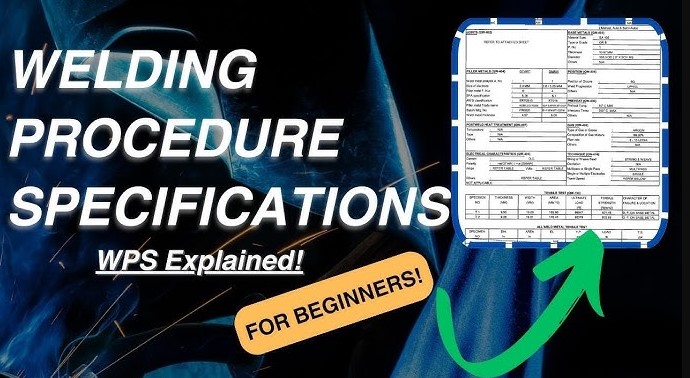
A Welding Procedure Specification (WPS) is the essential technical document that serves as the “recipe” for a successful weld. By detailing exact parameters like amperage, gas flow, and material preparation, it ensures that every weld meets strict safety and quality standards across the industry in 2026.
If you have spent any time around a professional fabrication shop in 2026, you have probably heard the term WPS thrown around. Maybe you are a new apprentice just picking up a torch, or perhaps you are a hobbyist curious about how the big boys get those perfect, consistent beads on critical structural components. You might be wondering, exactly what is WPS welding?
At its core, WPS stands for Welding Procedure Specification. Think of it like a master recipe. Just as a professional chef needs a precise recipe to ensure a five-star meal tastes exactly the same every single time, a welder needs a WPS to ensure that a weld is strong, safe, and identical across every joint. Without this document, welding would be a guessing game, and in industries where safety is the top priority, guessing is simply not allowed.
Key Takeaways
- The Blueprint: A WPS is a formal document that provides the necessary instructions for welders to follow to create a specific type of weld.
- Quality Control: Using a WPS ensures consistency, meaning every weld performed on a project will meet the exact same structural requirements.
- Code Compliance: WPS documents are mandatory in regulated industries like aerospace, pressure vessels, and structural steel construction.
- Parameter Control: It defines variables such as electrode type, gas mixture, heat input, and travel speed for optimal results.
- Legal Protection: Having a certified WPS protects companies from liability by proving that work was performed according to industry-standard testing.
- Versatility: A single shop may have dozens of different WPS documents to cover different materials, thicknesses, and welding positions.
Understanding the Basics of a WPS
When someone asks what is WPS welding, they are really asking about the document that bridges the gap between engineering design and manual labor. It takes the theoretical math of structural integrity and turns it into physical instructions that a welder can follow while wearing a hood.
What is actually inside the document?
A WPS is not just a sticky note with a few numbers scribbled on it. It is a comprehensive technical document. It lists everything from the base metal type and the filler material to the exact amperage, voltage, and shielding gas flow rate.
It tells the welder how to prepare the joint, what position the welding needs to be done in—like flat, horizontal, or vertical—and even the temperature the metal needs to be at before the arc is struck.
The role of the Welding Engineer
In most professional settings, a welding engineer or a qualified supervisor writes the WPS. They look at the project requirements and design a process that satisfies the codes set by organizations like the American Welding Society (AWS) or the American Society of Mechanical Engineers (ASME).
By 2026, the software used to generate these documents has become incredibly sophisticated, often integrating with digital management systems to track which WPS is being used for which specific job.
Why the WPS is Critical for Safety?
The primary reason we use a WPS is safety. We are talking about bridges, skyscrapers, pressure vessels, and heavy machinery. If a weld fails in any of those, the consequences are disastrous. The WPS ensures that the person doing the welding is using the right heat input for the thickness of the metal.
Preventing weld defects
If you run a welder too cold, you get lack of fusion, where the metal just sits on top without melting into the base. If you run it too hot, you might burn through the metal or weaken the heat-affected zone, making the joint brittle. The WPS dictates the “sweet spot.” By staying within the ranges provided, the welder avoids common defects like porosity, undercut, and cracking.
The concept of the PQR
You cannot have a WPS without a PQR, or Procedure Qualification Record. Think of the PQR as the “proof” that the recipe works. Before a company can use a WPS, they have to perform a test weld that follows those parameters. Then, they send that test piece to a lab to be pulled apart, bent, or x-rayed. Once that test passes, the PQR is filed, and the WPS becomes officially valid. It is a system built on evidence, not just opinion.
How a WPS Influences Daily Welding Tasks?
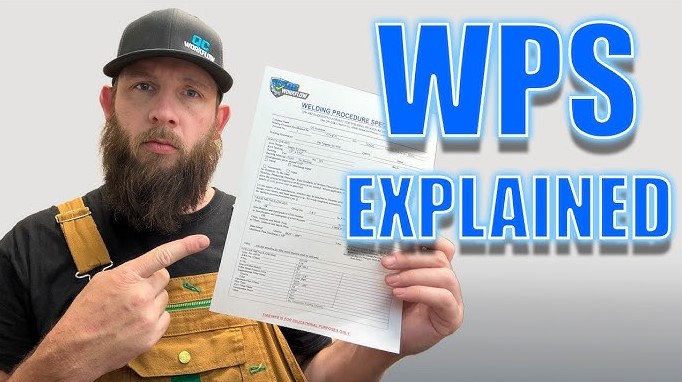
Knowing what is WPS welding helps you understand the flow of a modern shop floor. When a welder walks up to a station, they do not just guess what settings to use. They look at the WPS posted at the station. This document is their instruction manual for the day.
Standardizing the process
In a large shop, you might have ten different people welding on the same project. If everyone set their own heat settings, the quality would vary wildly. By requiring everyone to follow the same WPS, the manager ensures that every joint in the building is held to the same high standard. This consistency is the backbone of mass production and structural fabrication.
Adapting to different variables
A WPS is not a one-size-fits-all document. You might have one WPS for welding thin stainless steel with TIG, and another for welding thick carbon steel with MIG. Every time the variables change like using a different shielding gas or switching from aluminum to mild steel you need a different WPS to match those specific conditions. This versatility allows shops to handle complex projects that require different metal combinations.
The Evolution of WPS in 2026
As we move through 2026, the way we handle documentation has evolved. We are moving away from dusty, grease-stained paper binders and toward digital, tablet-based displays right at the welding booth. This makes it easier to verify that the welder is following the most current version of the procedure.
Digital integration
Many smart welding machines now allow you to upload the WPS parameters directly into the power source. This prevents “dial-twisting.” Instead of a welder guessing at the settings, the machine locks into the parameters specified by the WPS. It creates a closed-loop system where the quality is built into the technology itself.
Training and certification
For apprentices, learning to read a WPS is just as important as learning to strike an arc. Understanding how to interpret the technical language on these documents is a skill that separates a laborer from a master craftsman. It teaches them to respect the physics behind the weld. When an apprentice asks “what is WPS welding,” they are taking the first step toward becoming a professional who understands the ‘why’ behind the ‘how.’
Practical Tips for Working with a WPS
If you are working in a shop that requires a WPS, treat it like the law. Do not try to be a hero by changing the settings just because “it feels better.” There is a reason those numbers were chosen.
Check your variables
Before you start, double-check your gas flow, your wire feed speed, and your machine voltage. If you notice the weld pool behaving strangely, do not just turn up the heat. Check if your current gas pressure matches what is written on the document. Sometimes the fix is in the setup, not the settings.
Keep the documentation accessible
If you are a shop owner or a lead hand, make sure those documents are easy to read and easy to access. A WPS stuffed in a desk drawer three rooms away is useless. Laminate them, put them in protective sleeves, or display them on digital monitors. When information is easy to see, mistakes happen less often.
Conclusion
So, to wrap it all up, what is WPS welding? It is the vital link between engineering intent and finished construction. It is a document that provides the rules, the range, and the reality of what a high-quality weld should be.
By standardizing the variables and providing a clear path to success, the WPS ensures that every structure we build is solid, every pressure vessel is secure, and every welder is working with the safest possible information.
Whether you are building something small in your garage or working on a massive industrial project, understanding the importance of a procedure is what turns a good welder into a great professional. Stay safe, follow the specs, and keep the arc steady.
Frequently Asked Questions
Do all welding jobs require a WPS?
Not necessarily. While highly regulated industries like structural steel, aerospace, and oil and gas require a WPS by law, smaller hobbyist projects or non-critical artistic work often do not require them.
Can a welder write their own WPS?
Generally, no. A WPS must be written and approved by a qualified individual, such as a welding engineer or an inspector, and it must often be validated by a Procedure Qualification Record (PQR) before it can be used.
What happens if I deviate from the WPS?
Deviating from the WPS can lead to weld failure, potential accidents, and legal liability. In a professional shop, failing to follow a WPS is usually considered a serious violation of quality control standards.
Is a WPS the same as a welder’s qualification?
No, they are different. A WPS defines the “recipe” for the process, while a Welder Performance Qualification (WPQ) tests the individual welder’s skill and ability to follow that procedure.
How often should a WPS be updated?
A WPS is updated whenever there is a change in “essential variables,” such as switching to a different metal alloy, changing shielding gases, or significantly altering the welding position.
Where can I find standard WPS templates?
Organizations like the American Welding Society (AWS) provide standard welding procedure specifications (SWPS) that are pre-qualified and available for common welding applications, saving companies time on testing.