
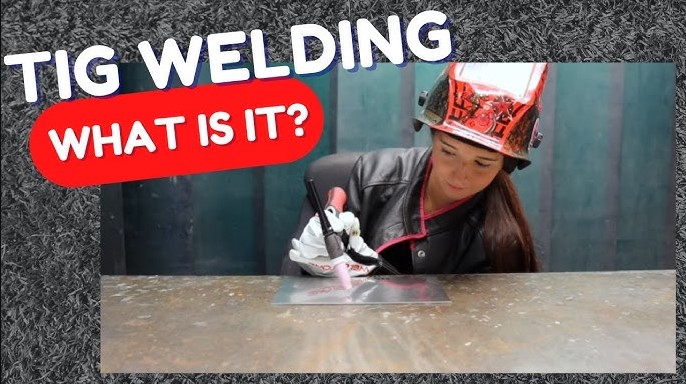
TIG welding, or Tungsten Inert Gas welding, is a highly precise arc welding process that uses a non-consumable tungsten electrode to join metals. It is widely considered the cleanest and most aesthetic welding method available for professional fabricators and hobbyists alike in 2026.
Have you ever looked at a perfectly stacked dime weld on a custom motorcycle frame or a clean stainless steel kitchen finish and wondered, “What’s TIG welding all about?” You aren’t alone. As we move through 2026, TIG welding has remained the gold standard for high-end fabrication. It is the process that separates the hobbyists from the true master craftsmen.
At its heart, TIG stands for Tungsten Inert Gas. It is a fusion process that uses a long, thin tungsten electrode to heat the metal. Unlike other welding types where the electrode melts into the weld, the tungsten just stands there and takes the heat. It is an elegant, slow, and rewarding way to work with metal. If you enjoy precision, you are going to fall in love with it.
Key Takeaways
- Precision Control: TIG welding offers unmatched control over heat input and weld bead appearance.
- Clean Process: It produces no slag or spatter, meaning very little post-weld cleanup is required.
- Versatility: You can use TIG welding on a vast range of metals, including aluminum, stainless steel, and chromoly.
- Skill Requirement: It is known as the most difficult welding process to master, requiring excellent hand-eye coordination.
- Gas Shielding: An inert gas, typically argon, is essential to protect the weld pool from atmospheric contamination.
- Application: Perfect for automotive, aerospace, and artistic projects where finish and structural integrity matter.
The Fundamentals of TIG Welding
Understanding what’s TIG welding starts with the basic equipment. You need a power source, a torch, a tank of shielding gas, and a ground clamp. The electricity flows from your machine, through the torch, and out of the tungsten tip to create an electric arc. This arc is incredibly hot—hot enough to melt almost any metal you throw at it.
The Role of Shielding Gas
Because the temperatures are so high, the molten metal wants to react with the air around it. This is bad news. Oxygen makes the metal brittle and weak. To stop this, TIG welding uses an inert gas, usually pure Argon. This gas flows through the torch and creates a protective bubble around your weld pool, keeping the air away until the metal cools down.
The Tungsten Electrode
The tungsten is the “star” of the show. It is non-consumable, which means it doesn’t melt away. However, you do have to keep it sharp. A blunt or contaminated tip will make your arc wander all over the place. Think of it like a pencil; if your lead is dull, you cannot draw a straight line. Maintaining your tungsten is a rite of passage for every TIG welder.
Equipment Needed for TIG Welding in 2026
In 2026, technology has made TIG gear more accessible than ever. We are seeing smaller, smarter machines that pack a punch. If you are just starting, you don’t need to spend thousands of dollars to get a machine that produces professional results.
The Power Source
You want a machine that offers High-Frequency (HF) start. This allows you to start an arc without touching the tungsten to the metal, which saves your tip from contamination. Many modern machines also include “pulse” settings. Pulse helps control heat, which is a life-saver when you are working on thin metal that likes to warp.
The Torch and Pedal
Your torch is your paintbrush. Choose one that feels comfortable in your hand. Most TIG welders use a foot pedal to control the amperage. This is the “throttle” for your heat. If the metal starts to glow a little too bright or gets close to melting through, you simply back off the pedal. Learning to balance your torch hand with your pedal foot is the main challenge of the craft.
Why Choose TIG Welding Over Other Methods?
If TIG is slow and hard to learn, why do we do it? Because nothing else looks as good. If you are working on a project where the weld will be visible, TIG is the only choice. It is clean, precise, and beautiful.
Unmatched Aesthetics
When you see those beautiful “stacks of dimes” on a weld joint, that is the work of a TIG welder. Because you are feeding the filler rod manually, you have total control over the size and spacing of every ripple in the bead. It is basically artwork created with high-voltage electricity.
Exceptional Strength
Beyond looks, TIG welds are incredibly strong. Because you have such tight control over the heat, you can ensure that the penetration is perfect. You aren’t just splashing metal onto the joint; you are fusing the two pieces together at a molecular level. This is why it is the preferred method for critical joints in race cars and aircraft parts.
The Learning Curve: Mastering the Art
If you ask anyone, “What’s TIG welding actually like to learn?” they will tell you it takes patience. It is often described as trying to play a guitar, draw a picture, and operate a sewing machine all at the same time. You have your torch in one hand, your filler rod in the other, and your foot on the pedal.
Coordination Tips
Start by just practicing moving the torch without the filler rod. Get your machine set to a comfortable amperage and practice maintaining a consistent distance from the metal. If you get too far away, the arc gets messy. If you get too close, you stick the tungsten to the part. Once your hands feel steady, introduce the filler rod by dipping it into the front of the weld pool with every “dab.”
The Importance of Cleanliness
TIG welding is a diva. It hates dirt. If there is oil, rust, or paint on your metal, the weld will become contaminated. It will turn gray, get porous, and look terrible. Always keep a stainless steel wire brush handy. Clean your metal until it shines before you even think about striking an arc. In 2026, we have great chemical cleaners, but a quick scrub is still the best habit you can form.
Common Challenges and How to Fix Them
Even the best welders run into issues. The most common problem is “tungsten contamination.” This happens when your filler rod accidentally touches the hot tungsten tip. The tungsten will turn gray and fuzzy, and your arc will become unstable. When this happens, stop, pull the tungsten out, and grind it back to a sharp point. Never try to “weld through” a contaminated tip.
Managing Heat Distortion
Thin metal loves to warp. If you pump too much heat into a thin sheet of stainless, it will twist like a potato chip. To avoid this, use a lower amperage and move faster. Use the pulse feature on your welder if available. The “off” time in the pulse cycle lets the metal cool down just enough to prevent a blowout.
The Future of TIG Welding
Looking at the landscape of 2026, the industry is changing. We see more digital interfaces on machines that save your settings. You can now pull up “presets” for different thicknesses of steel or aluminum, which makes learning much faster for beginners. Automated TIG systems are also becoming more common in factories, but the demand for skilled human welders who can handle custom, non-standard projects remains higher than ever.
Whether you want to build custom cars, fix vintage motorcycles, or just create unique metal art for your home, TIG welding is a skill that pays off. It is quiet, it is clean, and it allows you to create things that last a lifetime. Once you understand the basics of what’s TIG welding, the world of metal fabrication opens up to you in a brand new way.
In conclusion, remember that TIG is a journey. You will make mistakes, you will burn through a few pieces of scrap metal, and you will get frustrated. But then, one day, you will lay down a bead that looks perfect, and you will know exactly why it is worth the effort. Grab some scrap, sharpen your tungsten, and start practicing. Your next project is waiting.
Frequently Asked Questions
Is TIG welding harder than MIG welding?
Yes, TIG welding is generally considered more difficult because it requires you to coordinate both hands and a foot pedal simultaneously. MIG welding is a simpler “point and shoot” process, while TIG requires precise manual dexterity.
Can I TIG weld without gas?
No, you cannot TIG weld without shielding gas. The gas is essential to protect the molten metal from the atmosphere, and without it, your weld will become porous and brittle immediately.
What is the most common metal to TIG weld?
Stainless steel and mild steel are the most common metals for beginners to learn on because they are predictable and produce beautiful, shiny results. Aluminum is also very common but requires a more advanced AC setting on your machine.
Do I need an expensive welder to start?
Not necessarily. While professional-grade machines offer more stability, there are many affordable, high-quality “inverter” TIG welders available in 2026 that are perfect for home workshops.
Why does my tungsten turn black?
Your tungsten turns black or “fuzzy” when it becomes contaminated, usually by touching the molten metal or the filler rod. You must remove the tungsten and regrind it to a sharp point to restore a clean, stable arc.
Is TIG welding dangerous?
Like all welding, it involves high heat and bright UV light, which can damage your eyes and skin if you aren’t protected. Always wear a proper welding helmet, gloves, and flame-resistant clothing to stay safe.