A weld nut is a specialized fastener designed to be permanently welded onto a metal surface, providing a secure, threaded hole for bolts or screws. By offering a high-strength connection that resists vibration and loosening, these components are essential for modern automotive assembly, aerospace engineering, and robust industrial machinery.
When you start diving into the world of metal fabrication or automotive restoration, you eventually hit a point where you need to attach something securely. You have the bolt, but where does it go? You cannot always get a wrench behind the panel to hold a loose nut.
This is where the magic of a weld nut comes into play. If you have ever asked, “What is a weld nut?” you are looking at one of the smartest inventions in the manufacturing world. It turns a piece of sheet metal into a strong, threaded anchor point.
Think of it as a bridge between a simple hole and a professional-grade fastener system. By welding a nut directly to a component, you remove the “fumbling phase” of assembly. In 2026, as manufacturing demands faster and more durable results, understanding these fasteners is non-negotiable for anyone building with steel. Let’s break down exactly what these are and why they are the secret weapon of heavy-duty fabrication.
Key Takeaways
- Permanent Anchoring: A weld nut creates a fixed, threaded point that stays in place even under extreme vibration.
- Design Efficiency: Using these nuts eliminates the need for bulky wrenches during final assembly, speeding up production.
- Material Compatibility: They are commonly made from low-carbon steel to ensure optimal fusion during the welding process.
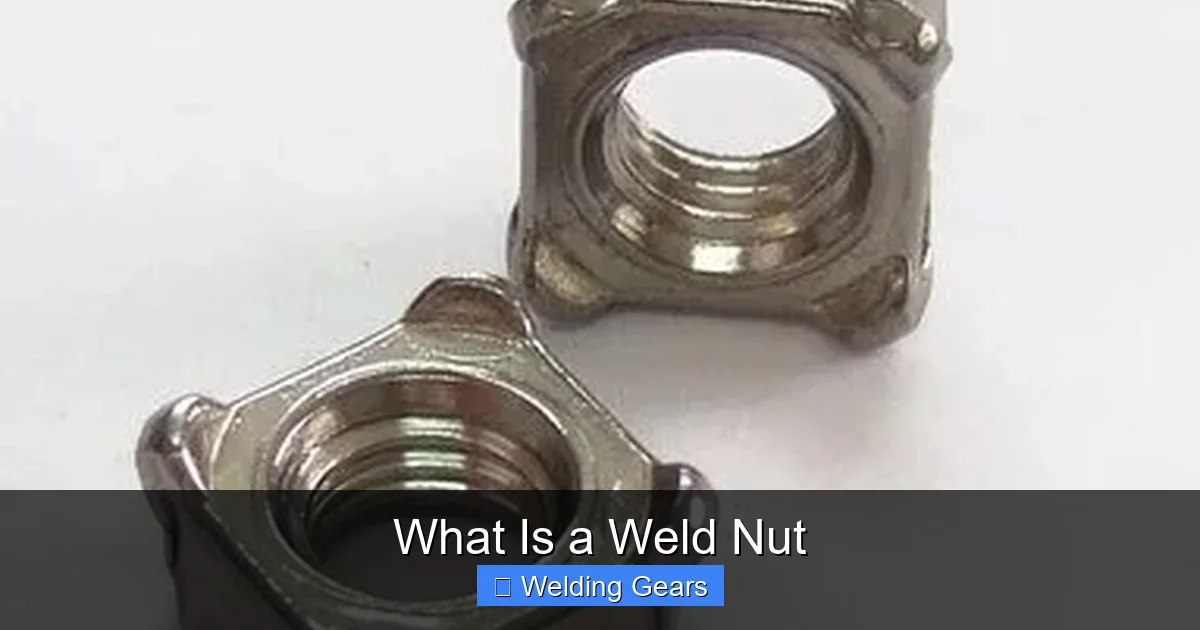
- Variety of Shapes: Depending on the application, you can choose from hex, square, or round weld nut designs.
- Installation Methods: These parts are primarily installed using projection welding, which is highly efficient for high-volume manufacturing.
- Strength and Durability: Because they are fused directly to the parent metal, they provide superior torque resistance compared to traditional caged nuts.
Understanding the Basics of a Weld Nut
At its core, a weld nut is a nut designed to be permanently joined to another metal part through a welding process. Unlike a standard nut that spins freely, this fastener becomes a structural part of the assembly once installed. It features specific design elements, such as projections or pilot bosses, that allow it to be precisely positioned and fused to the parent metal without ruining the internal threads.
Why Use Them Instead of Regular Nuts?
The primary reason is accessibility. Imagine you are building a car frame. You have a long, enclosed steel channel. If you need to bolt a suspension bracket to that channel, you have no way of reaching the inside to hold a nut with a wrench. A weld nut solves this instantly. You weld it to the inside of the channel during the fabrication phase. When you are ready for final assembly, you just drive the bolt into the nut from the outside. It saves time, energy, and a lot of frustration.
Materials and Composition
Most weld nuts are crafted from low-carbon, weldable steel. This is crucial because high-carbon or alloy steels can become brittle or crack when exposed to the intense heat of a welding arc. By keeping the carbon content low, the metal stays ductile enough to handle the fusion process. In some specialized industrial applications, you might see stainless steel versions, but these require very specific welding techniques to avoid damaging the internal threads.
Types of Weld Nuts and Their Uses
Not every weld nut is created equal. The design usually changes based on how much space you have and how strong the connection needs to be. Understanding the different styles helps you pick the right one for your 2026 engineering projects.
Projection Weld Nuts
These are the most common type found in automotive production. They feature small, raised points or “projections” on the face of the nut. When you apply current through these projections, they act as concentrated contact points. They melt first, creating a high-strength fusion with the parent sheet metal. They are incredibly fast to install on robotic assembly lines.
Pilot Boss Nuts
If you need extreme accuracy, look for a pilot boss weld nut. It has a raised circular lip or “pilot” that fits perfectly into a pre-drilled hole in your base metal. This acts as a locator, ensuring that your nut is perfectly centered before you pull the trigger on your welder. It’s perfect for DIY projects where you want that professional, centered finish.
Tab Weld Nuts
Tab nuts have a long, thin extension the “tab” that allows you to position the nut away from the actual welding point. This is a life-saver if you are working in a tight corner where the welding torch might interfere with the bolt hole. The tab is usually welded at a distance, keeping the threads clean and protected from weld spatter.
The Technical Side: Welding Procedures
When someone asks what is a weld nut in a technical context, they are usually talking about the joining process. Achieving a perfect weld requires a balance of current, pressure, and time. If you use too much heat, you might warp the threads. If you use too little, the nut will snap off the moment you torque a bolt into it.
Projection Welding vs. Arc Welding
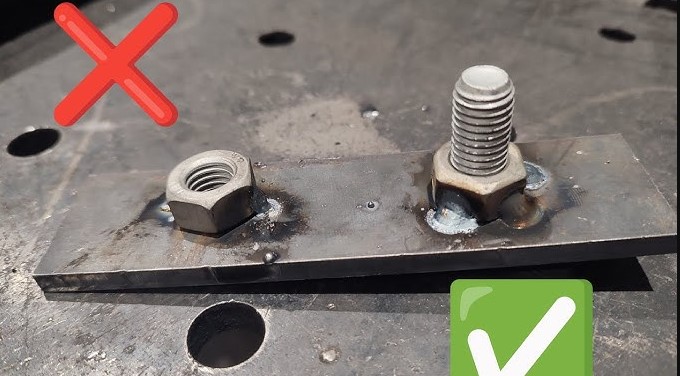
Most industrial setups use resistance projection welding. It is essentially a giant clamp that squeezes the nut and the plate together while blasting a surge of electricity through them. For the home welder or small shop, though, manual arc welding (MIG or TIG) is more common. If you are doing it manually, remember to keep your heat low and focus on the corner or the specific contact points of the nut rather than flooding the entire thread area with filler metal.
Preventing Thread Damage
The biggest enemy of a weld nut is weld spatter. If a glob of molten metal gets inside the threads, your bolt is not going anywhere. Many pros use anti-spatter spray before welding. Alternatively, you can use a sacrificial bolt or a threaded rod during the tack-welding process to ensure the threads stay perfectly aligned and clean. Just be sure to remove the sacrificial piece before the weld fully cools to avoid it getting stuck.
Benefits for Modern Construction and Repair
Why are we still using these in 2026? Because they are efficient. Every second counts in a production environment. By pre-installing these nuts, manufacturers can reduce the labor time for assembly significantly.
Vibration Resistance
In high-vibration environments, like engine bays or heavy machinery, standard bolts and nuts often work loose over time. A weld nut is different. Because it is fused to the chassis, it creates a solid unit. When you tighten a bolt into it, the force is distributed evenly across the parent material. This makes the entire assembly much more resilient to rattling or loosening.
Structural Integrity
When you use a weld nut, the base metal effectively becomes the fastener housing. This allows for thinner base materials to support heavier loads because the load-bearing area is no longer limited to a single washer or nut—it is anchored to the structural frame itself.
Common Challenges and How to Fix Them
Every tool has its quirks. Even if you know what a weld nut is, you might run into issues if you are new to the process. Most problems boil down to heat management and alignment.
Overheating the Threads
If you see your threads deforming after you weld, your heat was likely too high for too long. Try using a “stitch” or “tack” welding technique rather than a continuous bead. By placing a few small welds around the base of the nut instead of a full circle, you keep the temperature low enough to preserve the thread geometry.
Alignment Errors
If your bolt does not line up with the hole, the entire assembly is useless. Always use a mandrel or a properly sized bolt as a guide while you are tacking the nut into place. This forces the nut to stay in the exact center of the hole throughout the cooling process.
Future Trends in Fastening Technology
Looking toward the end of the 2020s, we are seeing a shift toward “smart” fasteners. While a basic weld nut is simple, we are now seeing materials that are easier to weld and coatings that prevent corrosion better than ever before. Zinc-nickel plating is becoming the industry standard for these nuts, providing incredible rust resistance, which is perfect for vehicles driven in harsh, salty climates.
Furthermore, automation is making the installation of these nuts much more precise. With AI-guided robotic arms, weld nuts are being placed with microscopic accuracy, leading to stronger, lighter products across the board. Whether you are building a custom race car or fixing farm equipment, these advancements mean you have access to better, stronger components than those available even five years ago.
Conclusion
So, what is a weld nut? It is much more than just a piece of hardware. It is a fundamental component of robust, reliable metal construction. It turns a simple hole into a permanent, high-strength anchor point that can withstand the test of time and vibration. Whether you are a professional fabricator or a weekend project builder, incorporating these fasteners into your design will make your life easier and your builds stronger.
By understanding the different types, learning the proper welding techniques, and respecting the need for heat management, you can unlock a new level of precision in your work. In 2026, building smart is just as important as building strong. Next time you are staring at a piece of steel and wondering how you will ever reach the back side of it to mount a component, remember: reach for a weld nut.
Frequently Asked Questions
Can I weld a regular nut if I do not have a specific weld nut?
You can, but it is not ideal. Standard nuts have a high carbon content and are usually coated, which can release toxic fumes or create weak, brittle welds when exposed to the high heat of a welder.
What is the best welding method for installing these nuts?
For industrial settings, projection welding is the industry standard for efficiency. For DIY or small-shop projects, a TIG welder is often best because it offers precise heat control, which helps prevent thread distortion.
Do I need to worry about the threads getting damaged during welding?
Yes, thread damage from weld spatter is a common issue. You can prevent this by using a sacrificial bolt or specialized anti-spatter spray to keep the threads clean and clear throughout the process.
Can weld nuts be used on aluminum?
Weld nuts are primarily designed for steel. While aluminum weld nuts exist, they require much more advanced equipment and specific aluminum welding techniques because aluminum conducts heat differently than steel.
Are there different thread sizes for weld nuts?
Absolutely, they come in a wide range of metric and imperial sizes. You should always match the weld nut thread to the bolt you intend to use to ensure a smooth, secure fit without stripping.
How do I know if the weld is strong enough?
A properly installed weld nut should be able to hold the bolt until the bolt itself reaches its torque limit. If the nut pops off under pressure, it indicates a weak fusion, often caused by improper heat settings or poor surface preparation.