
Natural gas pipe sealants help prevent leaks at compatible threaded pipe joints and fittings. Selecting an appropriate product is essential for safe, reliable gas distribution in residential, commercial, and industrial systems. Compatibility with natural gas, pipe material, operating pressure, temperature, and local fuel-gas codes should guide the selection process.
Gas-rated PTFE thread-sealing tape is commonly used on approved threaded connections, while natural-gas-rated pipe joint compounds provide another option for compatible metal fittings. Some compounds are formulated for specific piping materials and operating conditions. Product labels and technical documentation should explicitly confirm suitability for natural gas service; ordinary plumbing sealants are not automatically appropriate.
Verify the manufacturer’s specifications, approved applications, and relevant code requirements before selecting a sealant. Follow the prescribed installation method because certain fittings require different sealing approaches or must remain unsealed. Natural gas leaks can cause fires, explosions, or poisoning, so installation and pressure or leak testing should be handled by a qualified gas professional. If you smell gas, leave the area and contact the gas utility or emergency services from a safe location.
6 Best Sealants For Natural Gas Pipe
| Image | Title | Best For | Link |
|---|---|---|---|
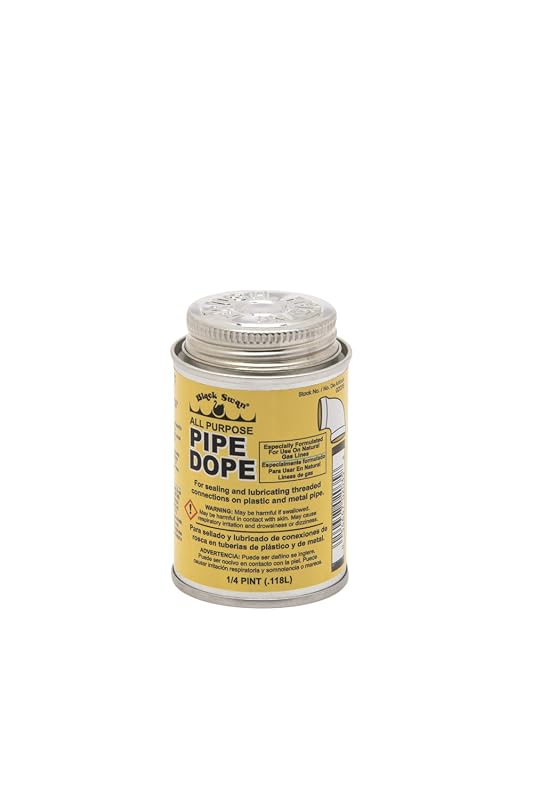 |
Black Swan All Purpose Pipe Dope | Best overall, high-viscosity paste for superior sealing of gas and water pipes. | View on Amazon |
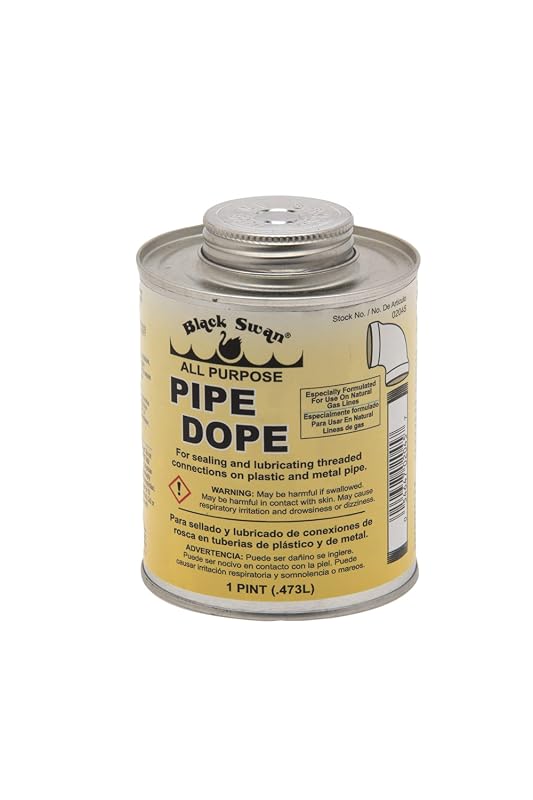 |
Black Swan All Purpose Pipe Dope (1-Pint) | Reliable, professional-grade bulk sealant for large-scale plumbing projects. | View on Amazon |
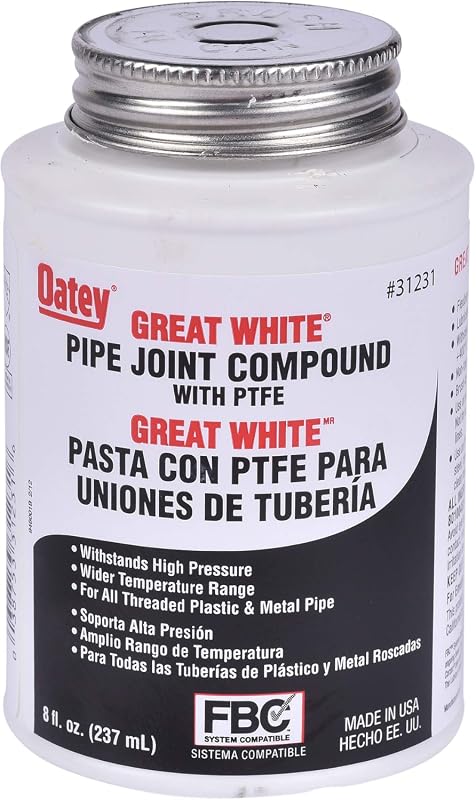 |
Oatey 31231 Pipe Joint Compound | Value-packed choice with integrated brush for easy, mess-free application. | View on Amazon |
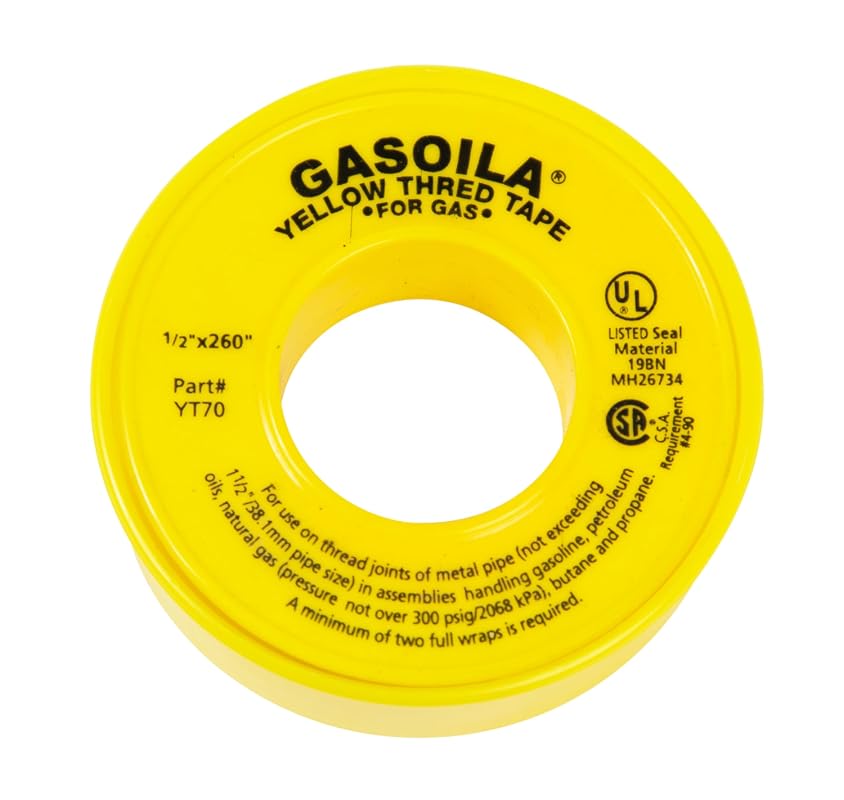 |
Gasoila Yellow PTFE Thread Tape | High-density tape specifically engineered for volatile gas line connections. | View on Amazon |
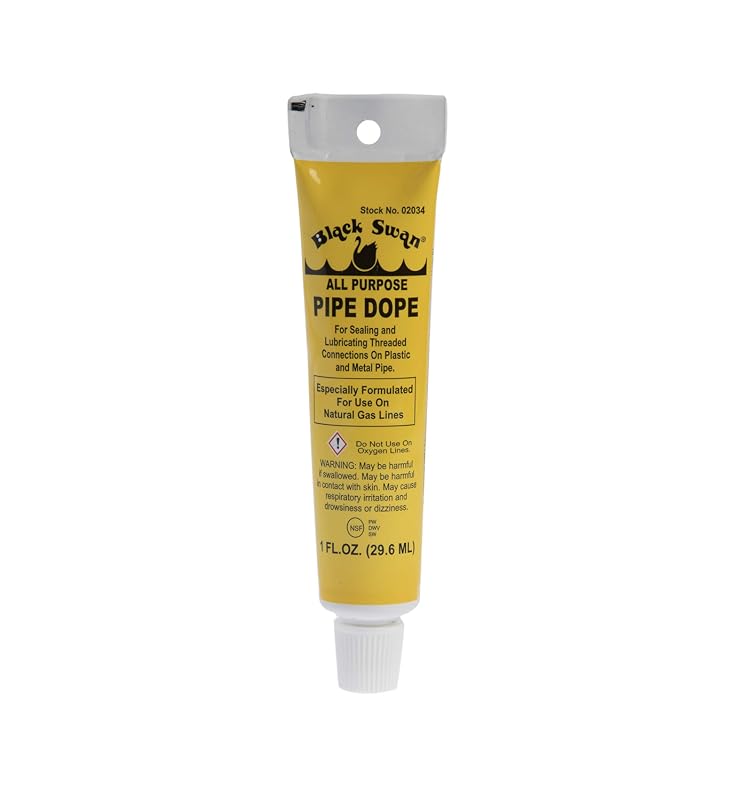 |
Black Swan All Purpose Pipe Dope (1oz) | Compact, convenient size for small repairs and household maintenance. | View on Amazon |
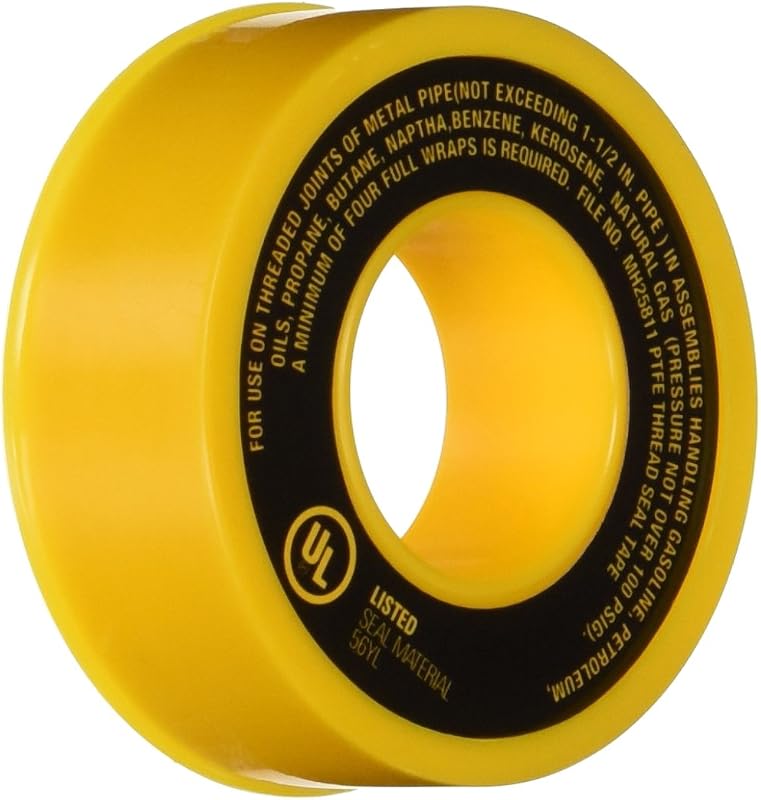 |
Harvey 017065 Gas Line Tape | Extra-heavy, industrial-strength tape for secure, leak-proof gas connections. | View on Amazon |
Our Top 6 Best Sealants For Natural Gas Pipe Reviews – Expert Tested & Recommended
1. Black Swan All Purpose Pipe Thread Sealant
This natural gas pipe sealant is a favorite for pros because it creates a robust, soft-set seal that handles vibrations with ease. It fills even the smallest imperfections in your threads, ensuring that your gas lines remain pressure-tight under demanding conditions.
Key Features That Stand Out
- ✓ Superior resistance to high-pressure environments.
- ✓ Handles thermal expansion and contraction without cracking.
- ✓ Effectively dampens the impact of extreme vibrations.
- ✓ NSF certified for both gas and potable water safety.
Why We Recommend It
We recommend this product because it offers the most reliable “set” in the industry, meaning your joints won’t leak over time due to settling. It is incredibly user-friendly and provides long-term peace of mind for any gas installation.
Best For
Best for professional contractors and DIYers needing a high-viscosity paste that ensures a permanent, vibration-resistant seal.
Pros and Cons at a Glance
2. Black Swan All Purpose Pipe Thread Sealant (1-Pint)
For those tackling larger projects, this 1-pint version of the Black Swan sealant provides the same professional-grade performance in a container size that won’t run out mid-job. It effectively handles pressure, movement, and vibration, making it a staple for any home workshop.
Key Features That Stand Out
- ✓ Large 1-pint capacity perfect for multi-pipe installations.
- ✓ High-viscosity formula ensures an airtight grip.
- ✓ Proven formula resistant to extreme vibrational stress.
- ✓ Certified for safe use in gas and potable water systems.
Why We Recommend It
If you have several gas lines to install, this larger size is much more economical. The consistent, non-hardening nature of the paste means you are guaranteed a high-quality, long-lasting connection every time you turn the wrench.
Best For
Ideal for home renovation projects, gas appliance installs, and plumbing professionals requiring a reliable, bulk-quantity solution.
Pros and Cons at a Glance
3. Oatey 31231 Pipe Joint Compound with PTFE
If you want a reliable solution that won’t break the bank, the Oatey 31231 is a standout performer. It includes a convenient, integrated brush, making the application process clean and fast, while the PTFE-enhanced formula provides excellent lubrication and sealing power.
Key Features That Stand Out
- ✓ Integrated applicator brush simplifies every task.
- ✓ Non-hardening, non-separating formula is easy to manage.
- ✓ Rated for high PSI performance on gas lines.
- ✓ Broad temperature range (-50° to +400°F).
Why We Recommend It
We love this for the convenience alone. Having the brush built into the cap means you aren’t digging around for tools, and the PTFE additive ensures the connection goes on smooth and seals tight without over-torquing the pipe.
Best For
Perfect for budget-conscious homeowners and DIYers who want a professional-grade sealant that is easy to apply and highly effective.
Pros and Cons at a Glance
4. Gasoila Yellow PTFE Thread Seal Tape
If you prefer tape over paste, this Gasoila Yellow PTFE tape is the gold standard for gas lines. Its heavy-duty, high-density construction is specifically engineered to create a secure, airtight seal that withstands the chemical demands of natural gas and propane.
Key Features That Stand Out
- ✓ Extra-thick high-density PTFE material.
- ✓ Chemical and corrosion-resistant composition.
- ✓ Designed specifically for gas and volatile systems.
- ✓ Easy to wrap and provides a secure, leak-proof seal.
Why We Recommend It
This is a must-have in any plumber’s kit. It feels substantial in the hand, which gives you confidence that it won’t tear or thin out when you tighten your fittings, a common failure point for cheaper, thinner tapes.
Best For
Ideal for gas line connections where you want a clean, simple, and effective sealing method without the mess of liquid pipe dope.
Pros and Cons at a Glance
5. Black Swan All Purpose Pipe Thread Sealant (1oz)
For small, one-off projects like fixing a single gas heater or a stove connection, you don’t need a massive tub of sealant. This 1oz tube provides the same industry-leading performance of the larger Black Swan jars in a compact, easy-to-use package.
Key Features That Stand Out
- ✓ Perfect size for small repairs and single tasks.
- ✓ High-viscosity formula fills thread gaps reliably.
- ✓ Resists vibrational loosening over time.
- ✓ NSF certified for safety and quality assurance.
Why We Recommend It
We think every homeowner should have one of these in their junk drawer. It prevents waste when you only have a minor project, yet it still delivers the same “set-it-and-forget-it” security that pros rely on.
Best For
Best for minor home repairs, small appliance gas connections, and those who want a reliable sealant without committing to a large, long-term supply.
Pros and Cons at a Glance
6. Harvey 017065 Professional Grade Gas Line PTFE Tape
The Harvey 017065 is a heavy-duty, professional-grade PTFE tape specifically color-coded for gas lines. Its extra-heavy density makes it perfect for creating reliable, leak-free joints in systems carrying propane, natural gas, or butane.
Key Features That Stand Out
- ✓ Yellow color specifically designates gas-line-rated material.
- ✓ Extra-heavy full density ensures durability.
- ✓ Recommended for natural gas, propane, and butane.
- ✓ Easy to apply for a secure, leak-proof connection.
Why We Recommend It
We appreciate the clear identification. In gas work, safety is the number one priority, and having a tape that is specifically labeled and engineered for high-risk systems like propane or natural gas is a huge benefit to any DIYer.
Best For
Best for those who want a clear, no-nonsense indicator that their sealant is rated specifically for gas service.
Pros and Cons at a Glance
Complete Buying Guide for Best Sealants For Natural Gas Pipe
Essential Factors We Consider
When choosing a natural gas pipe sealant, safety is your top priority. You must verify that the product is specifically rated for natural gas, propane, and similar volatile fuels. We look for certifications like NSF or ANSI standards, which prove the product has undergone rigorous testing. Additionally, the viscosity of a paste or the density of a tape matters; a higher-quality product will fill thread imperfections more effectively than a cheap alternative, preventing dangerous leaks before they start.
Budget Planning
Sealants are relatively affordable, but they are not the place to skimp. While budget options like Oatey offer great value, the cost difference between premium and basic sealants is minimal compared to the potential risk of a gas leak. If you have a large project, look for bulk containers to lower your per-ounce cost, but always prioritize quality over the lowest possible price point.
Final Thoughts
Choosing the right sealant comes down to your personal comfort with application—do you prefer the control of a brush-on paste, or the straightforward nature of a wrap-around tape? Either way, as long as you choose a product explicitly rated for gas lines, you are setting yourself up for a successful, leak-free installation. Always remember to test your joints after assembly to ensure maximum safety.
Frequently Asked Questions
Q: Can I use regular plumbers tape for gas lines?
A: No. Standard white PTFE tape is often not dense enough for gas lines. You should always use yellow, high-density tape specifically rated for gas or an approved liquid gas-rated pipe dope.
Q: Is it better to use tape or paste for gas pipes?
A: It is a matter of preference. Many professionals use both—a layer of gas-rated tape followed by a thin layer of gas-rated pipe dope for a “belt and braces” approach, but either product, if rated for gas, will perform correctly when applied properly.
Q: How do I know if my sealant is rated for gas?
A: Always check the product label for specific mentions of “natural gas,” “propane,” or “butane.” If the label is vague or only mentions water, do not use it on a gas line.
Q: How much sealant should I apply?
A: Use enough to cover the threads completely, but avoid using too much, as excess paste can enter the pipe and potentially cause blockages in valves or regulators.