
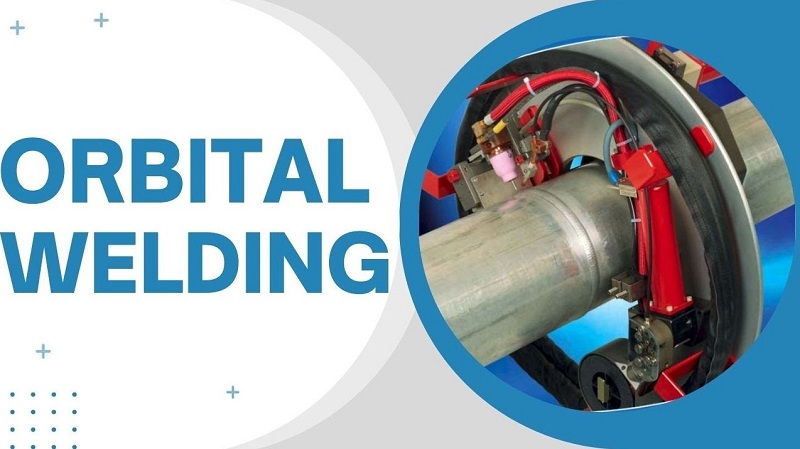
An orbital welder is an advanced, automated system that rotates a welding torch 360 degrees around a fixed pipe or tube to create perfect, repeatable welds. By removing the need for manual torch movement, this technology ensures unparalleled consistency, safety, and efficiency in high-purity industries.
If you have ever wondered how the complex piping systems in massive food processing plants or semiconductor laboratories stay perfectly sealed, you have likely come across the magic of an orbital welder. In the fast-paced world of 2026 manufacturing, precision is the name of the game. An orbital welder isn’t just a tool; it is a sophisticated system that takes the guesswork out of joining pipes and tubes.
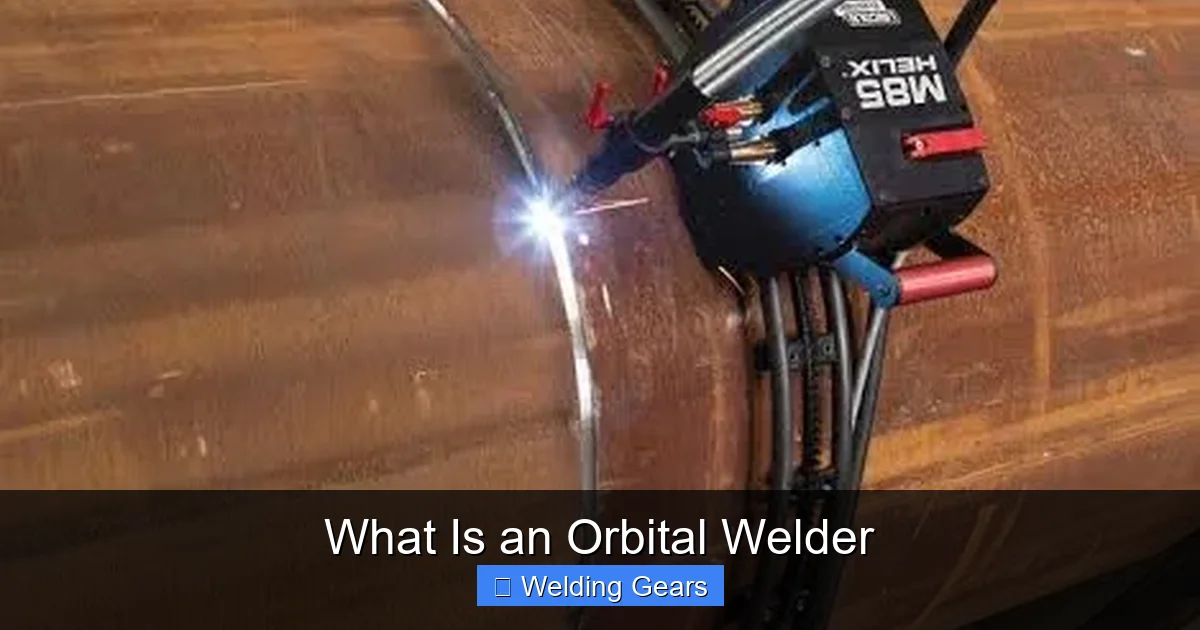
Unlike traditional welding, where a human hand guides the torch, an orbital welder fixes the torch in place and rotates it mechanically around the circumference of a pipe. This movement is where the term “orbital” comes from. It mimics the orbit of a planet around a sun. By controlling speed, voltage, and gas flow with digital precision, these machines deliver high-quality, repeatable results that even the most talented human welder would struggle to replicate consistently.
Key Takeaways
- Precision Control: Orbital welders use computer-controlled parameters to ensure every weld is identical to the last, eliminating human error.
- High-Purity Standards: These machines are essential for industries like pharmaceuticals and semiconductors where zero-defect welds are mandatory.
- Increased Safety: Automating the arc reduces exposure to fumes and bright light, keeping skilled welders safer in confined spaces.
- Speed and Efficiency: Orbital systems significantly decrease rework rates and downtime, saving companies money over long-term projects.
- Versatility: Modern 2026 orbital welders can handle various alloys and pipe diameters with interchangeable weld heads.
- Ease of Operation: While technically advanced, contemporary interfaces make these systems easier to program and deploy than ever before.
Understanding the Basics of Orbital Welding
At its heart, an orbital welder is a marriage between advanced robotics and Gas Tungsten Arc Welding (GTAW), commonly known as TIG welding. The setup consists of a power supply, a controller, and a weld head. The weld head clamps onto the pipe, creating a closed environment for the arc to do its work. This closed loop is crucial for maintaining a clean, oxygen-free zone, which prevents oxidation on the inside of the weld.
The Power Source and Controller
The brain of the operation is the power supply. In 2026, these units are smarter than ever. They store hundreds of “weld programs” that users can recall at the push of a button. The controller monitors the arc voltage in real-time, making tiny adjustments thousands of times per second. If the heat fluctuates, the machine corrects itself before the welder even notices a change. This means your first weld is just as good as your hundredth.
The Weld Head
The weld head is the part that does the heavy lifting. It physically wraps around the pipe. There are two main types: open and closed heads. Closed heads provide an inert gas chamber that covers the entire weld area, which is perfect for ultra-high-purity applications. Open heads are more flexible and allow for larger pipes, often used in heavy industry or power plants where the work environment is more rugged.
Why Industries Rely on Orbital Welders
You might be asking why we need these machines if we have skilled welders. The answer comes down to standards. In industries like aerospace, pharmaceuticals, and semiconductor manufacturing, a single pinhole leak could lead to millions of dollars in losses or even safety hazards. An orbital welder removes the “human factor.” Fatigue, shaky hands, or varying vision are no longer concerns. Every weld meets the exact same high-quality specification every single time.
Repeatability and Consistency
When you are welding thousands of joints in a cleanroom, you need absolute consistency. With an orbital welder, you program the parameters for a specific material thickness and diameter. Once the program is locked in, the machine repeats that exact movement. This is a game-changer for production speed. You don’t have to worry about a “bad day” impacting your project’s integrity.
Improved Welding in Tight Spaces
Ever tried welding a pipe tucked into a wall corner? It is nearly impossible to maintain a steady torch angle in tight spots. Because the orbital weld head is compact, it can fit into areas where a human welder cannot even reach their arms. The controller handles the torch, so the operator only needs to mount the head and press start.
Applications Across Modern Industry
The versatility of these machines is truly impressive. In 2026, we see orbital welders being used in sectors that most people don’t even think about. From the coffee machine in your office to the massive systems that create vaccines, this technology is everywhere.
Pharmaceutical and Food Processing
In food and pharma, hygiene is everything. Pipes must have smooth internal welds, or bacteria can grow in the crevices. Orbital welding provides a full-penetration, smooth-bead weld that is easy to sanitize. This “sanitary welding” is a standard requirement for these industries, and orbital systems are the only reliable way to achieve it at scale.
Semiconductors and Aerospace
Chips for our computers and parts for rockets require extreme purity. These pipes often carry dangerous gases or high-pressure fluids. Orbital welders use high-purity inert gas shielding to ensure the weld is as strong as the base metal itself. It is not just about keeping it together; it is about ensuring the internal atmosphere of the pipe stays pure.
The Evolution of Technology by 2026
We have come a long way from the early days of automated welding. In 2026, the technology is more portable and more integrated with modern data management systems. You can now track your weld data in the cloud, allowing engineers to verify quality from an office thousands of miles away from the construction site.
Integrated Data Logging
Modern orbital welders keep a digital record of every single weld. If a customer asks for proof of quality, you can export a report showing the exact voltage, amperage, and travel speed for every joint. This level of accountability is standard practice now, making audits much smoother for contractors.
Simplified User Interfaces
Remember when machines required a degree in computer science to program? Not anymore. Modern controllers feature touchscreen interfaces with simple icons. New welders can be trained on these systems in a matter of days, rather than weeks. This has democratized high-quality welding, allowing smaller shops to take on high-stakes projects.
Practical Tips for Success
If you are planning to use an orbital welder, keep a few things in mind. First, preparation is 90% of the battle. If your pipe edges are not square and clean, no machine can fix that. Always use a dedicated tube squaring tool to ensure your edges are perfect before you start.
Choosing the Right Equipment
Don’t just buy the first machine you see. Consider your pipe diameter range and the type of material you work with most. Do you need a closed head for ultra-clean results, or an open head for thick-walled pipes? Discuss your specific needs with a supplier to avoid over-buying.
Maintenance is Key
An orbital welder is a precision instrument. Keep the weld heads clean and the gas lines free of moisture. A little bit of dust inside a closed weld head can cause an arc fault or contaminate the weld. Treat your equipment well, and it will give you years of reliable, perfect welds.
Conclusion
So, what is an orbital welder? It is the pinnacle of welding automation, a tool designed to bring unmatched precision to the most demanding piping systems in the world. As we look at the landscape of 2026, these machines have moved from being specialty equipment to essential infrastructure tools.
By blending robotics with the science of metallurgy, orbital welding has made our systems safer, cleaner, and more efficient. Whether you are a business owner looking to reduce rework or a technician interested in working with the latest technology, understanding the orbital welder is a great step forward. The future of joining metal is consistent, digital, and perfectly circular.
Frequently Asked Questions
Do I need to be an expert welder to use an orbital welder?
No, you do not need to be an expert welder, but you do need to understand the principles of metal preparation and gas shielding. The machine handles the physical arc movement, but the operator must properly set up the equipment and verify the pipe fit-up.
Can orbital welders be used on all types of metal?
They are primarily used for stainless steel, titanium, and other high-purity alloys common in piping systems. Most systems can be programmed to handle different materials as long as the correct welding parameters are established.
What is the biggest advantage of using an orbital welder over manual welding?
The biggest advantage is repeatable quality. Human welders can get tired or have varying technique, but an orbital system will produce the exact same high-quality, defect-free weld every time.
Are these machines portable?
Yes, modern 2026 orbital systems are designed to be portable and rugged enough for field work. Many come in durable cases that allow them to be transported easily between job sites.
How long does it take to learn how to operate one?
With modern touch-screen controls, a trained technician can learn to operate an orbital system in a few days. The learning curve is much shorter than learning to manually weld to the same high-purity standards.
What happens if there is a power failure during a weld?
Most modern controllers have a resume function or allow you to document exactly where the machine stopped. You can then adjust the program to overlap the weld and ensure the joint is sealed properly without compromising quality.